
Shoulder muscles
Deltoid
Musculus deltoideus
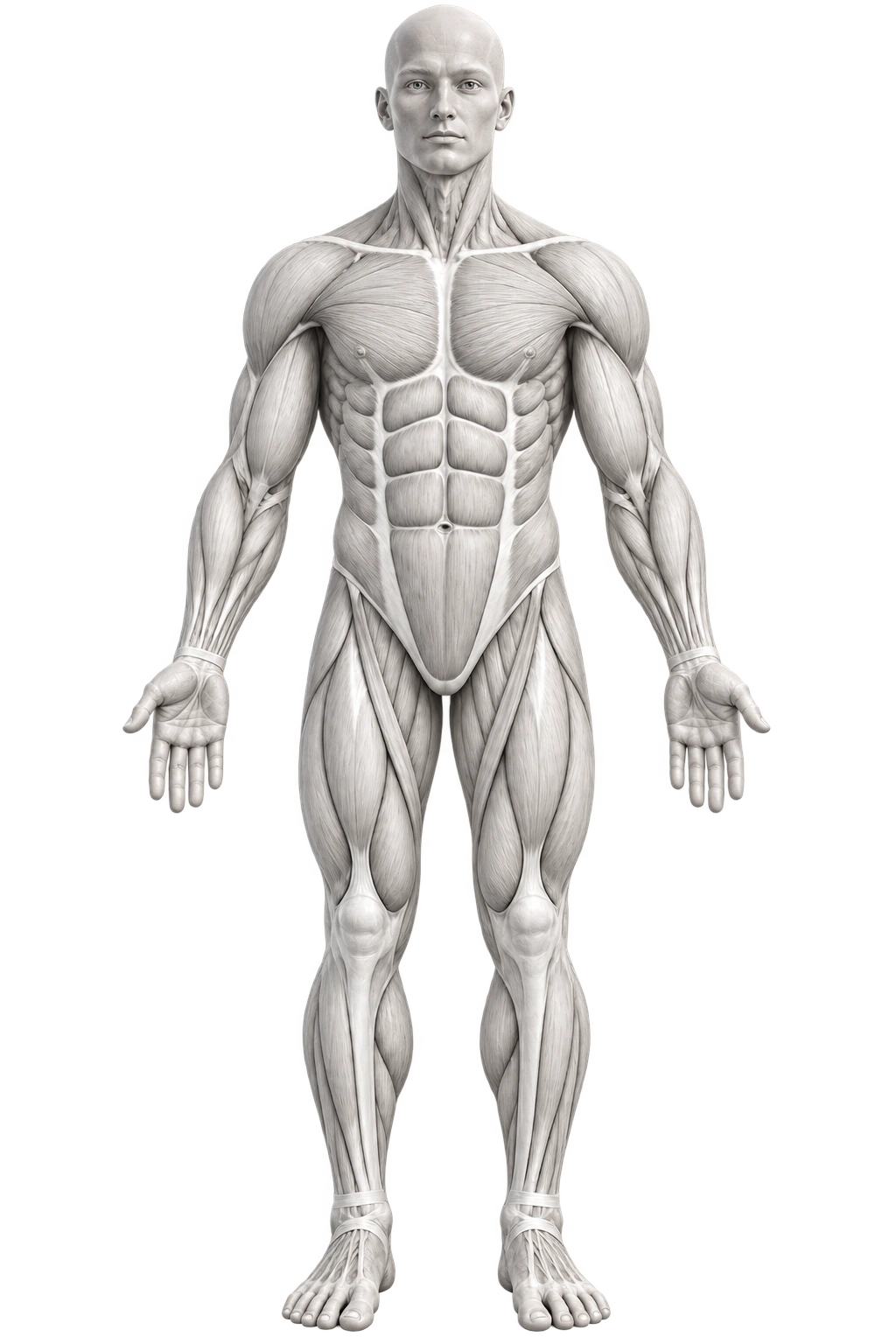
Your deltoid wraps around the shoulder joint. Its front, side, and rear parts help press and move your upper arm in different directions.
At a glance
- Region
- Shoulder
- Movement pattern
- Pressing, raising, and reverse fly movements
- Joint
- Shoulder joint
Exercises
Exercises for the deltoid
Machine · Backrest · Press handles
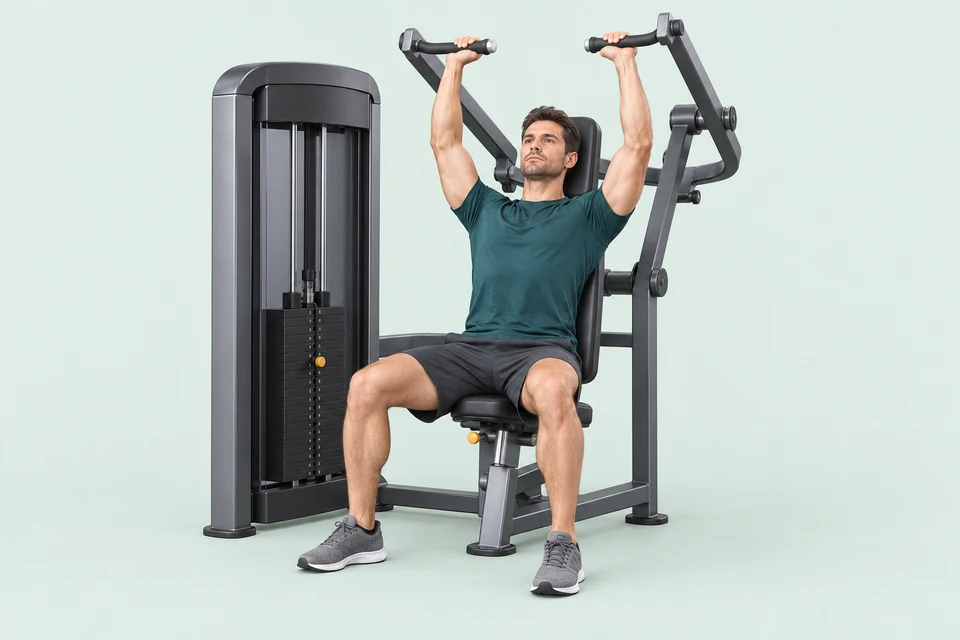
Shoulder press machine
Press overhead with a supported torso to train the front delts alongside the side delts and triceps.
View technique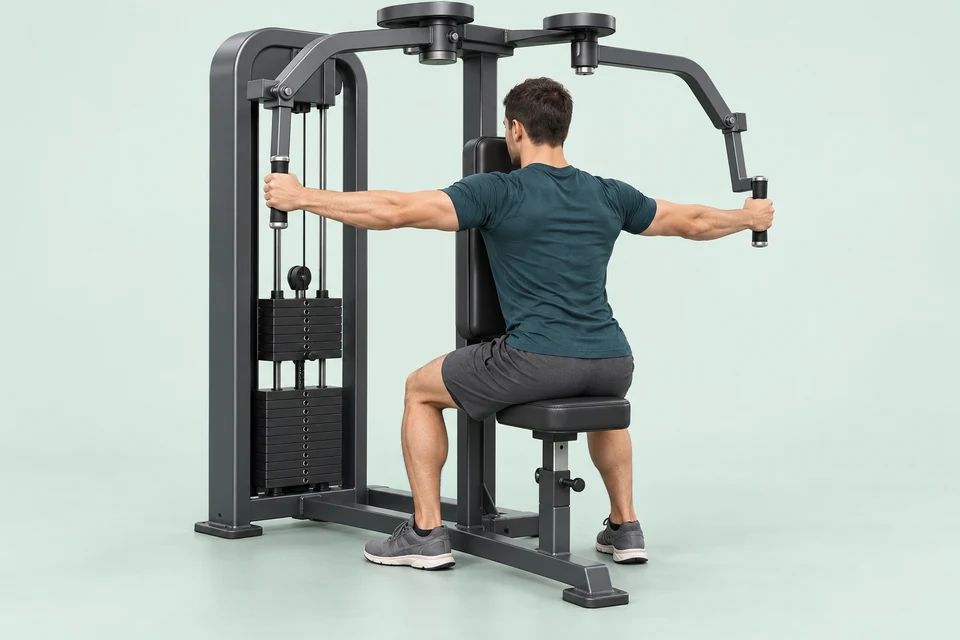
Machine · Chest pad · Rear-delt handles
Reverse pec deck fly
Open the arms while facing the pad to emphasize the rear delts.
View technique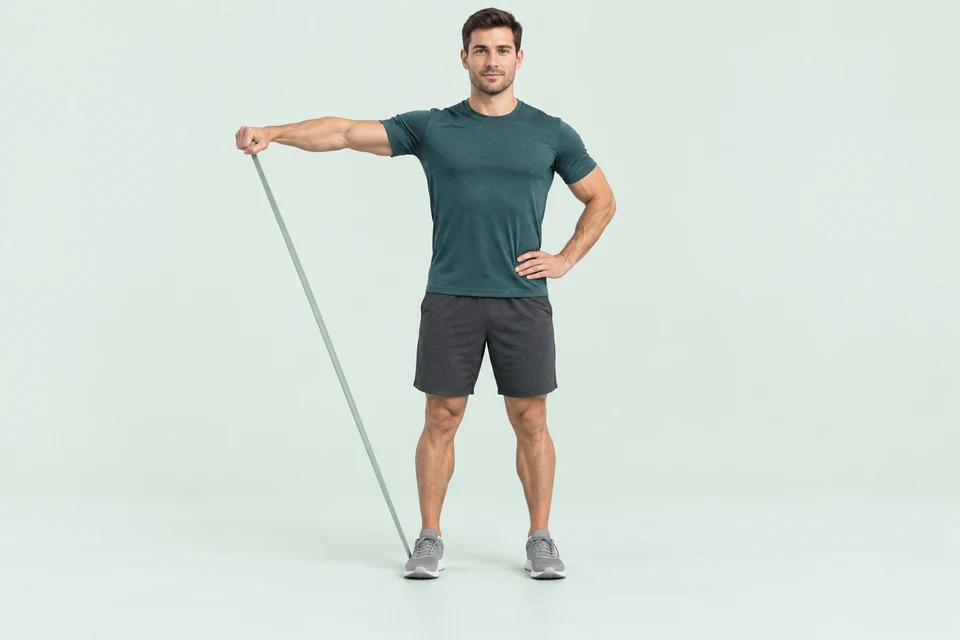
Resistance band · Foot anchor
Resistance-band lateral raise
Lift one arm sideways against a band to emphasize the side delts.
View technique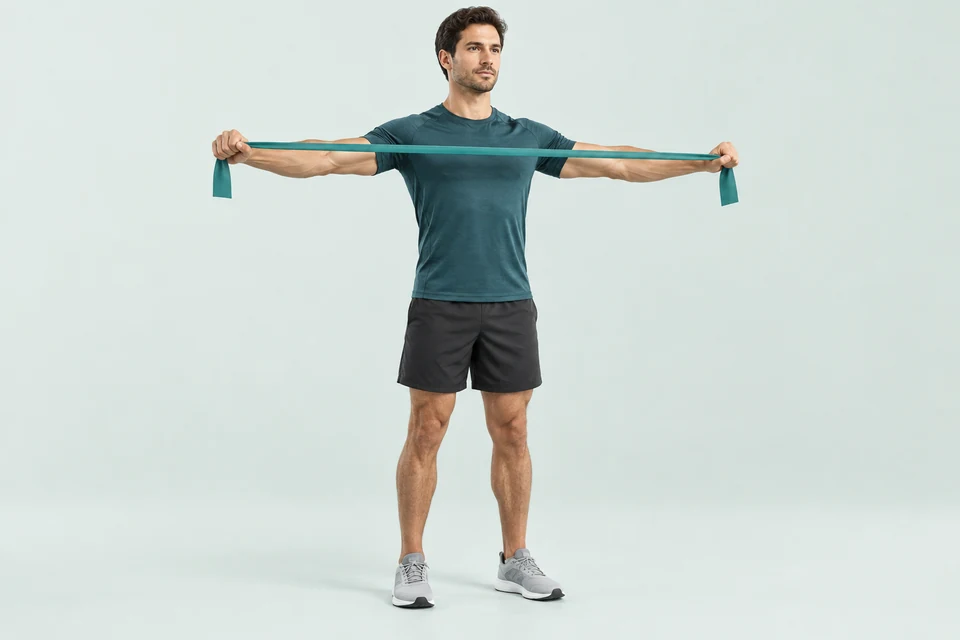
Resistance band · Standing
Band pull-apart
Spread your arms against a light band to train the rear delts together with the muscles between your shoulder blades.
View technique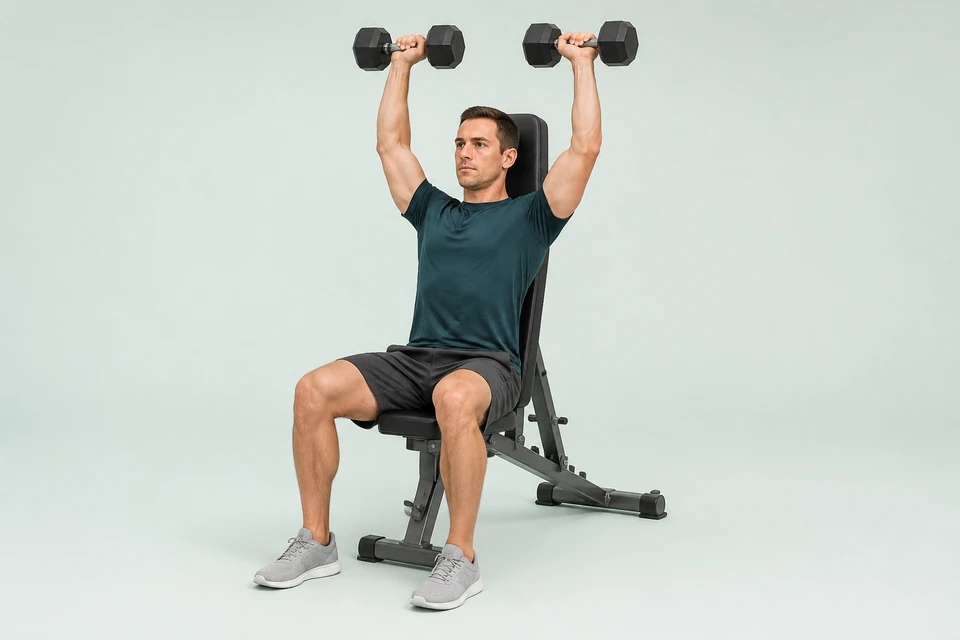
Dumbbells · Seated
Seated dumbbell shoulder press
Press two dumbbells overhead while the bench supports your torso. The front and side delts work with the triceps.
View technique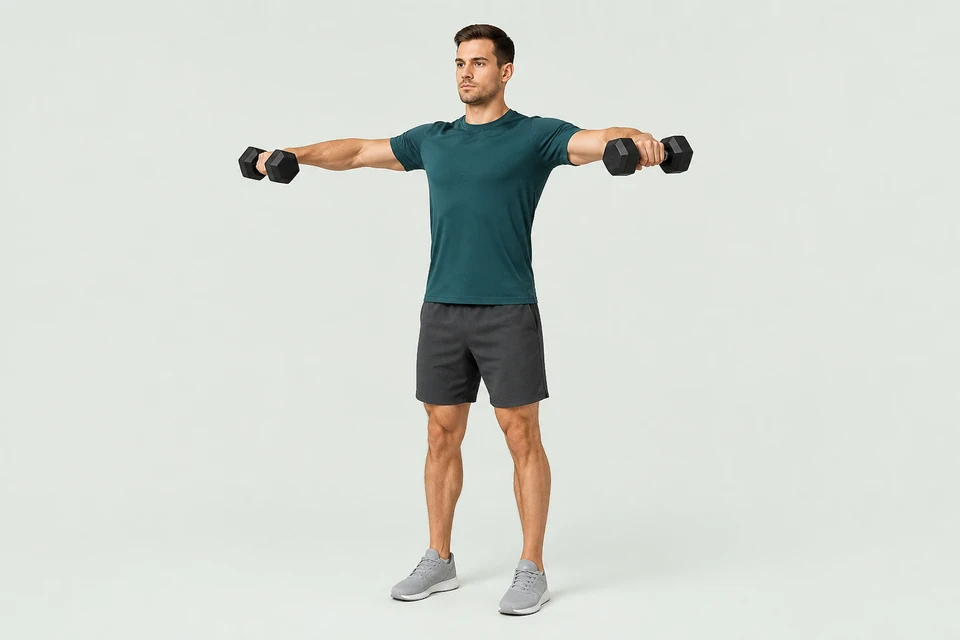
Dumbbells · Standing
Dumbbell lateral raise
Raise the dumbbells out to the sides to emphasize the lateral part of the deltoid.
View technique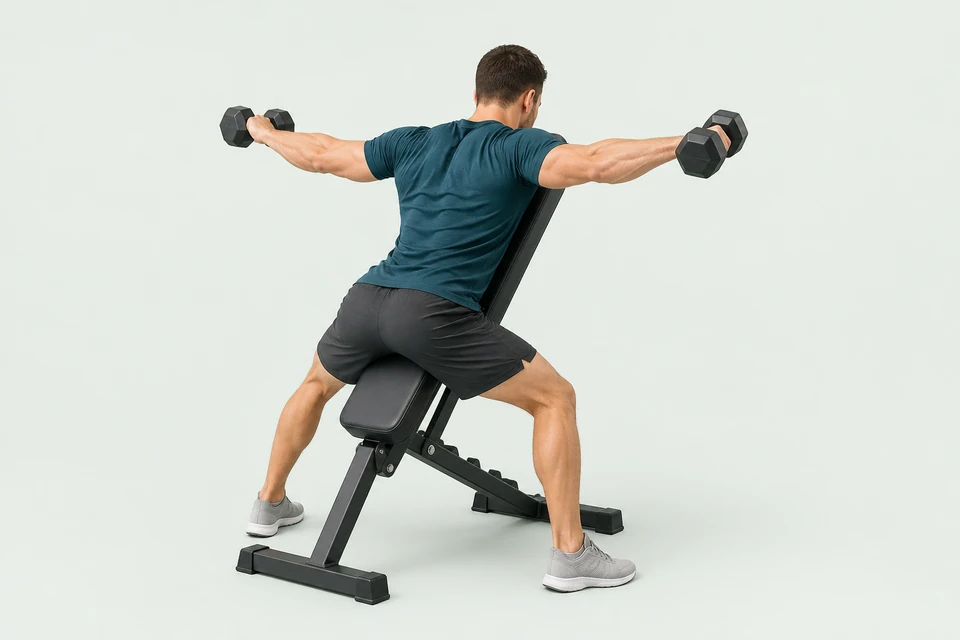
Dumbbells · Incline bench
Incline reverse fly
The bench supports your chest while you raise the arms outward to train the rear delts.
View technique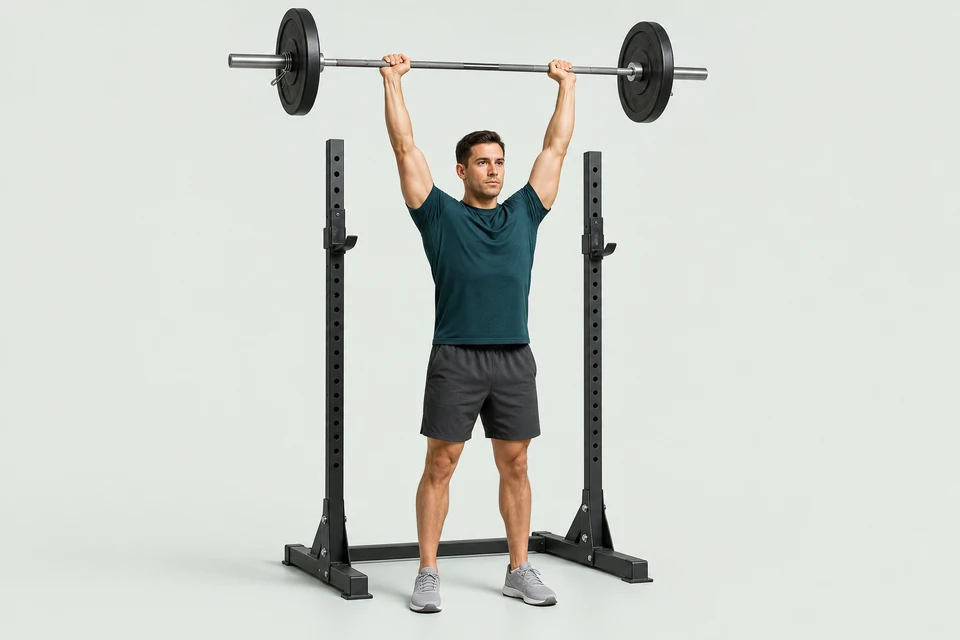
Barbell · Rack
Standing barbell shoulder press
Press a barbell overhead with a stable torso. The front delts work with the side delts and triceps.
View technique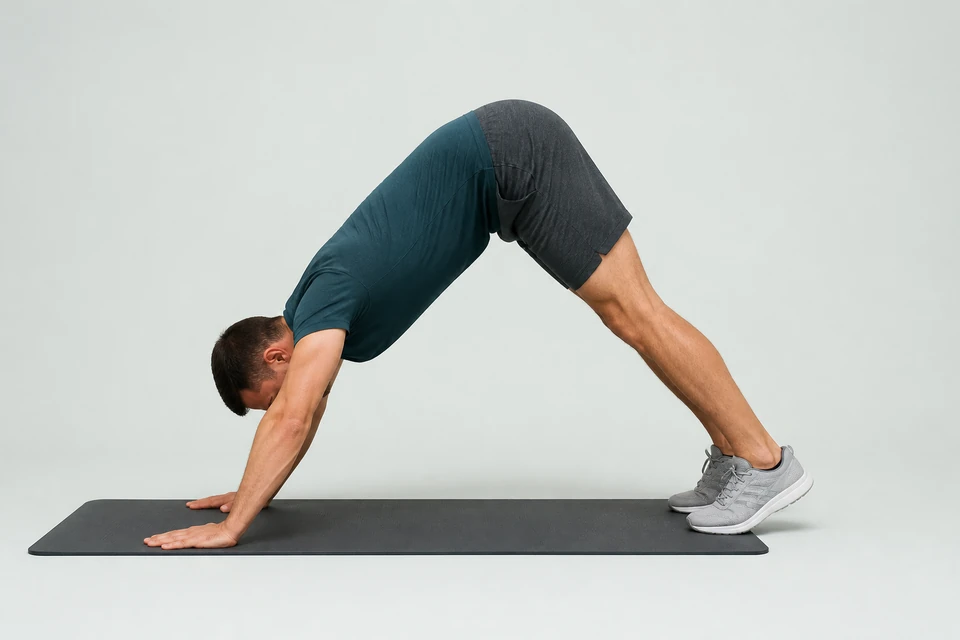
No equipment · Bodyweight
Pike push-up
A demanding bodyweight press with raised hips that emphasizes the front delts.
View technique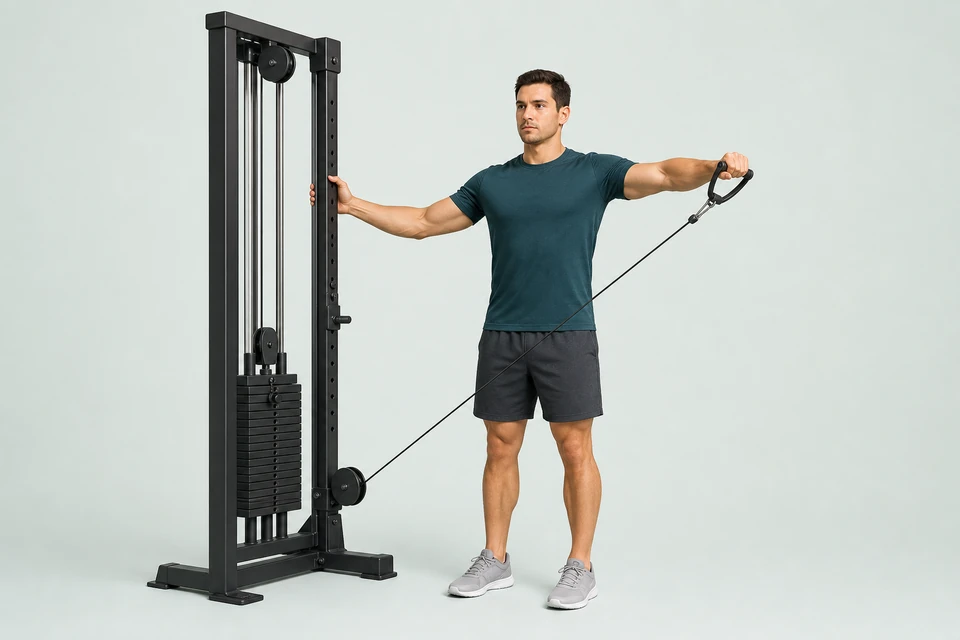
Cable machine · Low pulley
Single-arm cable lateral raise
Raise one arm sideways against cable resistance to emphasize the side delts.
View technique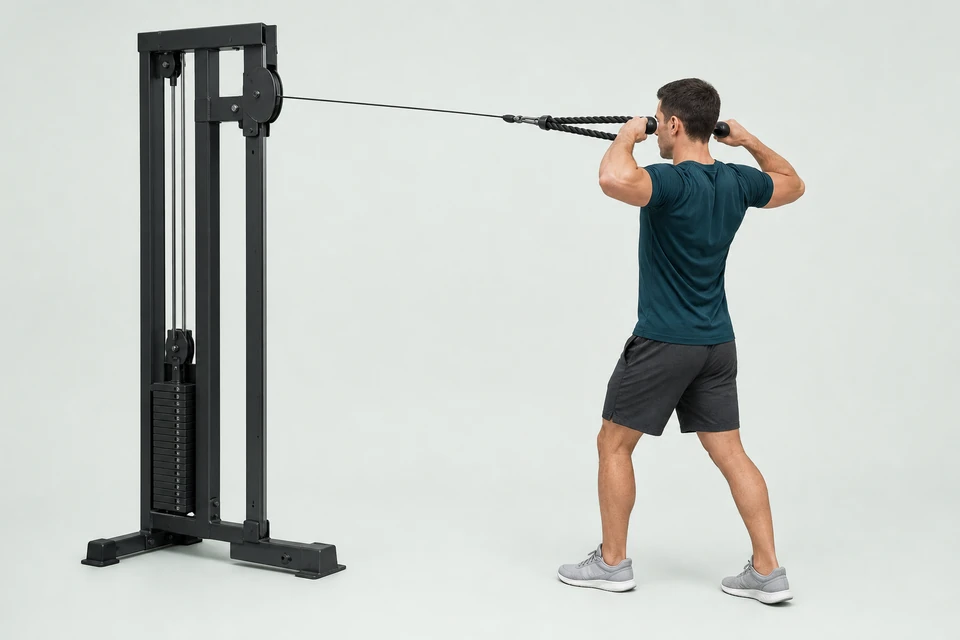
Cable machine · Rope attachment
Cable face pull
Pull a rope toward your face to train the rear delts together with the upper back.
View techniqueExercise suggestions for this muscle are being prepared.
Understand the muscle
Three parts around the shoulder
The deltoid has three functional parts with a shared attachment on the upper arm. Their different origins let them move the arm in different directions. The figure shows the front and side portions; the posterior part lies on the back of the shoulder.
Front delts
Anterior part
Pars clavicularisStarts at the outer collarbone. It raises the arm forward and helps rotate it inward.
Exercises for this region
Side delts
Lateral part
Pars acromialisStarts at the acromion and forms the shoulder cap. It is the main deltoid part for lifting the arm sideways.
Exercises for this region
Rear delts
Posterior part
Pars spinalisStarts at the spine of the shoulder blade. It moves the arm backward and helps rotate it outward.
Exercises for this region
The listed exercises involve this region alongside other parts of the muscle. A muscle head or deep portion is not necessarily trained in isolation.
Simply explained
What does the muscle do?
The deltoid moves your upper arm forward, out to the side, and backward. Different exercises emphasize each part.
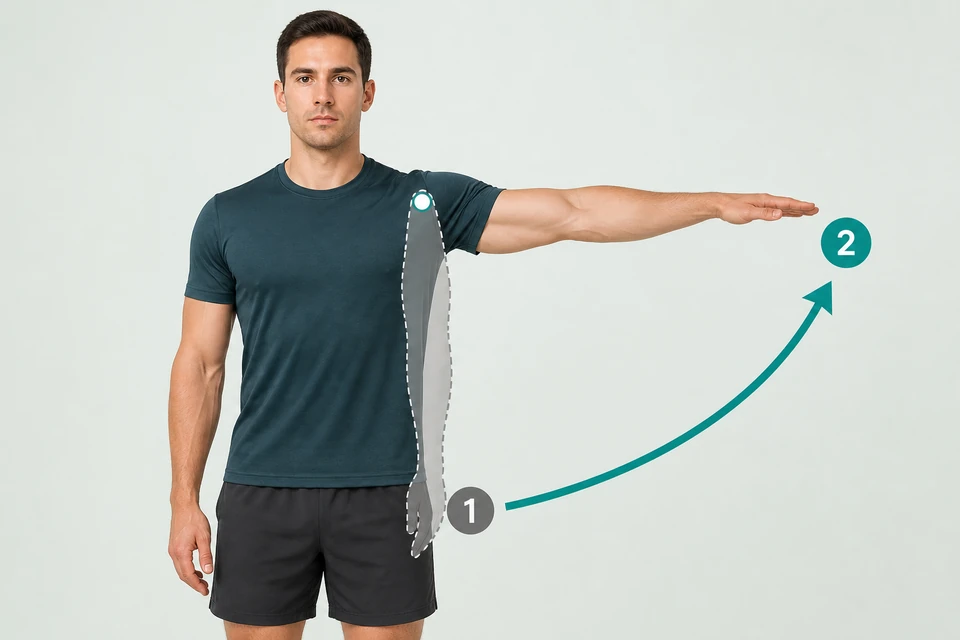
Raise your arm to the side
Shoulder abduction
Lift your upper arm away from your torso. The lateral deltoid is especially active in this direction.
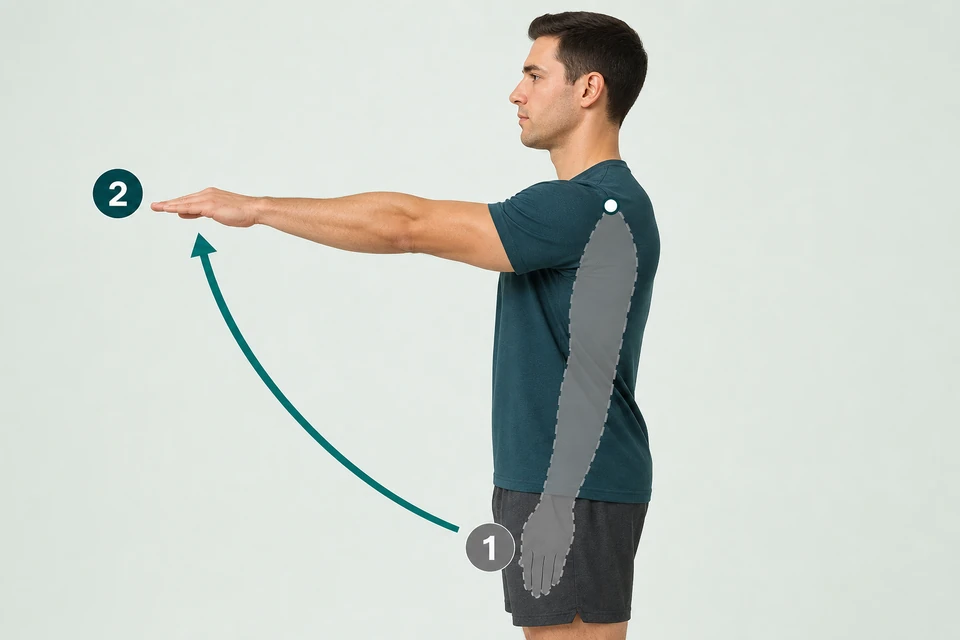
Raise your arm forward
Shoulder flexion
Lift your upper arm in front of your body. The anterior deltoid is especially active here.
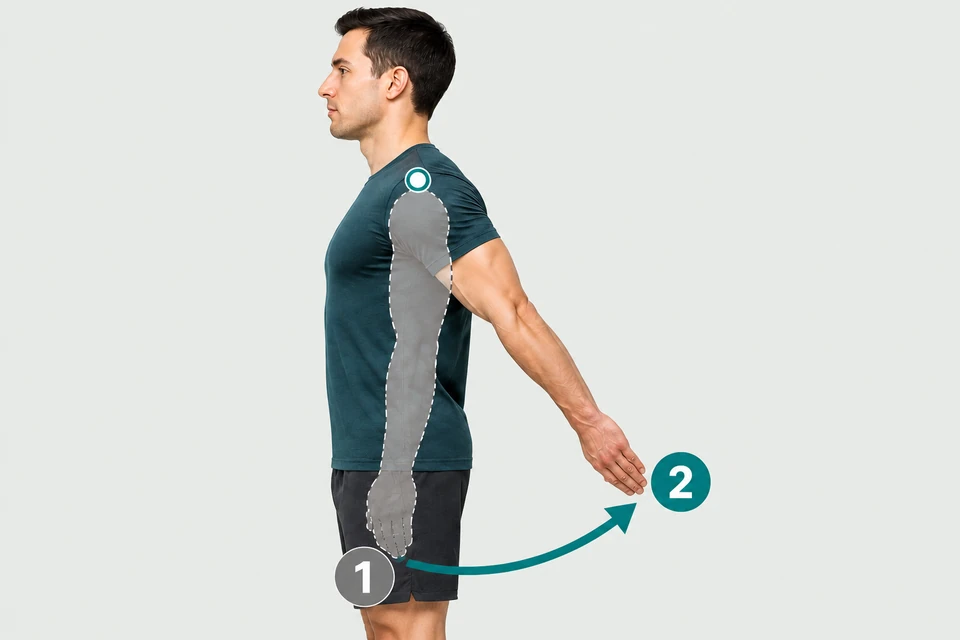
Move your arm backward
Shoulder extension
Move your upper arm behind the torso. The posterior deltoid contributes to this movement.
Sources & illustrations
Anatomy and technique: the references below. Region boundaries and motion overlays are schematic. Exercise and movement illustrations on this page are AI-generated.
- Life Fitness · Shoulder Press
- Muscle & Fitness · Reverse Pec Deck
- ACE · Resistance Band Workout Builder
- Trent University · Banded Pull-Aparts
- StatPearls / NCBI · Deltoid anatomy
- ACE · Seated Overhead Press
- ACE · Lateral Raise
- ACE · Incline Reverse Fly
- ACE · Standing Shoulder Press
- NASM · Pike Push-Up
- Catalyst Athletics · Cable Lateral Raise
- NASM · Face Pull