
Upper-back muscles
Trapezius
Musculus trapezius
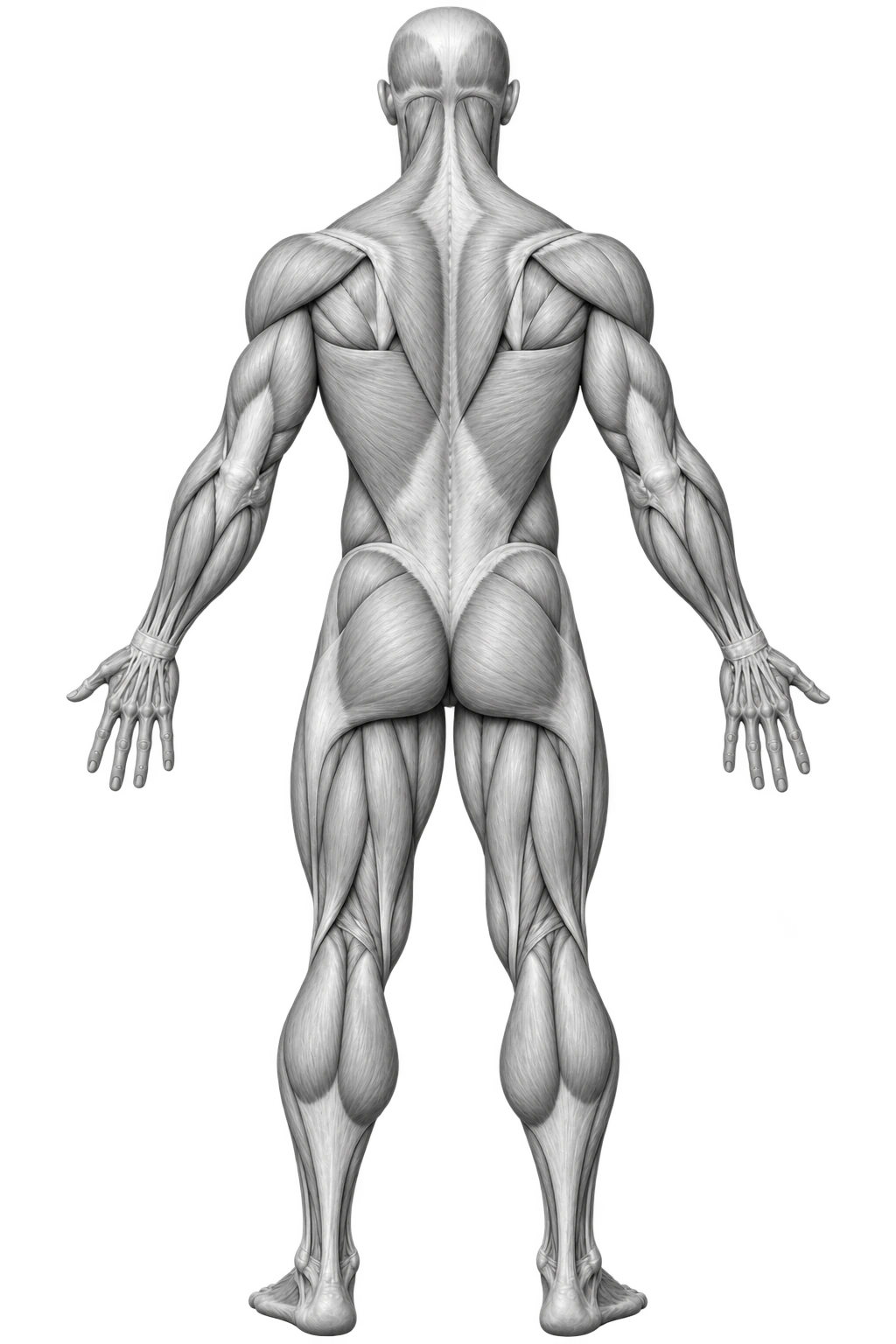
Your trapezius guides the shoulder blades when you shrug, pull and lift your arms overhead. It spans the neck and upper back.
At a glance
- Region
- Neck and upper back
- Movement pattern
- Shoulder-blade elevation, retraction and rotation
- Joint
- Shoulder girdle
Exercises
Exercises for the trapezius
Resistance band · Rated fixed anchor
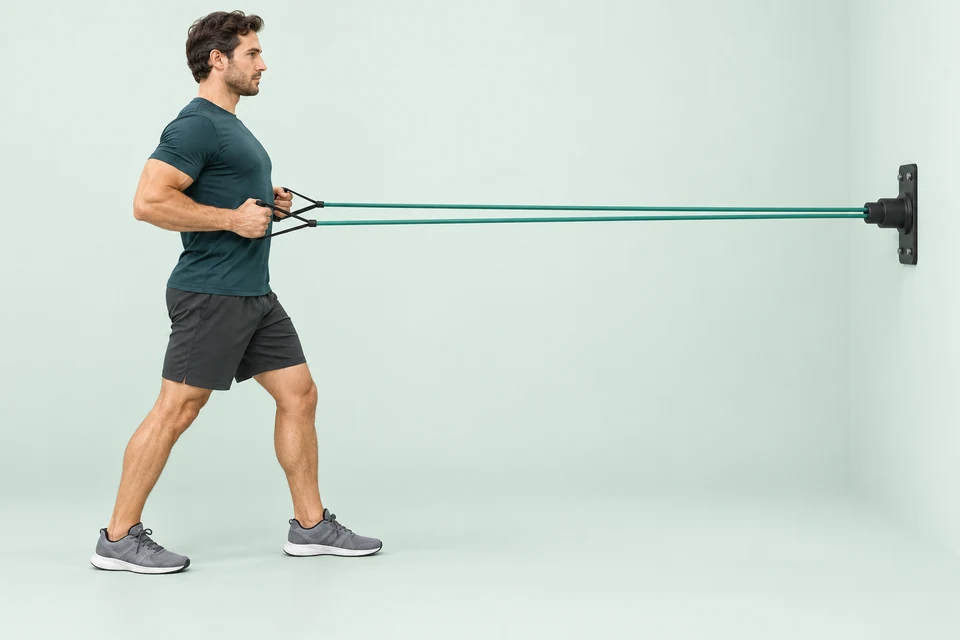
Standing resistance-band row
Pull against a band to train the lats and mid-back while keeping the torso still.
View technique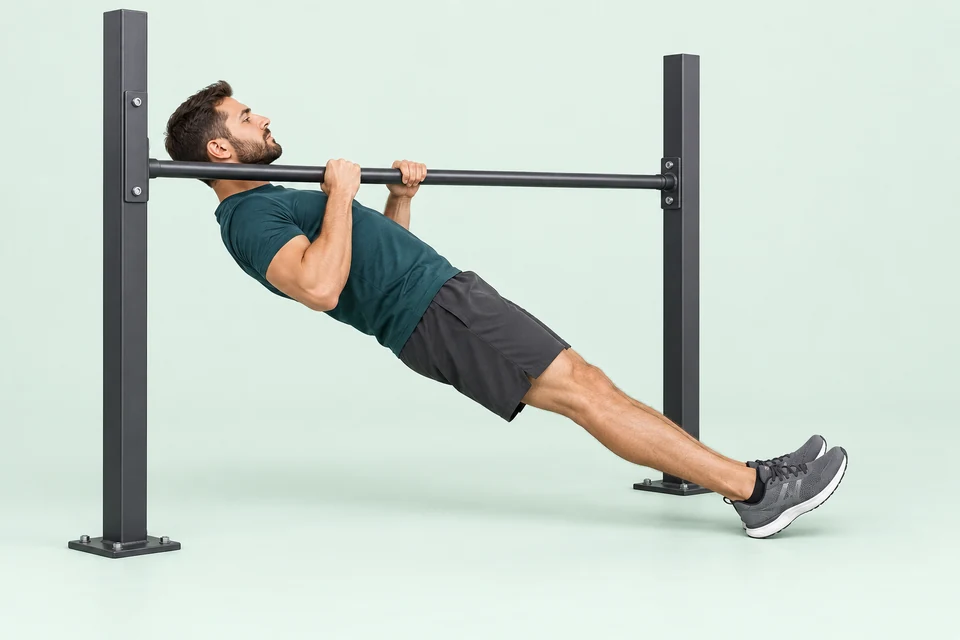
Bodyweight · Fixed low training bar
Inverted row on a low bar
Pull the chest toward a low fixed bar while the heels stay on the floor to train the lats and upper back.
View technique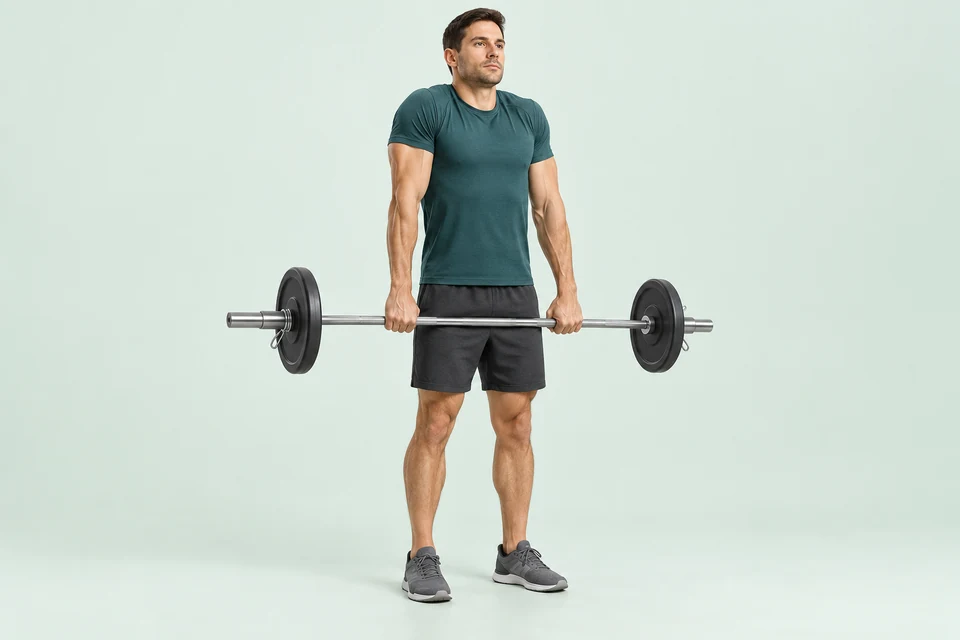
Barbell · Weight plates · Collars
Barbell shrug
Elevate the shoulders while the arms stay long to train the upper trapezius.
View technique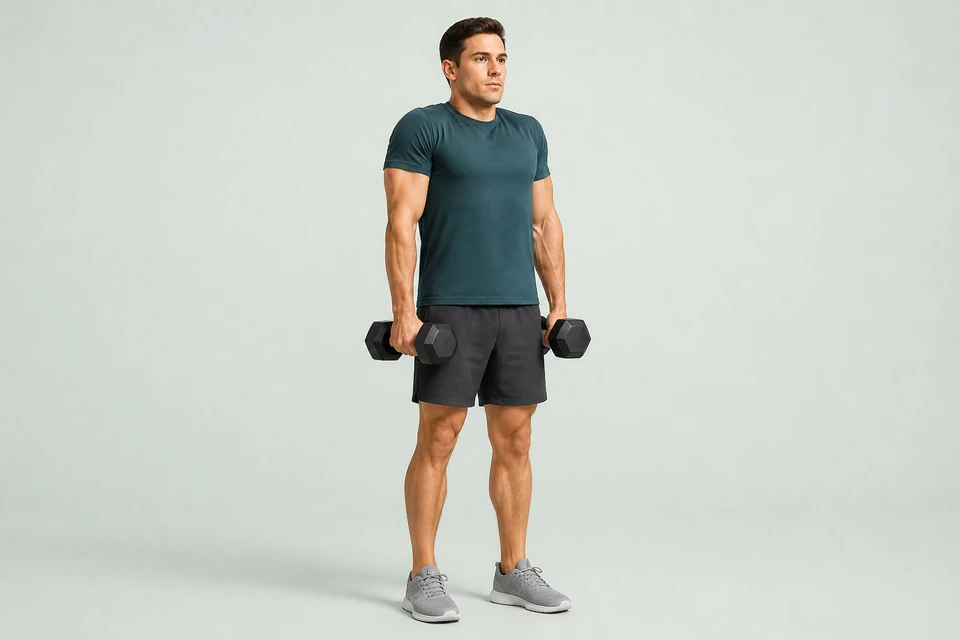
Dumbbells
Dumbbell shrug
Lift the shoulders with straight arms. This small movement trains the upper trapezius.
View technique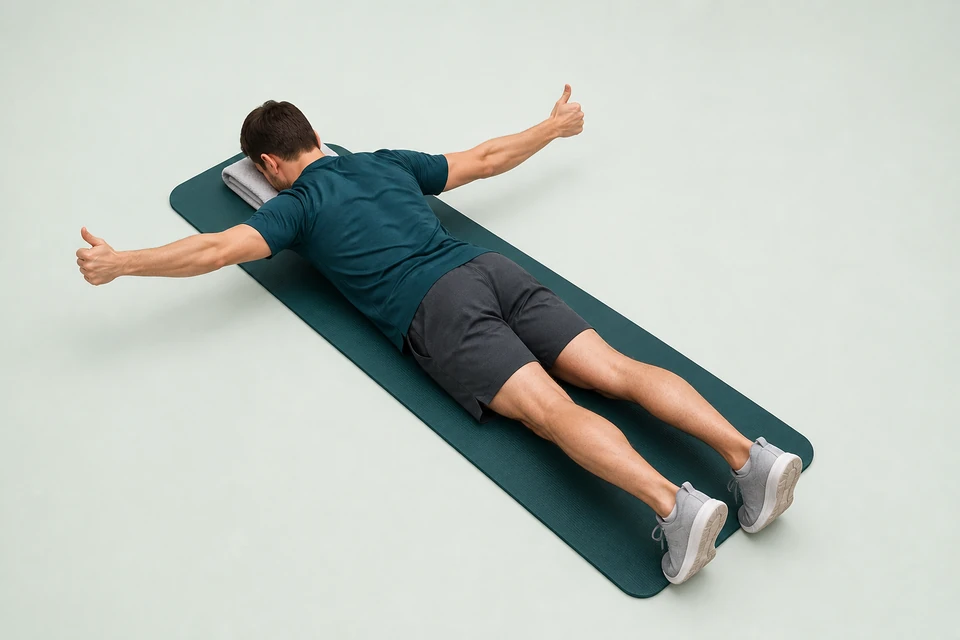
No equipment · Mat and towel
Prone T raise
Lift your arms sideways in a T. The middle trapezius works with other shoulder muscles.
View technique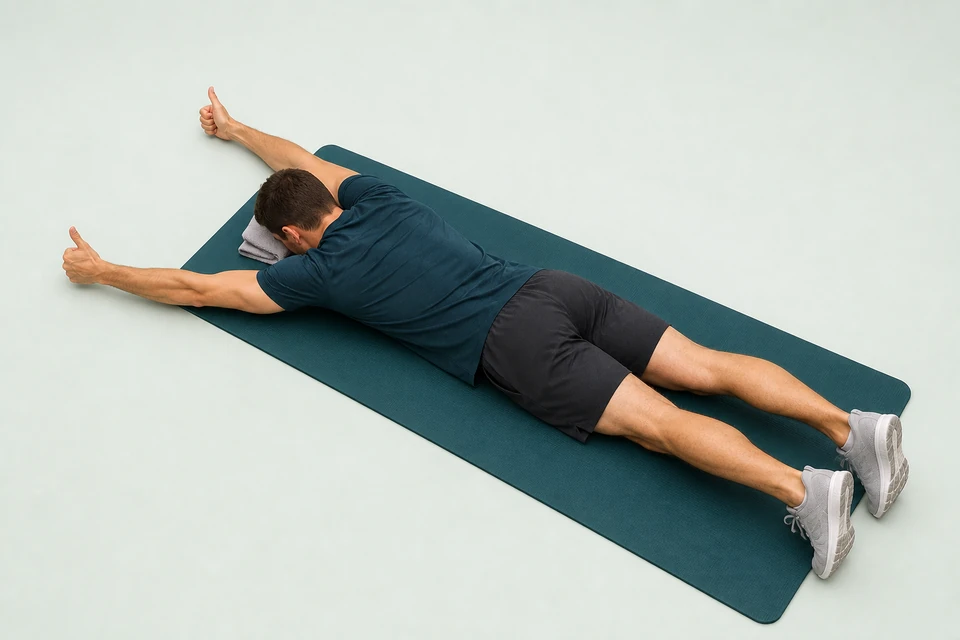
No equipment · Mat and towel
Prone Y raise
Lift your arms diagonally in a Y. This challenges control by the lower and middle trapezius.
View techniqueExercise suggestions for this muscle are being prepared.
Understand the muscle
Three regions guide your shoulder blades
The paired muscle spans from the back of the skull and spine to the collarbone and shoulder blade. Its three regions pull in different directions and work together.
From the neck to the shoulder
Upper fibers
Pars descendensRun from the back of the skull and neck to the outer collarbone. Help elevate the shoulder girdle.
Exercises for this region
Between the shoulder blades
Middle fibers
Pars transversaConnect the upper thoracic spine and scapular spine. Draw the shoulder blades toward the spine.
Exercises for this region
Toward the middle back
Lower fibers
Pars ascendensRun upward from the lower thoracic spine to the scapular spine. Help lower and upwardly rotate the shoulder blade.
Exercises for this region
The listed exercises involve this region alongside other parts of the muscle. A muscle head or deep portion is not necessarily trained in isolation.
Simply explained
What does the muscle do?
The trapezius helps your shoulder blades move and stay controlled on the rib cage. Its upper, middle and lower regions share the work.
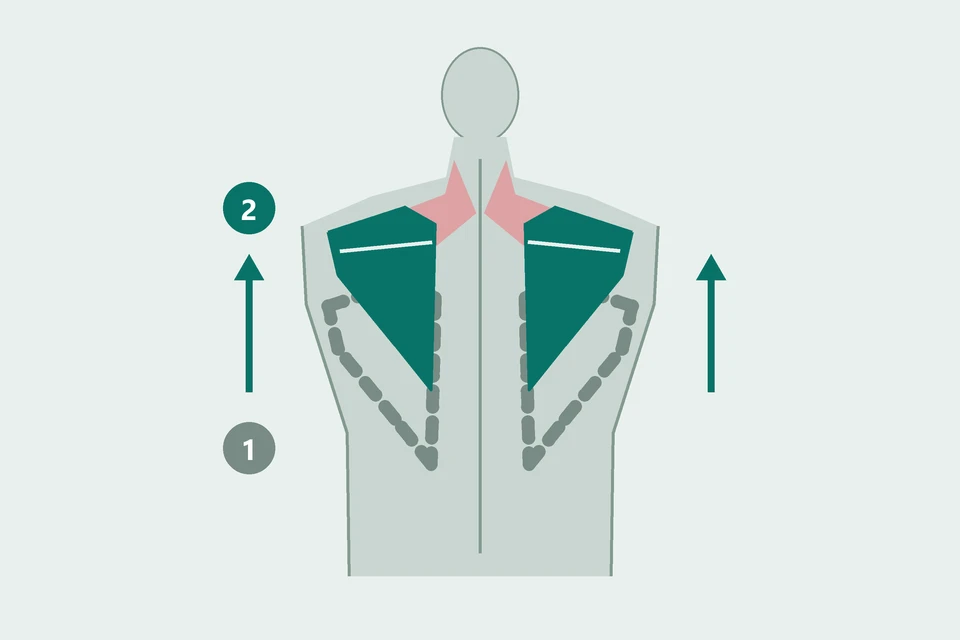
Lift the shoulders
Scapular elevation
The upper region helps lift the shoulder girdle, as in a shrug. The head can stay still while the shoulders rise.
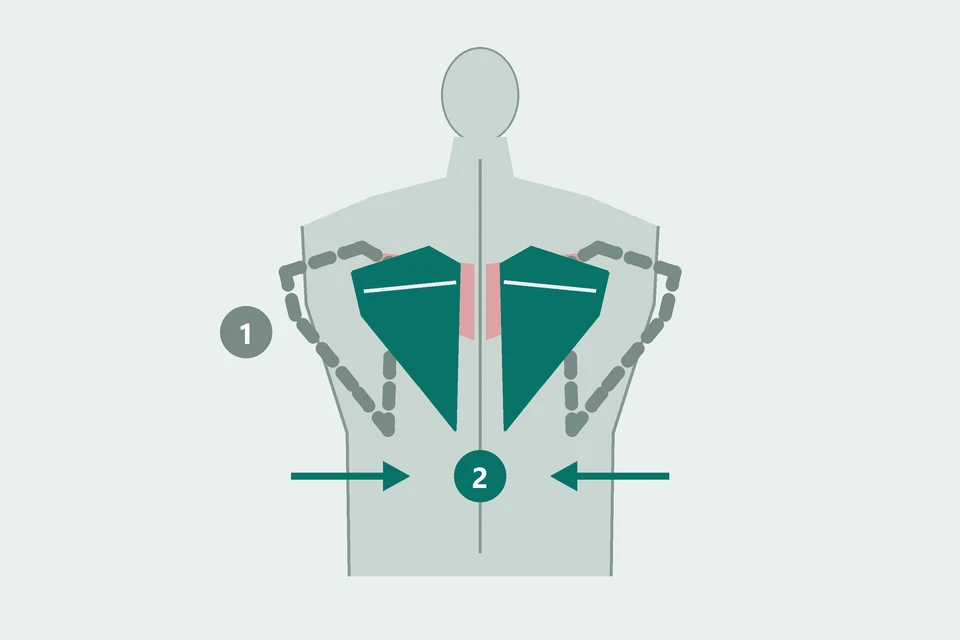
Bring the shoulder blades together
Scapular retraction
The middle region draws the shoulder blades toward the spine. This happens during rowing and T raises, together with muscles such as the rhomboids.
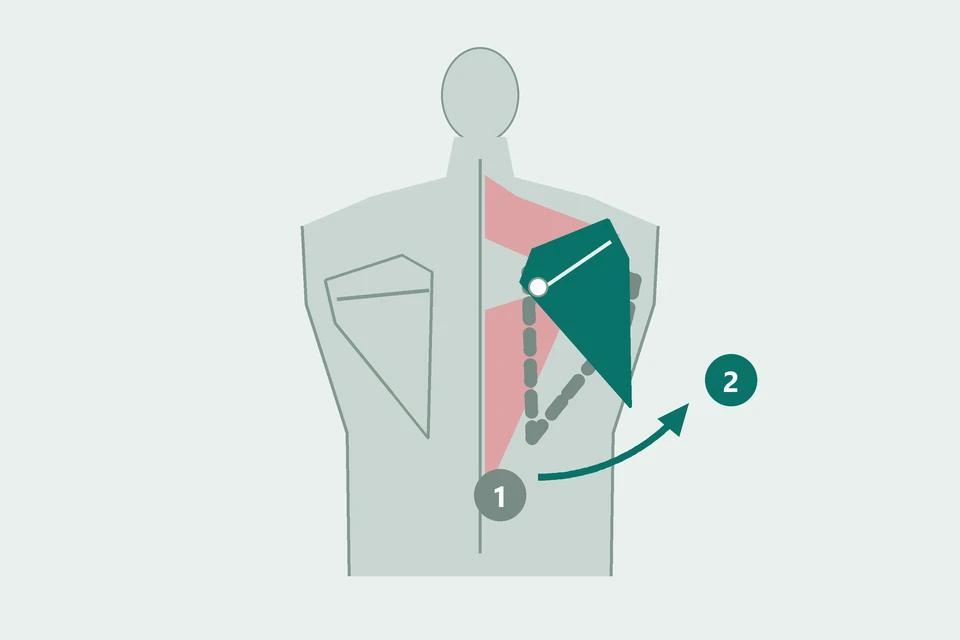
Support overhead arm movement
Upward rotation
The trapezius and serratus anterior coordinate upward rotation. The lower tip of the shoulder blade swings outward as the socket turns upward.
Often works with
Sources & illustrations
Anatomy and technique: the references below. Region boundaries and movement diagrams are schematic. Exercise images are AI-generated illustrations.