
Spinal extensors
Erector spinae
Musculus erector spinae
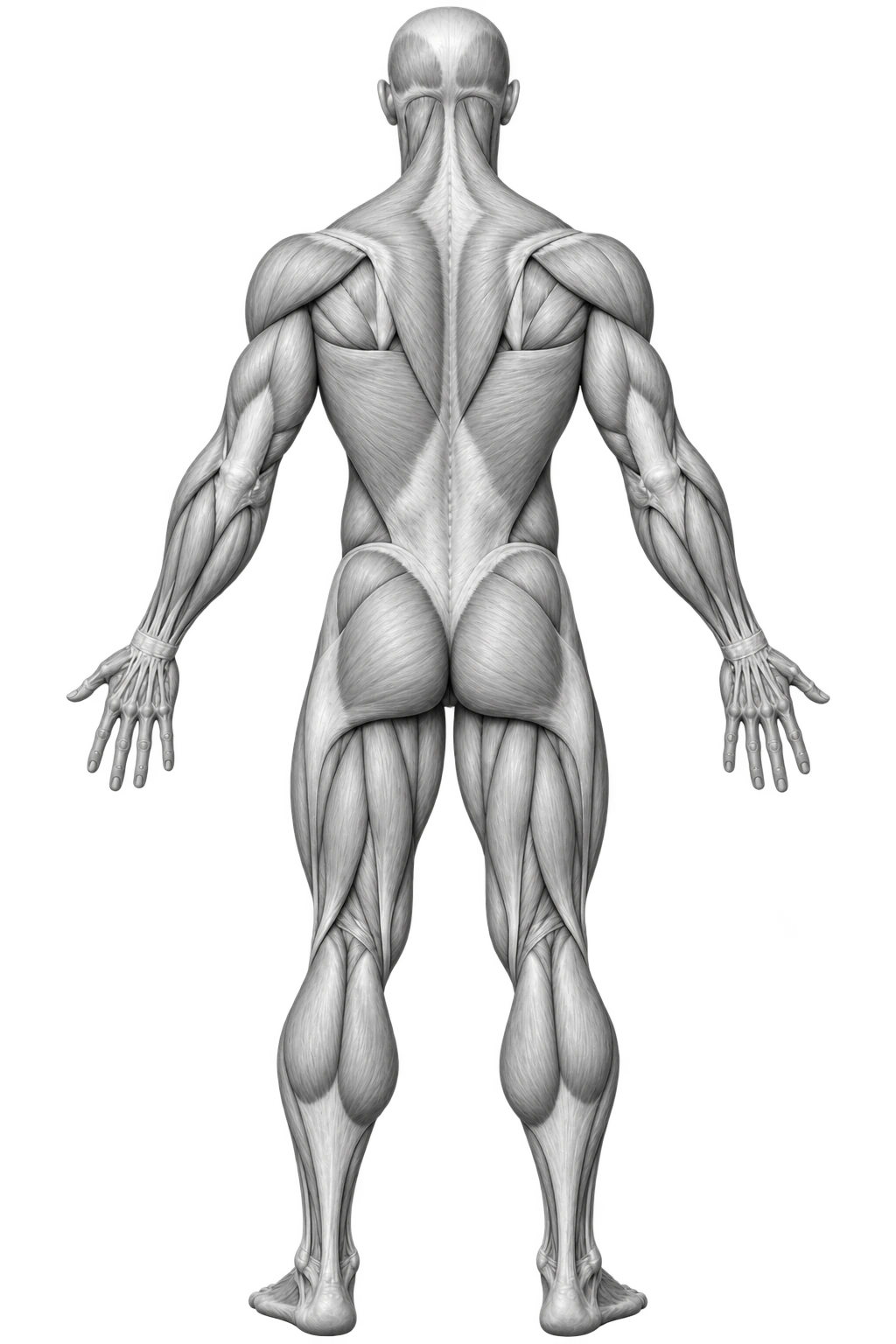
The erector spinae runs in long columns on either side of your spine. It helps straighten your back and keeps your torso steady during movements such as lifting.
At a glance
- Region
- Back and spine
- Movement pattern
- Back extension and trunk control
- Joint
- Spine
Exercises
Exercises for the erector spinae
Barbell · Weight plates · Collars
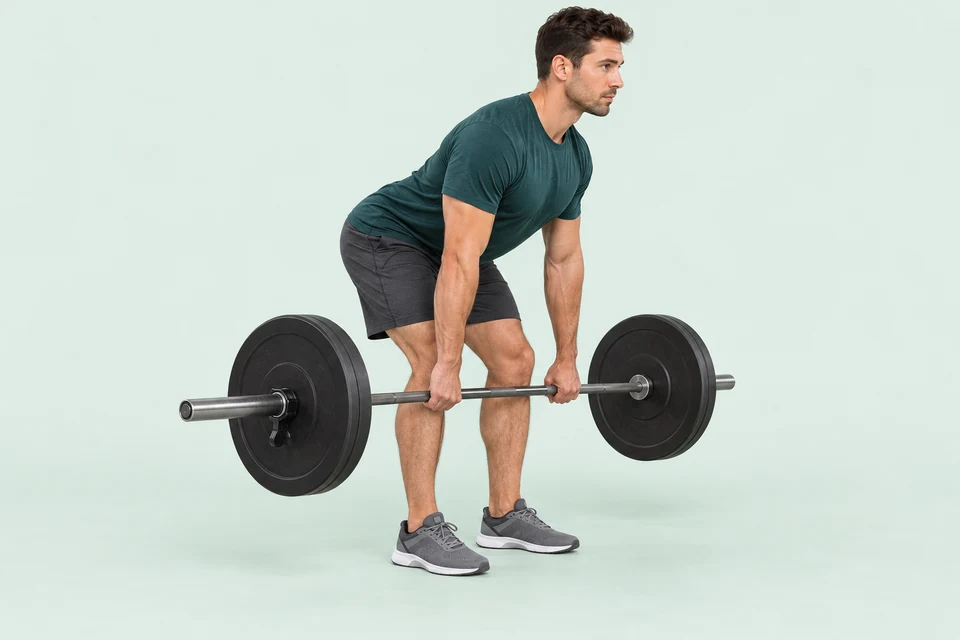
Barbell Romanian deadlift
Hinge at the hips to train the hamstrings and glutes while the back extensors stabilize the torso.
View technique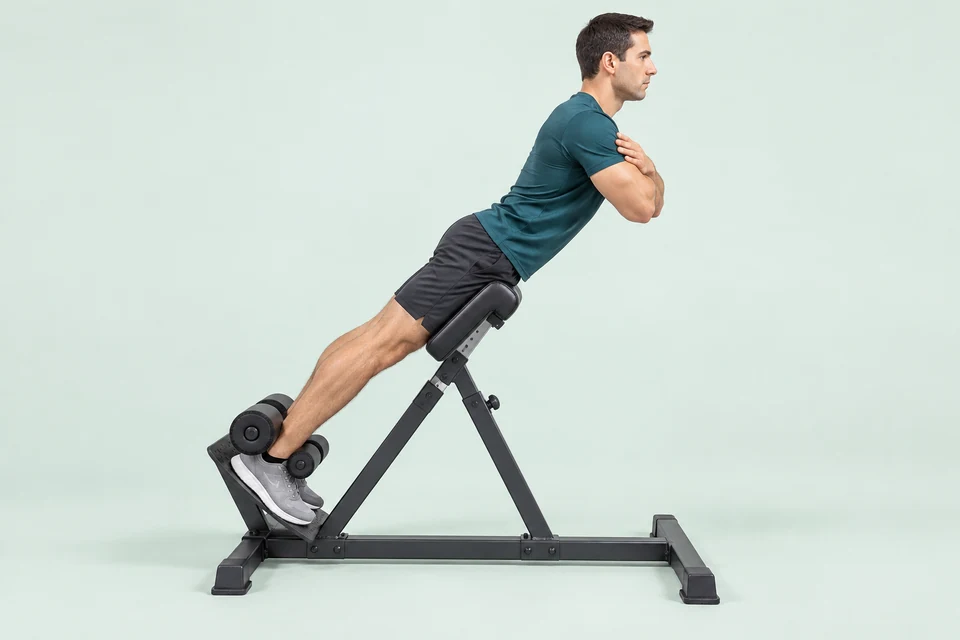
Bodyweight · 45-degree extension bench
45-degree back extension
Hinge over a fixed bench and return to a straight body line. The back muscles stabilize alongside the glutes and hamstrings.
View technique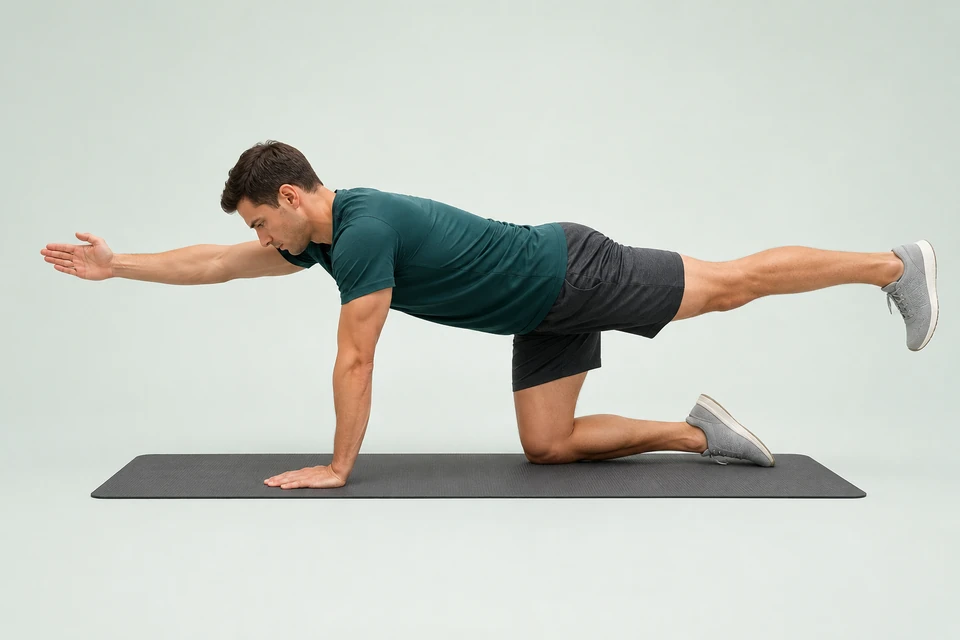
No equipment · Mat
Bird dog
Extend the opposite arm and leg from all fours. Your back and abdominal muscles work together to keep your torso steady.
View technique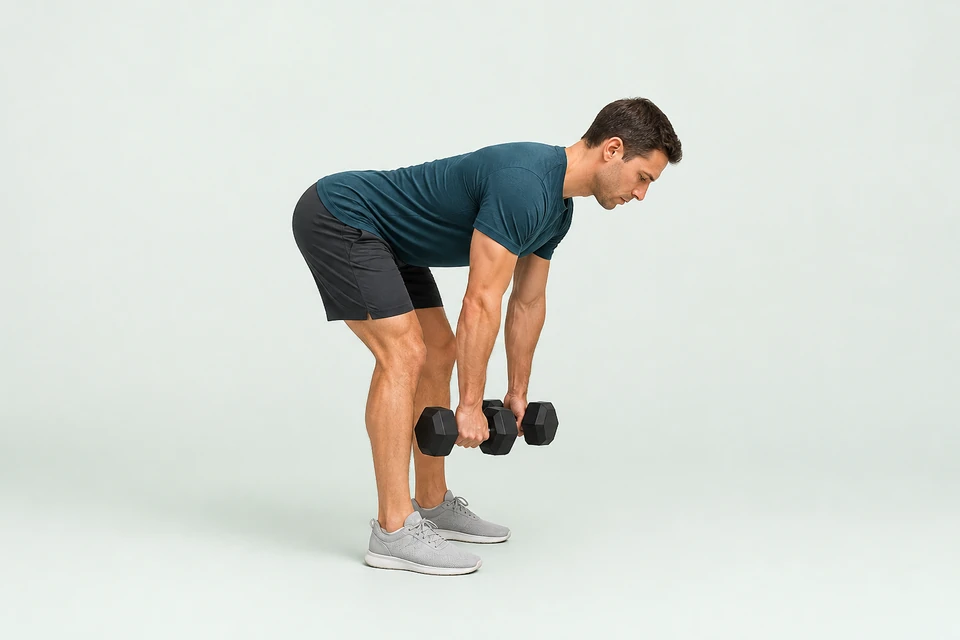
Dumbbells · Standing
Dumbbell Romanian deadlift
Hamstrings and glutes move your hips. The spinal extensors mainly hold your back steady against the pull of the weights.
View technique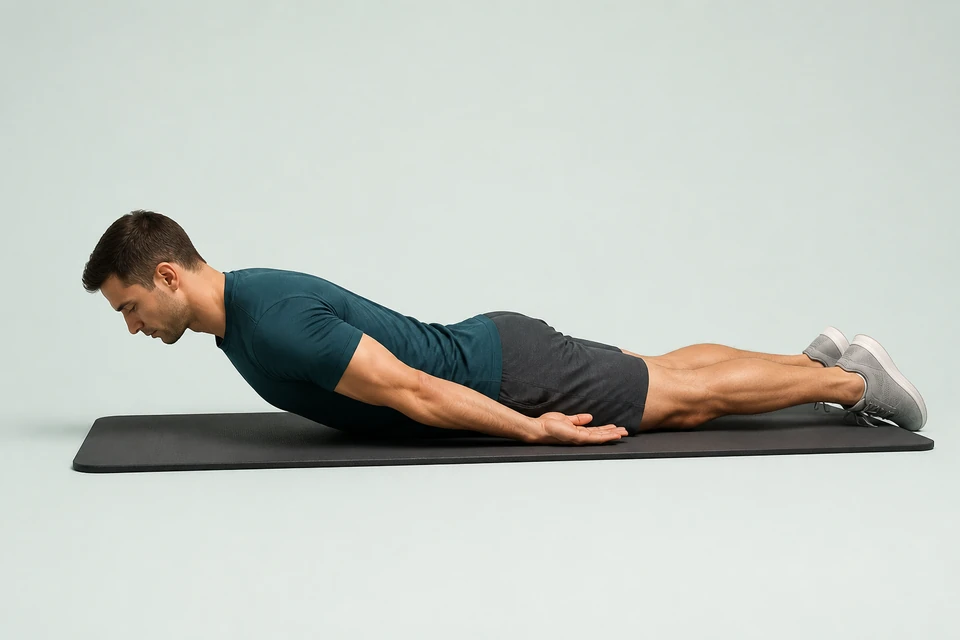
No equipment · Mat
Prone back extension
Lift your upper chest slightly from the floor while your pelvis and legs stay down. This trains active spinal extension without added weight.
View techniqueExercise suggestions for this muscle are being prepared.
Understand the muscle
Three columns along the spine
The erector spinae consists of three muscle columns on each side. They run upward from the pelvis and spine, with portions reaching the ribs and neck. Much of this group lies beneath more superficial back muscles; the highlight shows its approximate location.
Outer column
Iliocostalis
Musculus iliocostalisIliocostalis lies farthest from the spine. Its sections connect the pelvis, ribs and cervical vertebrae and assist back extension and side bending.
Exercises for this region
Middle column
Longissimus
Musculus longissimusLongissimus forms the middle and largest column. Its sections extend through the back and neck, with the uppermost part reaching the head.
Exercises for this region
Inner column
Spinalis
Musculus spinalisSpinalis lies closest to the midline. It connects spinous processes of vertebrae and contributes to spinal extension.
Exercises for this region
The listed exercises involve this region alongside other parts of the muscle. A muscle head or deep portion is not necessarily trained in isolation.
Simply explained
What does the muscle do?
Your spinal extensors can move your back or hold its position. During a Romanian deadlift, your hips move while your back muscles help keep your spine neutral.
Straighten your back
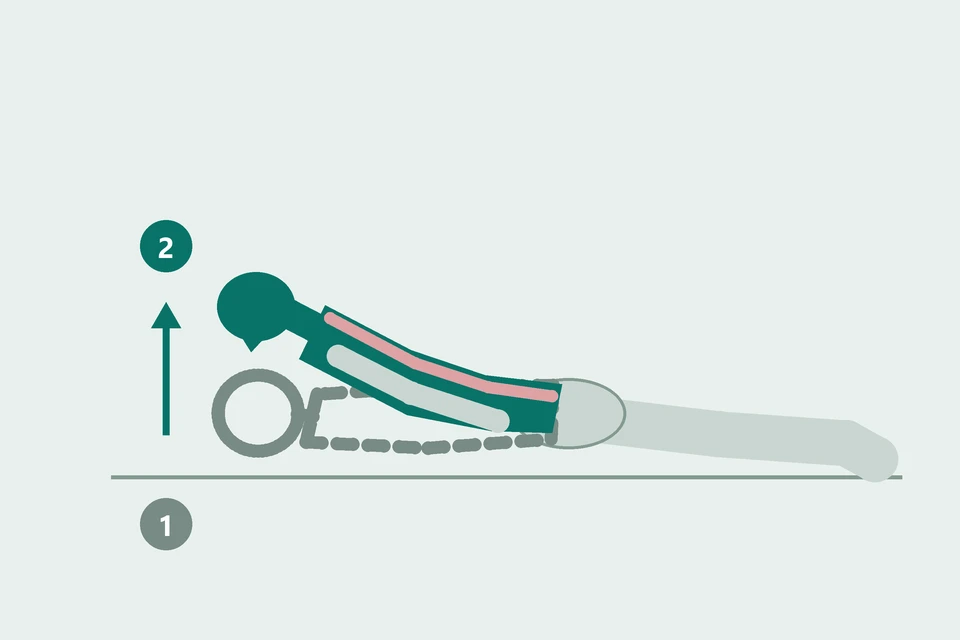
Spinal extension
Working on both sides, the spinal extensors straighten the back. In a prone back extension, they help lift your upper chest a little from the floor.
Bend to the side
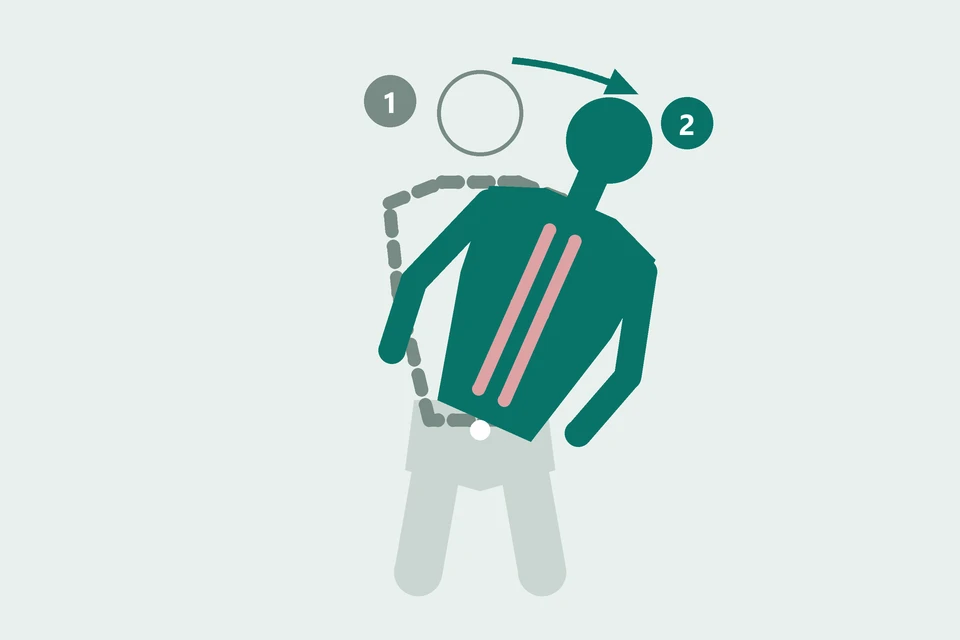
Lateral flexion
Working on one side, the spinal extensors help bend the trunk toward that side. Your abdominal muscles also contribute to this movement.
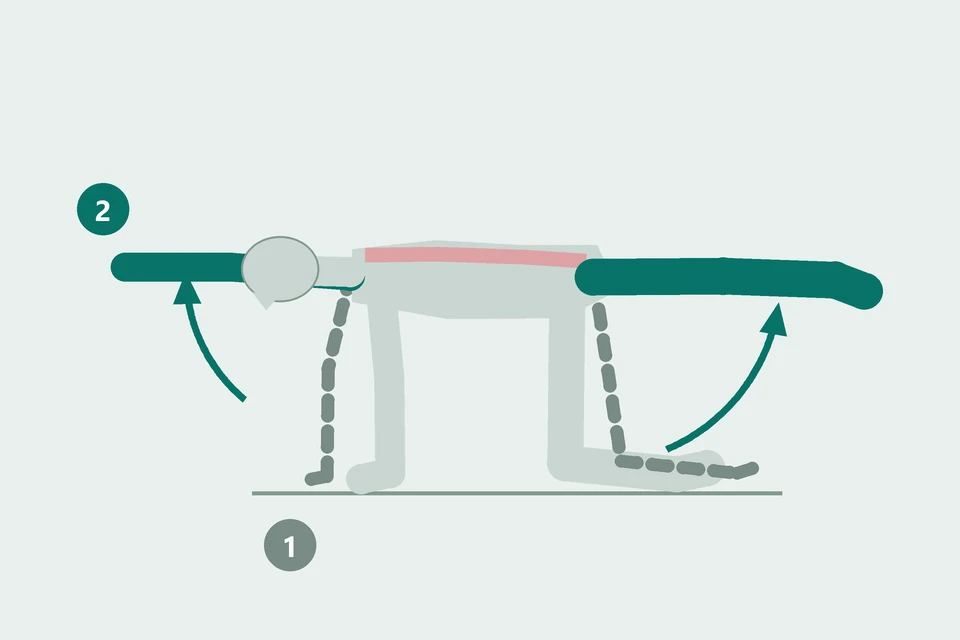
Keep your torso steady
Postural stability
The spinal extensors also work without visible back movement. Together with the rest of your trunk muscles, they hold your back position as you move an arm and leg in the bird dog.
Often works with
Sources & illustrations
Anatomy and technique: the references below. Region boundaries and movement diagrams are schematic. Exercise images are AI-generated illustrations.