
Gluteal muscles
Gluteus maximus
Musculus gluteus maximus
The gluteus maximus is the largest and most superficial gluteal muscle. It straightens your hip and supports powerful movements such as standing up and climbing.
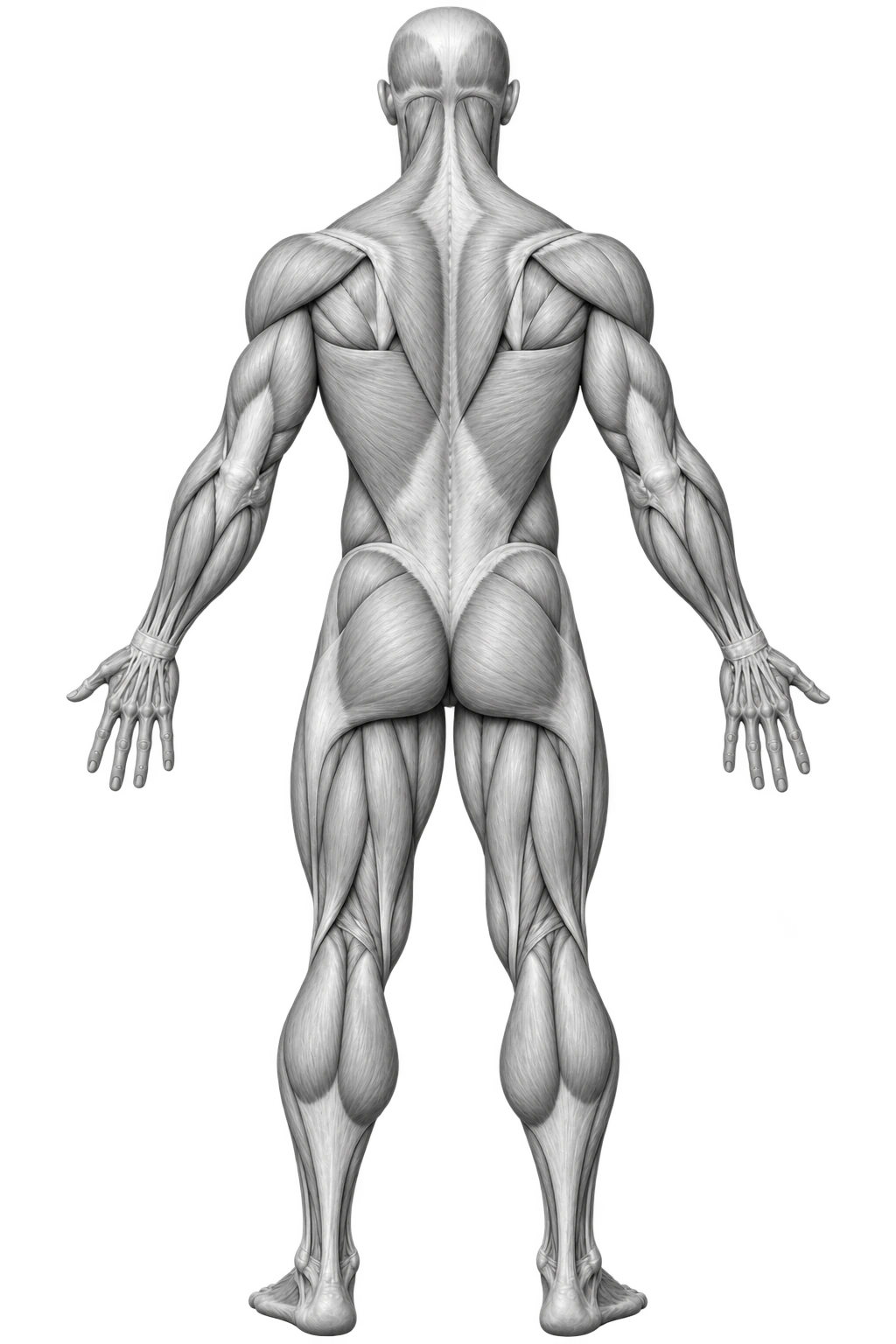
At a glance
- Region
- Hips and buttocks
- Movement pattern
- Hip extension, rising, and climbing
- Joint
- Hip joint and pelvis
Exercises
Exercises for the gluteus maximus
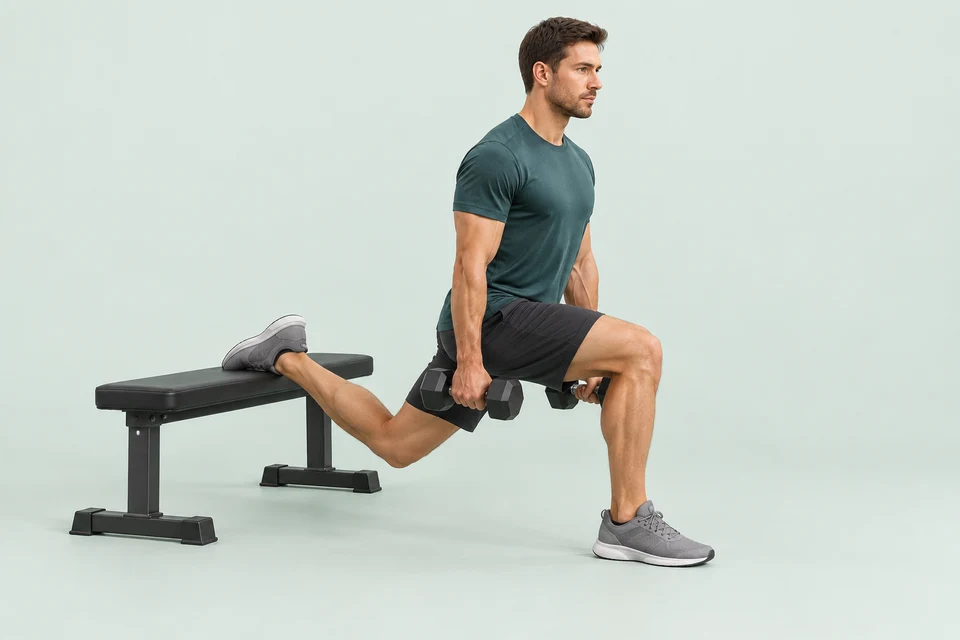
Two dumbbells and a stable low bench
Bulgarian split squat with dumbbells
A rear-foot-elevated split squat trains the quadriceps and glutes of the front leg while challenging balance.
View technique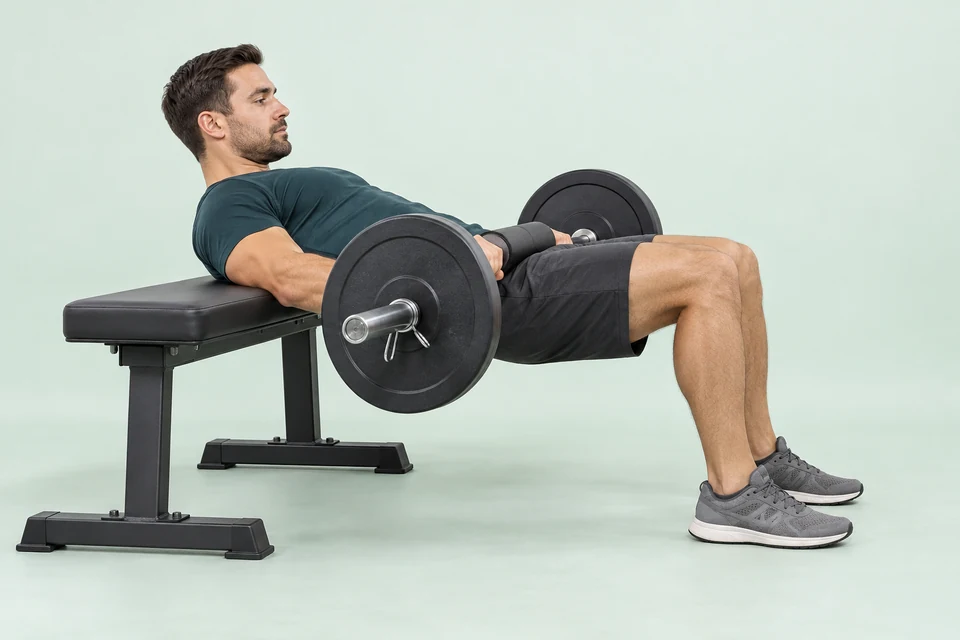
Barbell · Stable bench · Hip pad
Barbell hip thrust
Extend the hips with your upper back supported and a padded barbell over the hip crease.
View technique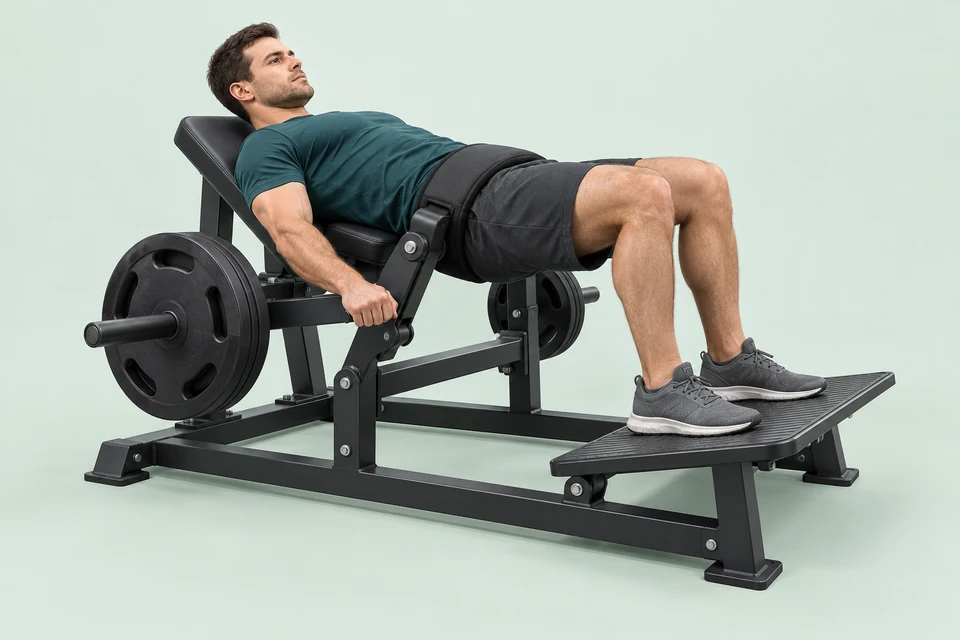
Machine · Padded hip belt
Hip thrust machine
Extend the hips against a guided lever with your upper back and feet supported.
View technique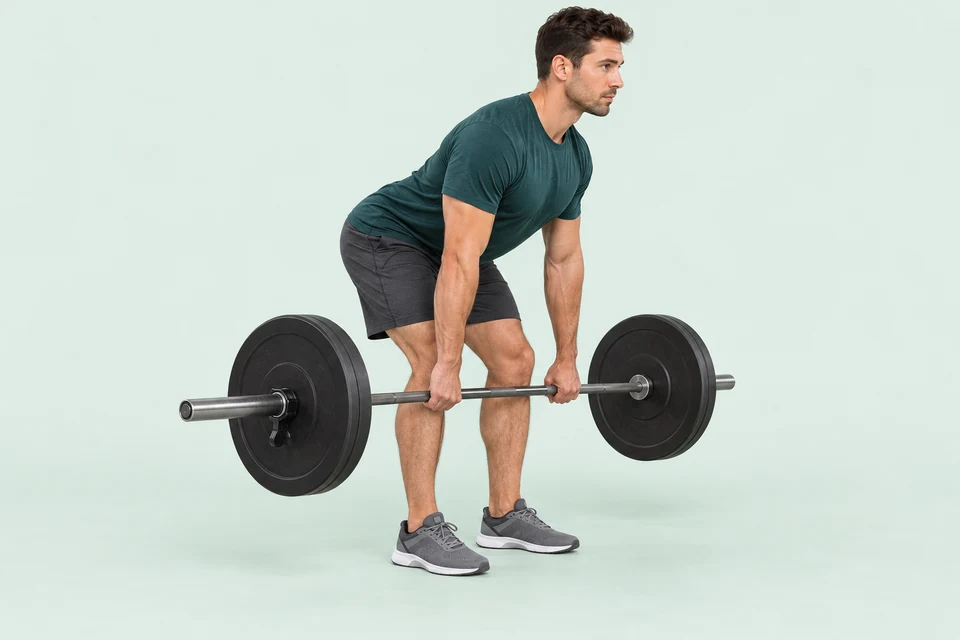
Barbell · Weight plates · Collars
Barbell Romanian deadlift
Hinge at the hips to train the hamstrings and glutes while the back extensors stabilize the torso.
View technique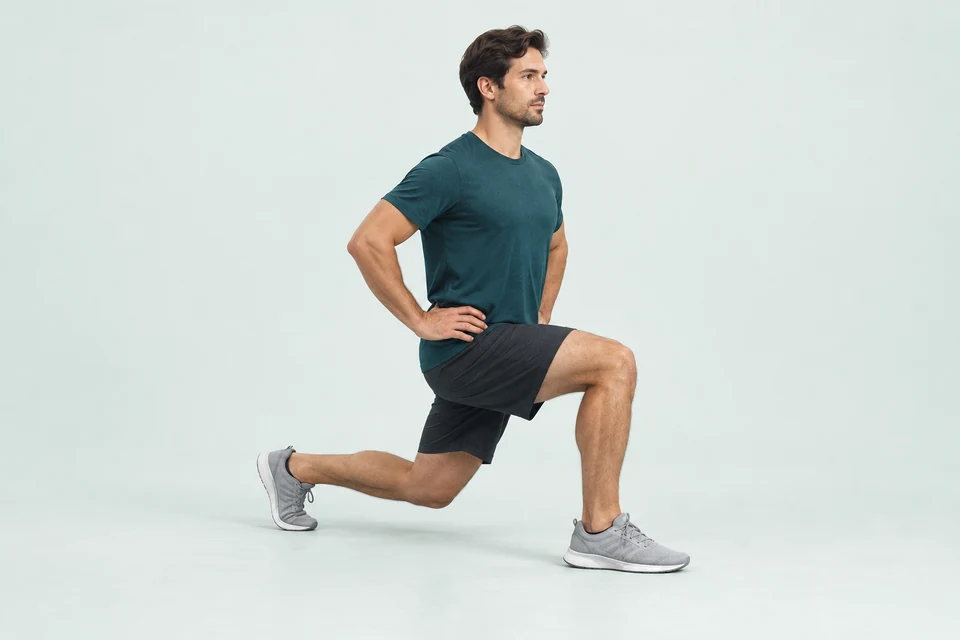
No equipment · Standing
Bodyweight split squat
Bend both knees in a fixed staggered stance. The front leg's quadriceps and glutes work together to raise you again.
View technique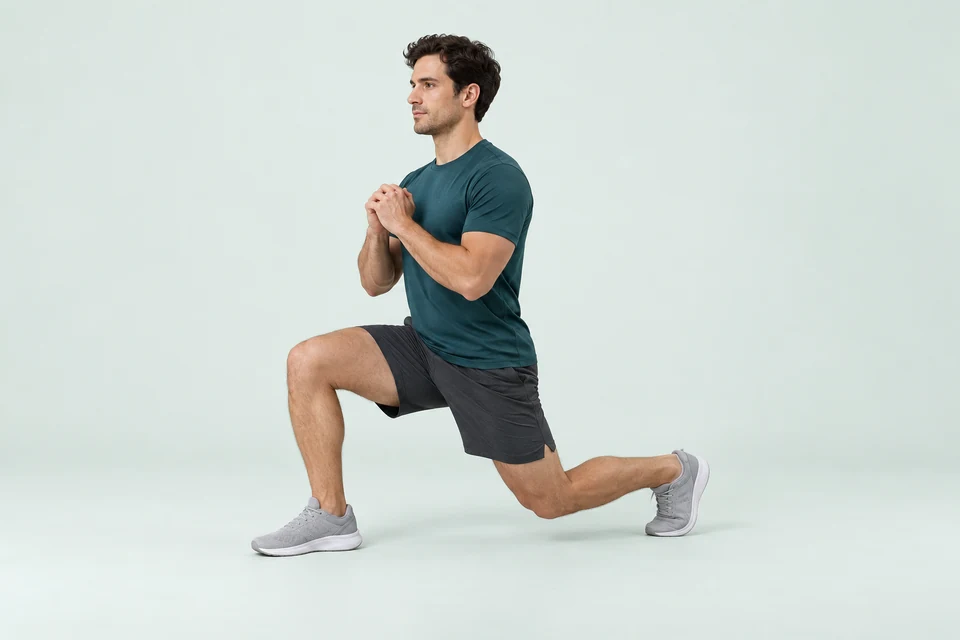
No equipment · Standing
Bodyweight reverse lunge
Step backward and lower with control, then return to standing. This trains the quadriceps and glutes with a changing stance.
View technique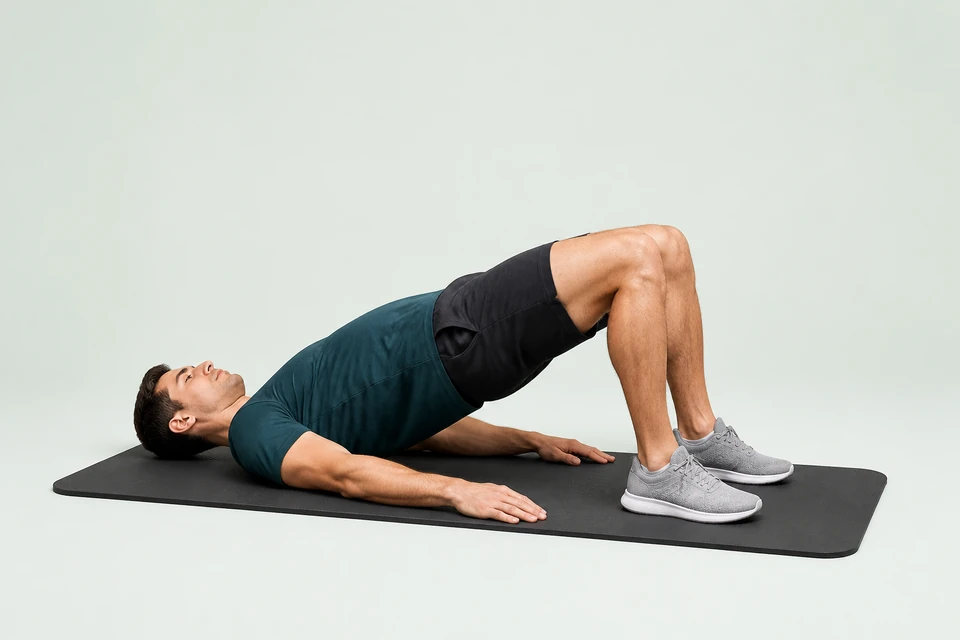
No equipment · Floor
Bodyweight glute bridge
Lift your hips from the floor while your shoulders and feet stay supported. This makes hip extension easy to learn without added weight.
View technique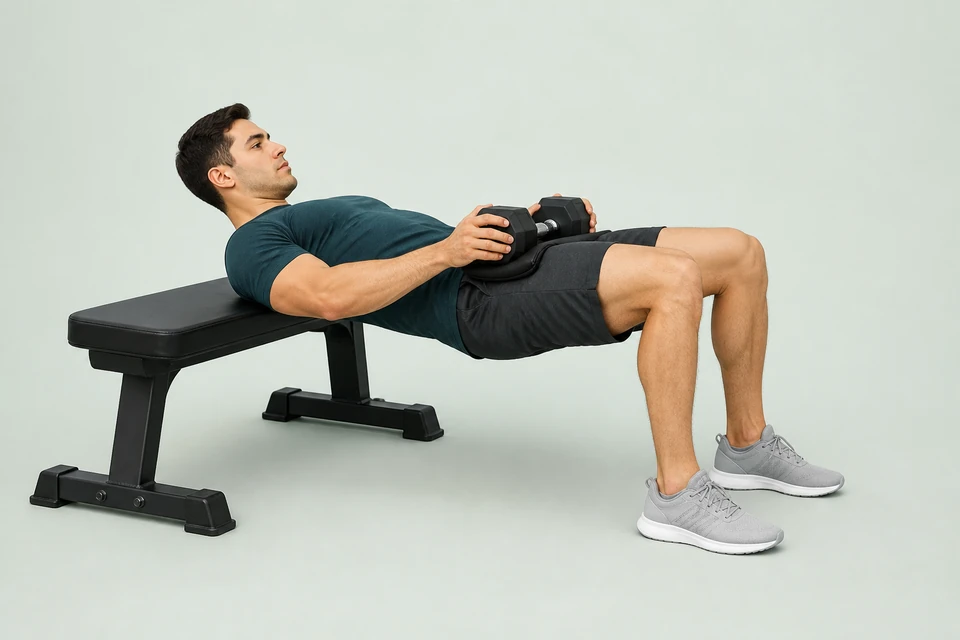
Dumbbell · Bench
Dumbbell hip thrust
With your shoulder blades supported on a bench, move your hips through a larger range and load the same extension pattern.
View technique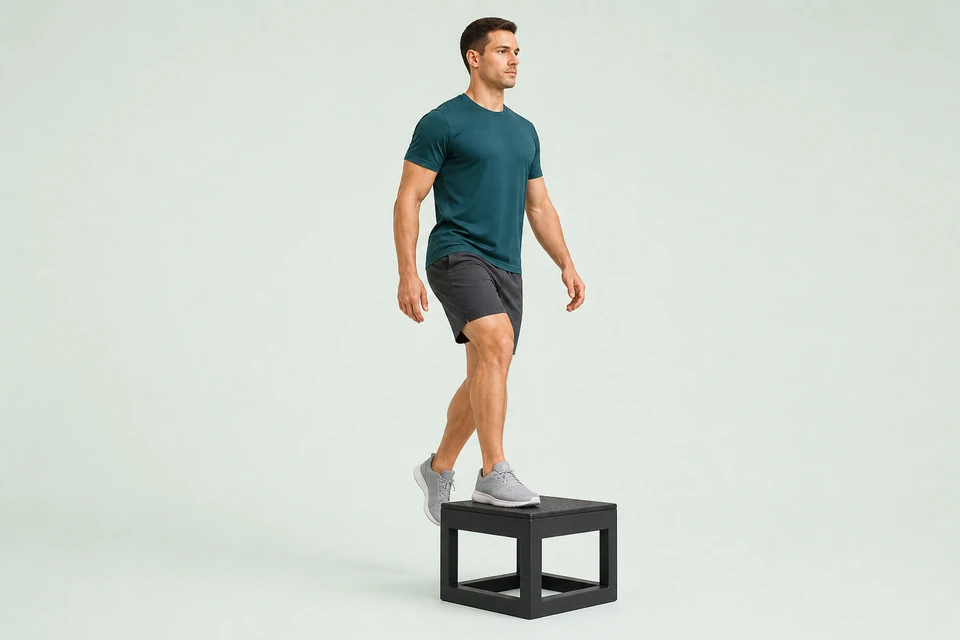
No equipment · Low box
Bodyweight step-up
Step onto a stable box and straighten the working hip. The glutes and quadriceps share the ascent.
View techniqueExercise suggestions for this muscle are being prepared.
Understand the muscle
One large muscle with two insertion paths
The gluteus maximus begins broadly at the back of the pelvis and sacrum. Its fibers run down and outward toward two main attachment areas.
Connection to the iliotibial tract
Superficial fibers
Fibrae superficialesA large superficial portion blends into the iliotibial tract along the outside of the thigh.
Exercises for this region
Connection to the femur
Deep fibers
Fibrae profundaeThe deeper portion attaches to the gluteal tuberosity on the back of the femur.
Exercises for this region
The listed exercises involve this region alongside other parts of the muscle. A muscle head or deep portion is not necessarily trained in isolation.
Simply explained
What does the muscle do?
The gluteus maximus straightens your hip and helps keep your pelvis controlled, especially when you rise or stand on one leg.
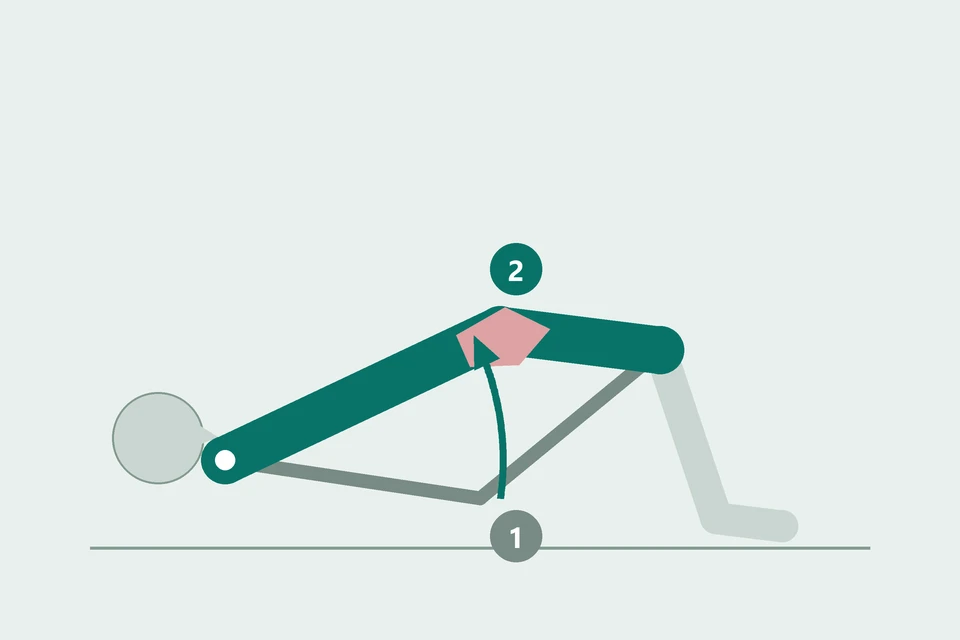
Straighten your hips
Hip extension
Bring the thigh and pelvis into line. This is the main movement in bridges, hip thrusts, and standing up.
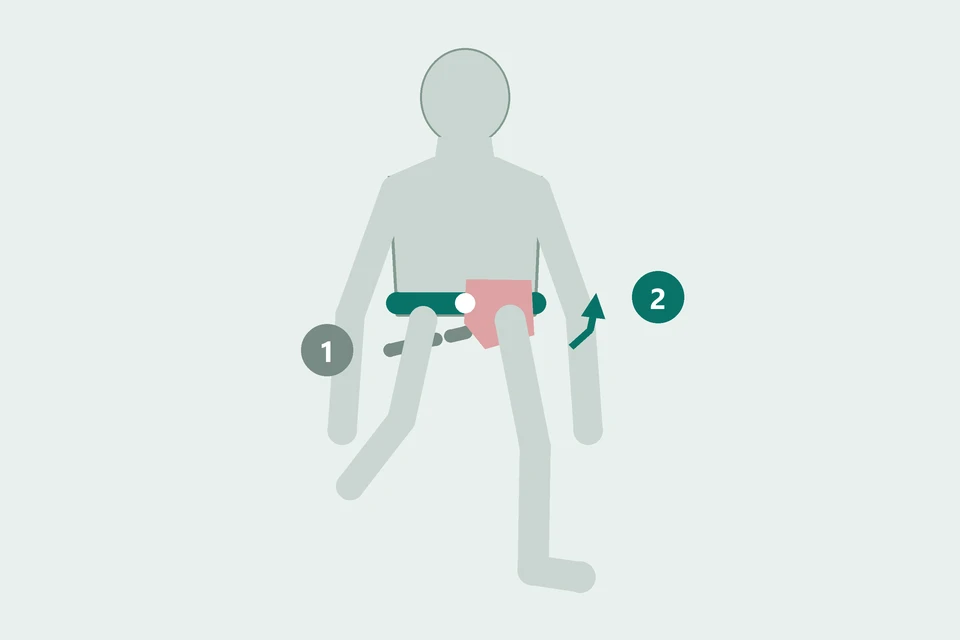
Keep your pelvis level
Pelvic stability
During a step-up or single-leg stance, the gluteal muscles help control the pelvis and thigh.
Often works with
Sources & illustrations
Anatomy and technique: the references below. Region boundaries and movement diagrams are schematic. Exercise images are AI-generated illustrations.