
Anterior thigh muscles
Quadriceps femoris
Musculus quadriceps femoris
Your front thigh muscles straighten the knee and control your descent when going down stairs, sitting down or lowering into a squat.
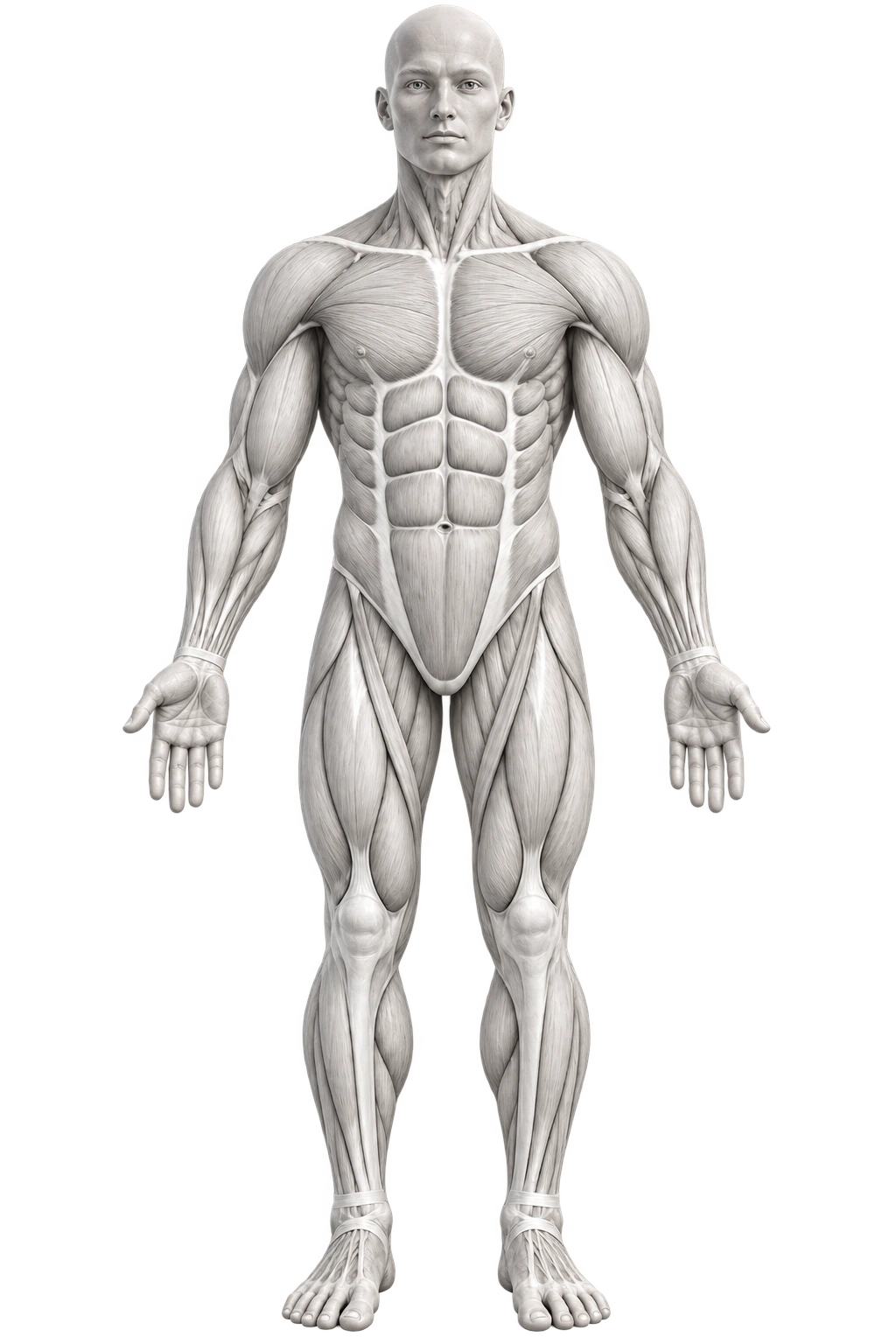
At a glance
- Region
- Front thigh
- Movement pattern
- Knee extension and controlled lowering
- Joint
- Knee and hip joints
Exercises
Exercises for the quadriceps
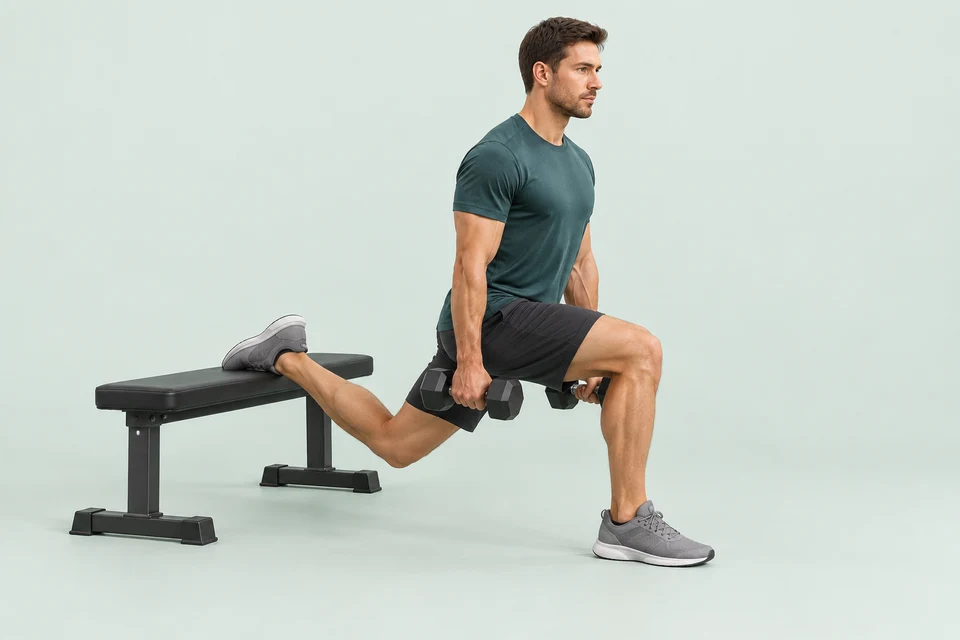
Two dumbbells and a stable low bench
Bulgarian split squat with dumbbells
A rear-foot-elevated split squat trains the quadriceps and glutes of the front leg while challenging balance.
View technique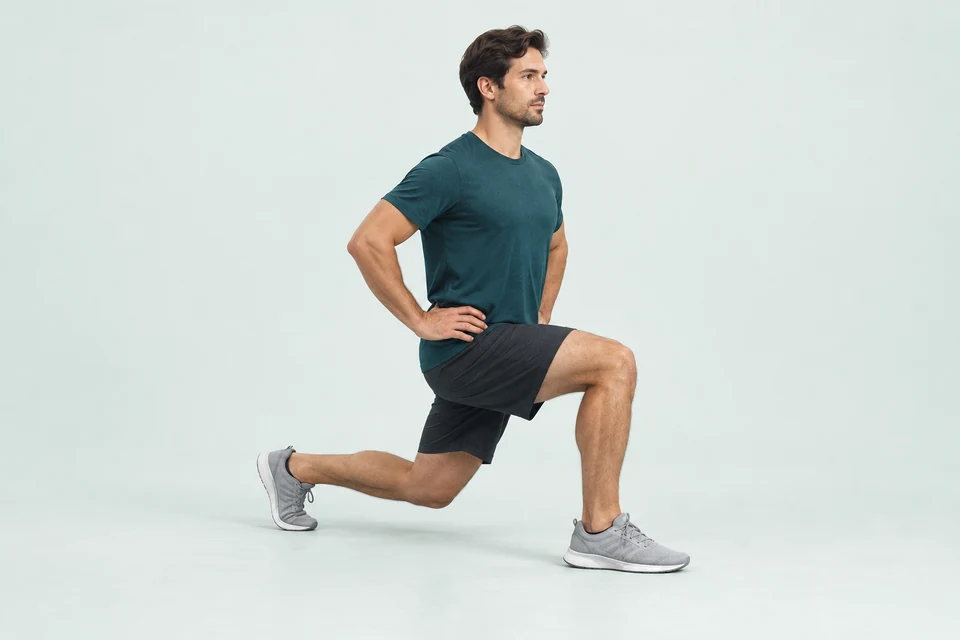
No equipment · Standing
Bodyweight split squat
Bend both knees in a fixed staggered stance. The front leg's quadriceps and glutes work together to raise you again.
View technique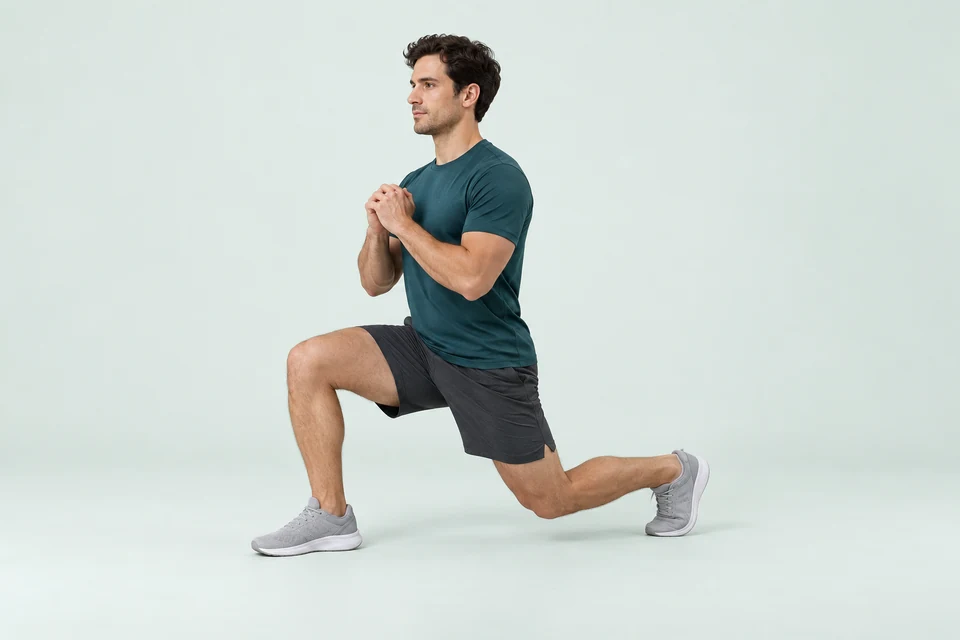
No equipment · Standing
Bodyweight reverse lunge
Step backward and lower with control, then return to standing. This trains the quadriceps and glutes with a changing stance.
View technique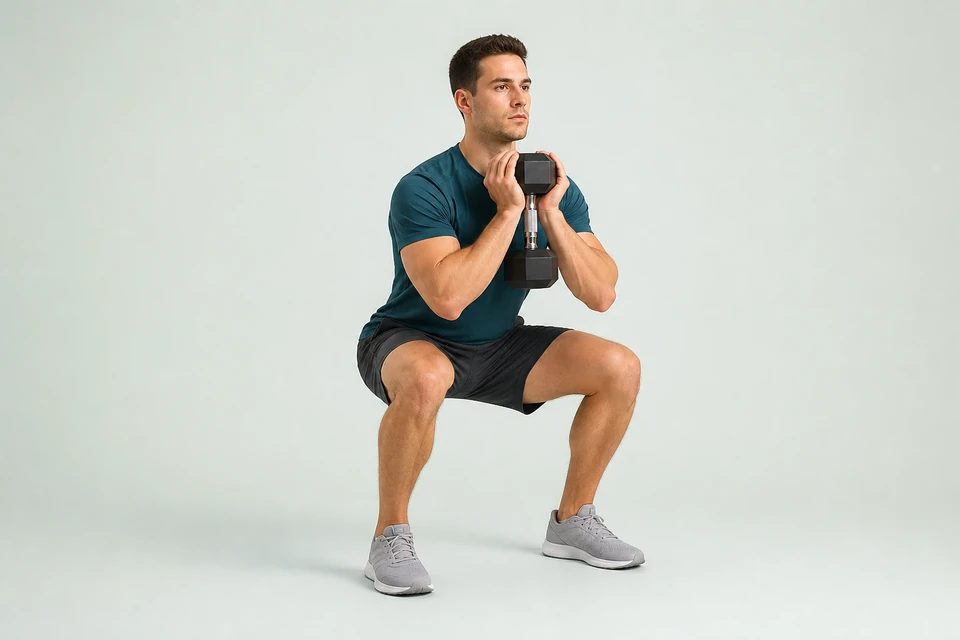
Dumbbell
Dumbbell goblet squat
Squat with one dumbbell close to your chest. Your quads work with your glutes and other muscles.
View technique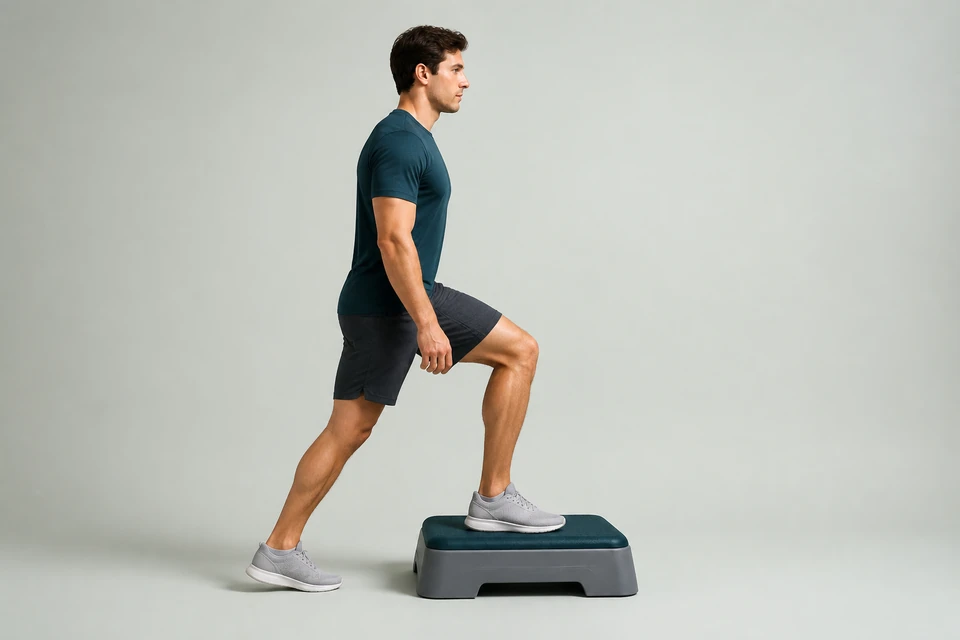
No equipment · Low stable step
Low step-up
Step onto a low platform, then lower slowly. Train one leading leg at a time.
View technique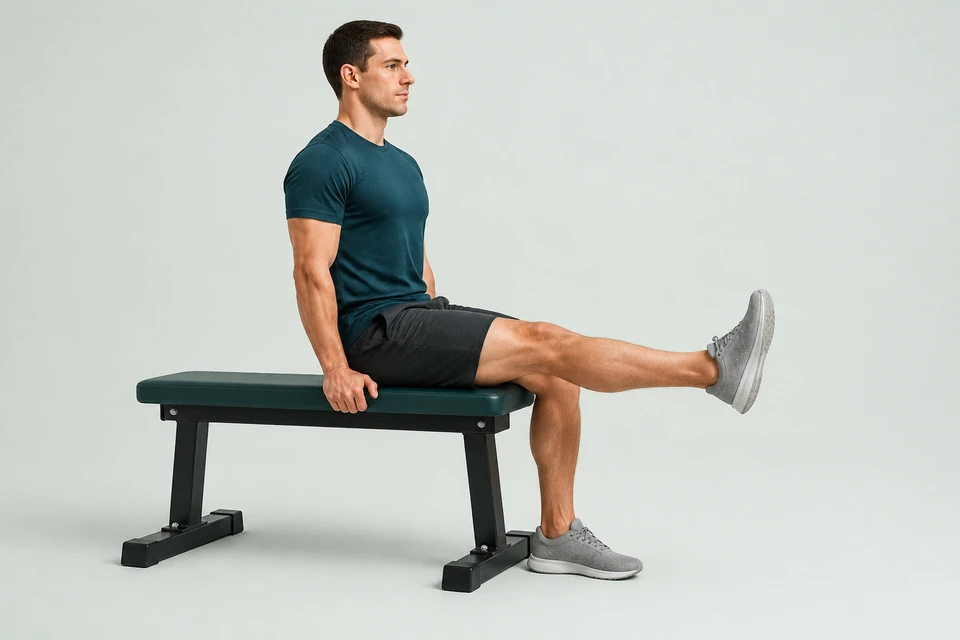
No equipment · Chair or bench
Seated knee extension
Straighten one knee while seated. The thigh stays supported as the lower leg rises.
View technique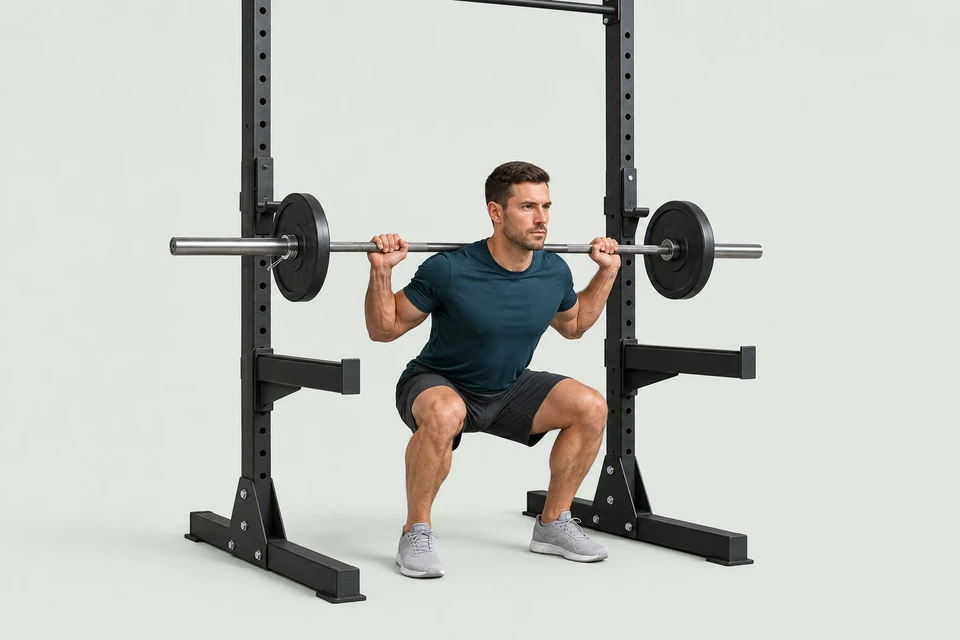
Barbell · Squat rack
Barbell back squat
Squat with a bar across your upper back. Quads and glutes work together.
View technique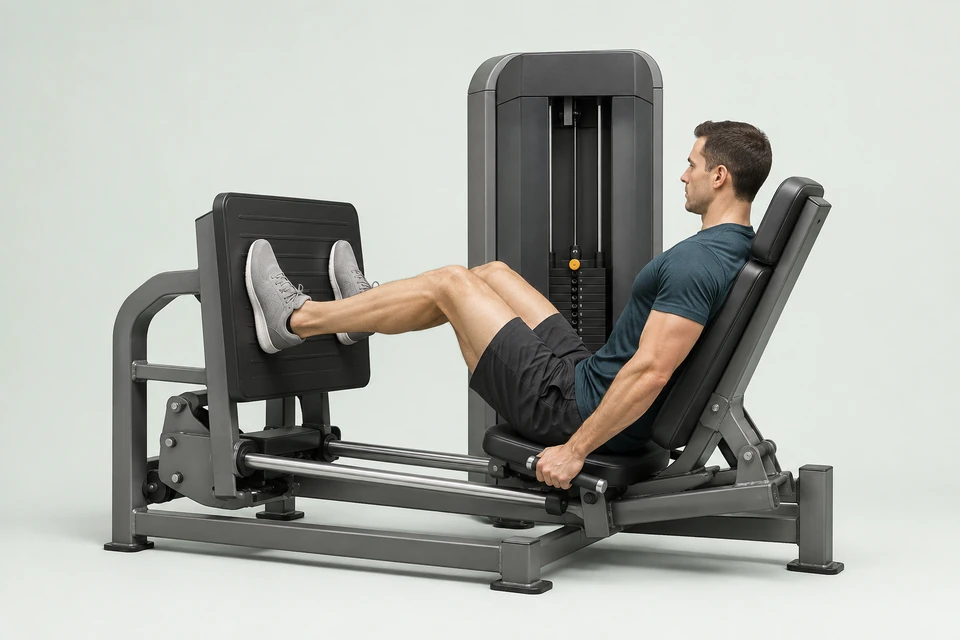
Machine · Seated leg press
Seated leg press
Press through both feet with your back supported. Quads and glutes share the movement.
View technique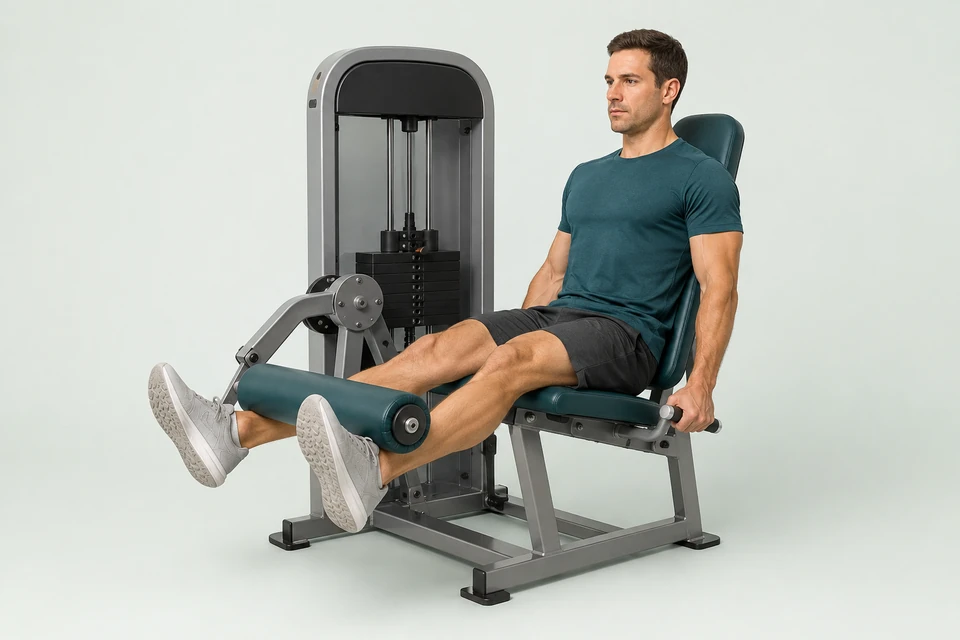
Machine · Leg extension
Machine leg extension
Straighten both knees against a padded roller to focus on your quads.
View techniqueExercise suggestions for this muscle are being prepared.
Understand the muscle
Four main parts, one shared tendon
The four main quadriceps muscles join above the kneecap in a common tendon. Force passes through the kneecap and patellar ligament to the shin. The rectus femoris also crosses the hip.
Superficial middle portion
Rectus femoris
Musculus rectus femorisRuns from the pelvis over the front of the thigh. It helps straighten the knee and lift the thigh forward.
Exercises for this region
Outer quad
Vastus lateralis
Musculus vastus lateralisThe large outer portion starts on the femur and contributes to knee extension through the common quadriceps tendon.
Exercises for this region
Inner quad
Vastus medialis
Musculus vastus medialisThis inner portion is prominent above the knee. It helps extend the knee and contributes to the coordinated guidance of the kneecap.
Exercises for this region
Deep quad
Vastus intermedius
Musculus vastus intermediusLies beneath the rectus femoris, directly on the front of the femur. It extends the knee without crossing the hip.
Exercises for this region
The listed exercises involve this region alongside other parts of the muscle. A muscle head or deep portion is not necessarily trained in isolation.
Simply explained
What does the muscle do?
In simple terms, the quadriceps straightens your knee and helps you stand up, squat, climb stairs, run, and jump.
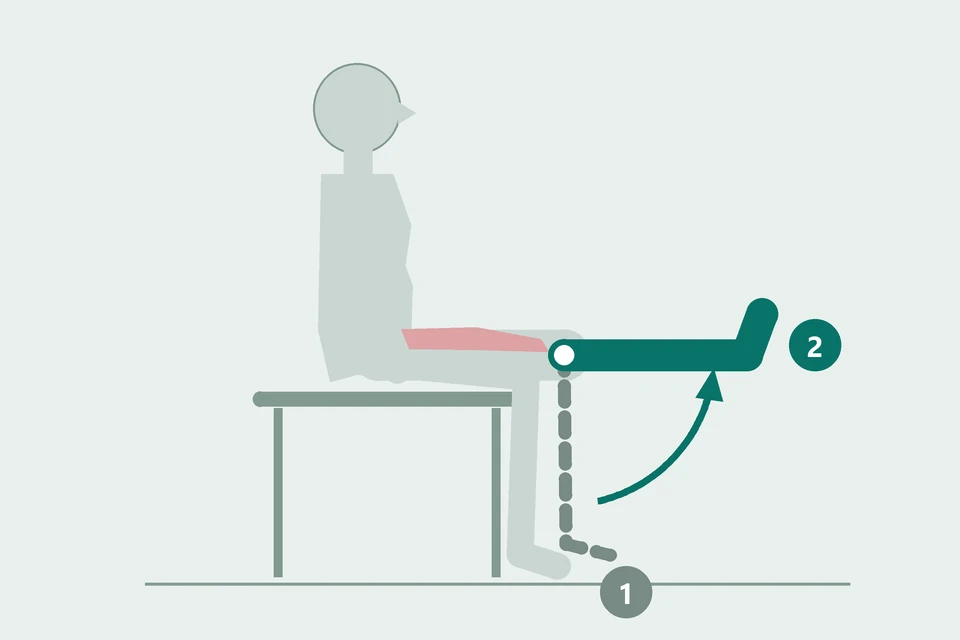
Straighten the knee
Knee extension
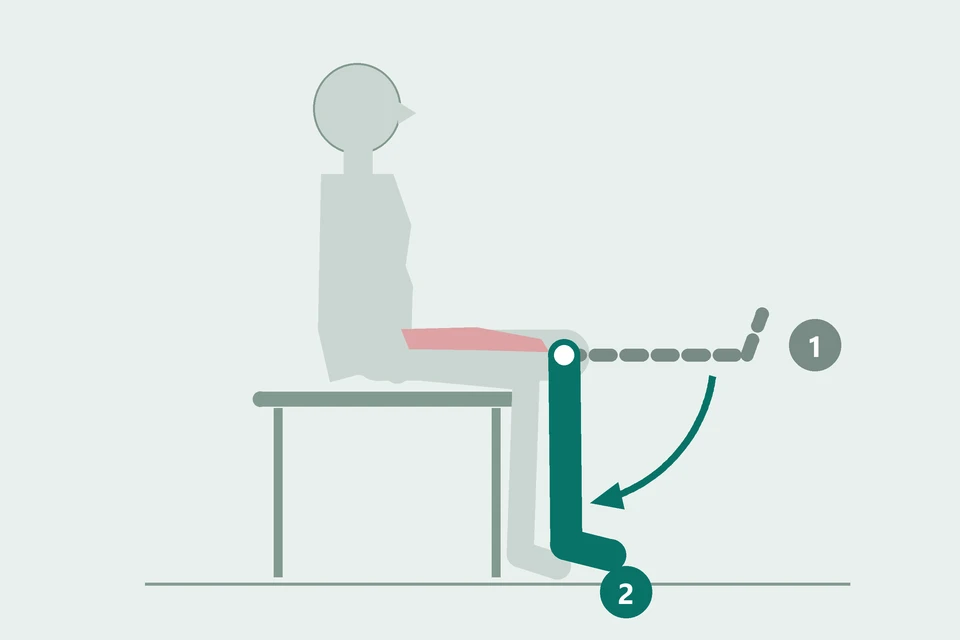
The lower leg straightens relative to the thigh. All four main parts contribute, as in a seated knee extension or when rising from a squat.
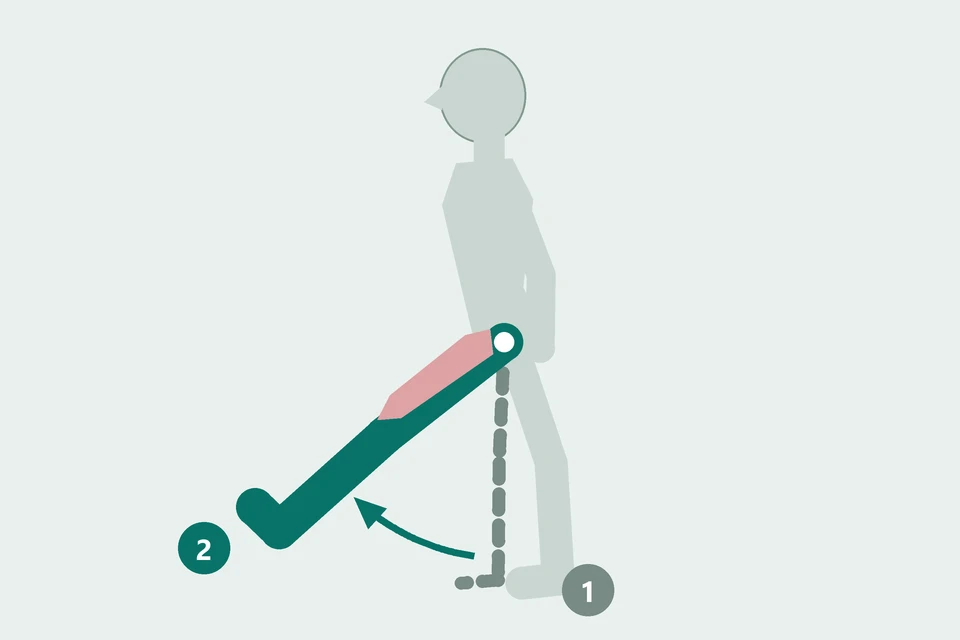
Lift the thigh forward
Hip flexion
The rectus femoris assists the other hip flexors when the thigh moves forward. The three vastus muscles act at the knee and do not cross the hip.
Slow the lowering phase
Eccentric control
The quadriceps also produces force as it lengthens. It controls knee bending when you lower the foot after a seated extension or descend into a squat.
Often works with
Sources & illustrations
Anatomy and technique: the references below. Region boundaries and movement diagrams are schematic. Exercise images are AI-generated illustrations.
- NASM · Bulgarian Split Squat
- Physitrack · Split Squat
- PureGym · Reverse Lunges
- StatPearls / NCBI · Thigh Quadriceps Muscle
- StatPearls / NCBI · Rectus Femoris
- PubMed · Quadriceps activation during eccentric squats
- PureGym · Goblet Squat
- ACE · Step-up
- Leeds Teaching Hospitals · Knee Exercises
- ACE · Back Squat
- ACE · Seated Leg Press
- PureGym · Leg Extensions