
Medial thigh muscles
Adductors
Musculi adductores femoris
Your inner-thigh muscles bring your legs together and help control your hips — when walking, squatting or changing direction.
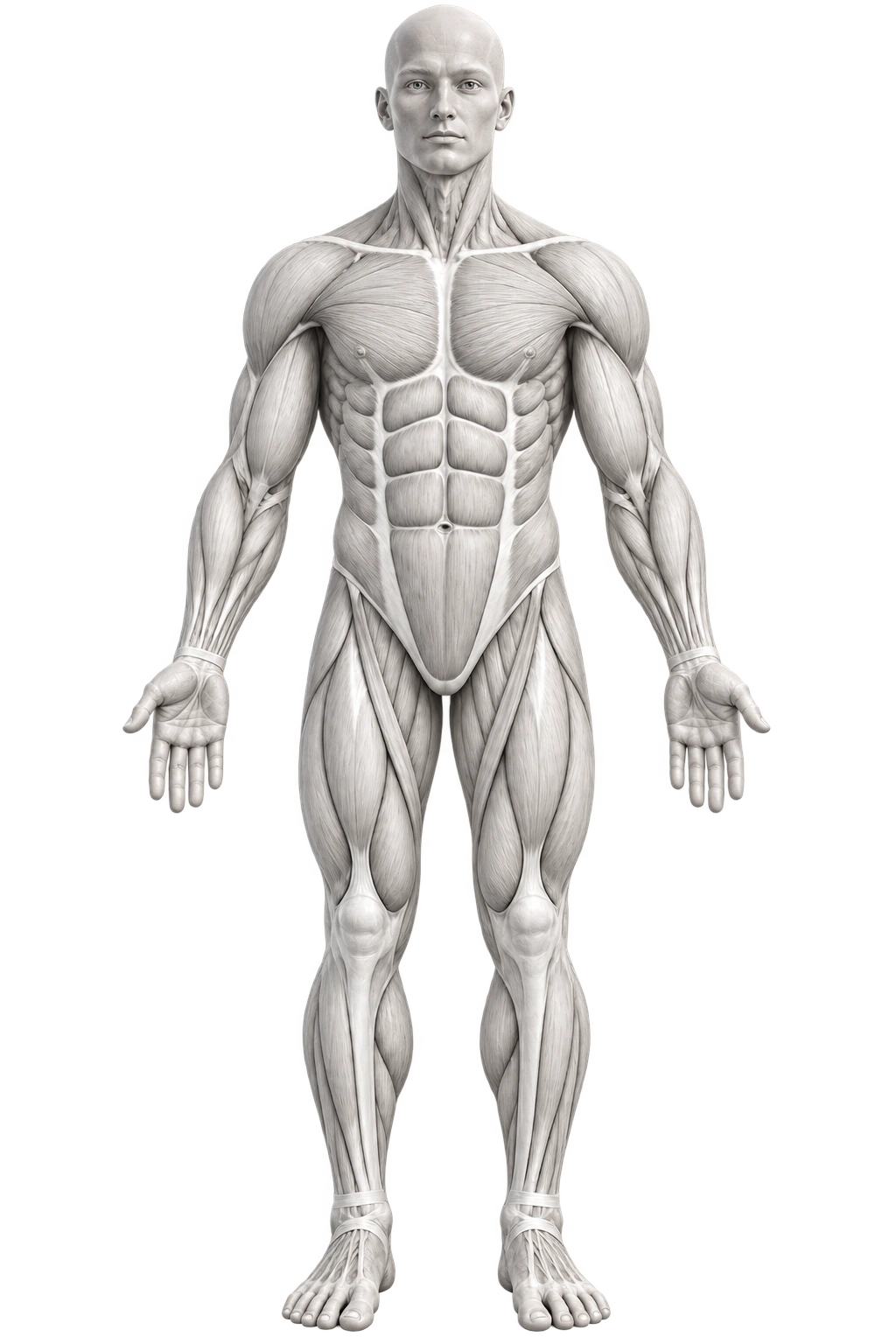
At a glance
- Region
- Inner thigh
- Movement pattern
- Hip adduction and lower-body stability
- Joint
- Hip joint and pelvis
Exercises
Exercises for the adductors
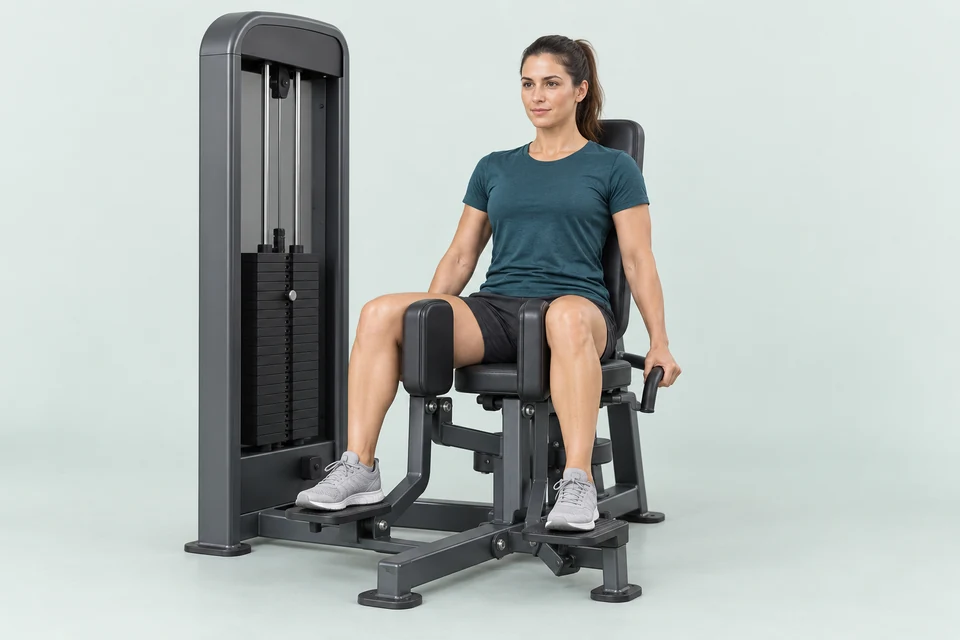
Machine · Seated
Seated hip adduction machine
Bring your thighs together against machine resistance. The seated support makes the load easy to adjust for your adductors.
View technique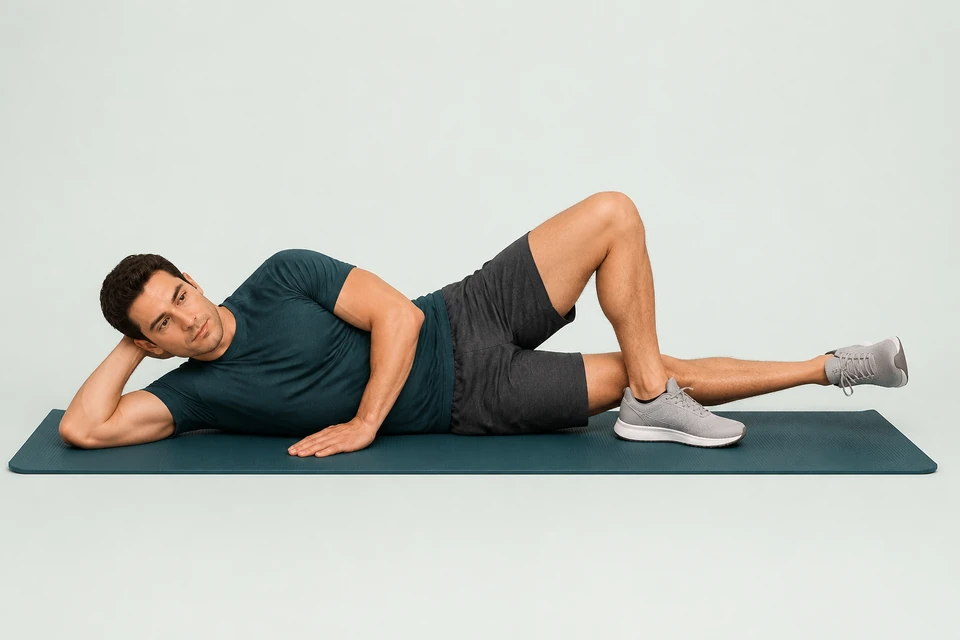
No equipment · Mat
Side-lying hip adduction
Lift the lower leg a short distance while the upper leg supports you.
View technique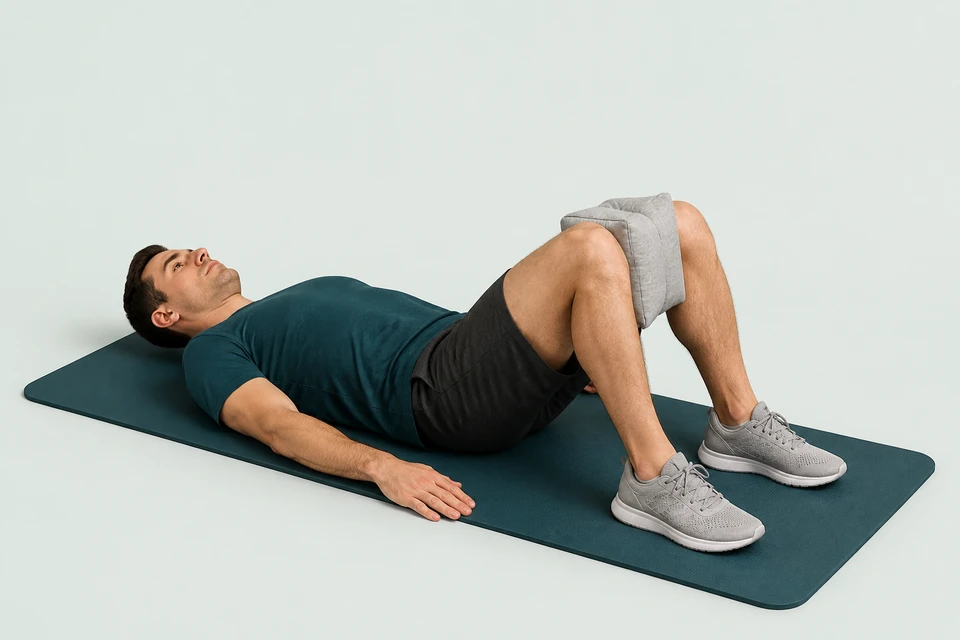
No equipment · Pillow and mat
Adductor pillow squeeze
Press a pillow between your knees while your body stays supported on the mat.
View technique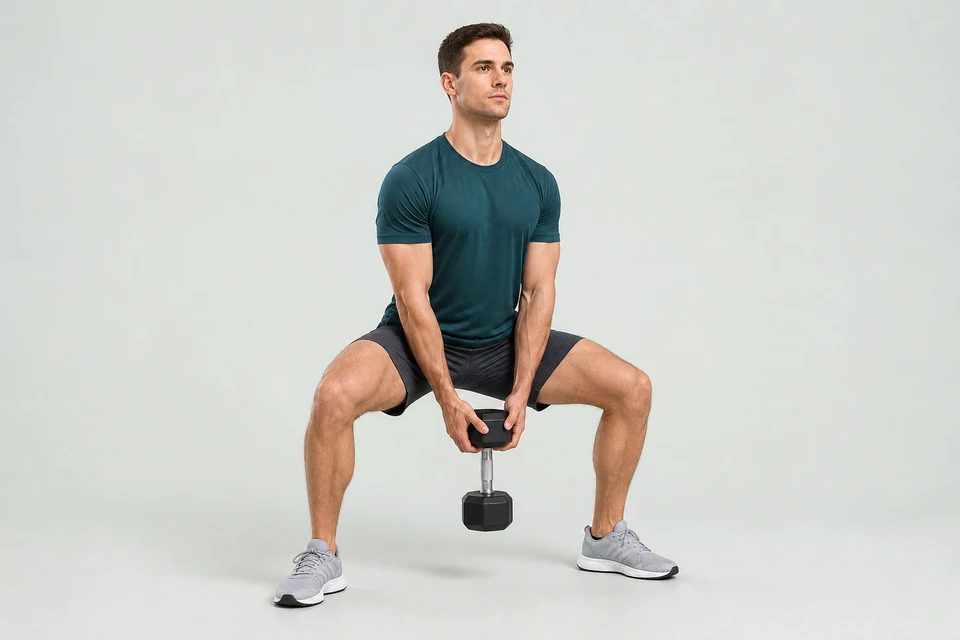
Dumbbell
Dumbbell sumo squat
A wide-stance squat trains the inner thighs together with the glutes and quadriceps.
View techniqueExercise suggestions for this muscle are being prepared.
Understand the muscle
Several muscles along the inner thigh
Most adductors connect the pelvis to the thigh bone. The gracilis continues past the knee to the shin. These muscles share the task of bringing the thigh inward, with additional roles depending on their attachments.
Long and short adductors
Adductor longus and brevis
Musculus adductor longus · Musculus adductor brevisBoth run from the pubic bone to the femur and pull the thigh inward. The shorter brevis lies deeper than the longus.
Exercises for this region
Largest muscle in the group
Adductor magnus
Musculus adductor magnusThis broad muscle has adductor and hamstring portions. Its hamstring portion also helps extend the hip.
Exercises for this region
Long, slender inner-thigh muscle
Gracilis
Musculus gracilisIt crosses both hip and knee, attaching to the inner shin. Alongside hip adduction, it assists knee bending.
Exercises for this region
High on the inner thigh
Pectineus
Musculus pectineusThis short muscle runs from the pubic bone to the upper femur. It helps bring the thigh inward and forward.
Exercises for this region
The listed exercises involve this region alongside other parts of the muscle. A muscle head or deep portion is not necessarily trained in isolation.
Simply explained
What does the muscle do?
In simple terms, the adductors pull your leg inward and help control your hips during squats, lunges, running, and side-to-side movement.
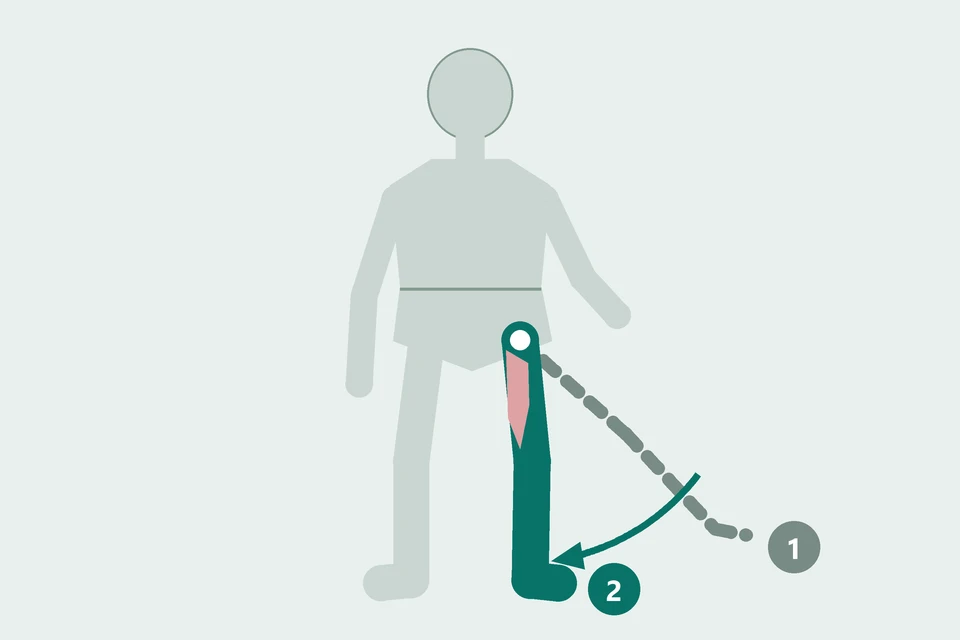
Bring the leg inward
Hip adduction
The thigh moves toward the body's midline. In side-lying adduction, lifting the lower leg creates this movement against gravity.
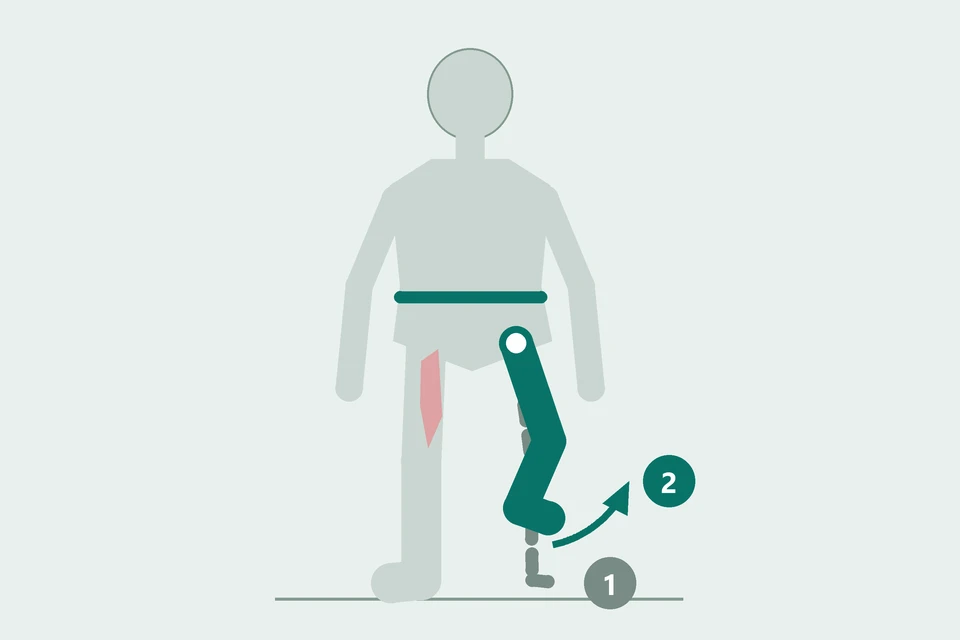
Control the pelvis
Hip stability
With a foot planted, the adductors help control the thigh and pelvis. They work with the glutes and other muscles as you shift weight or take a step.
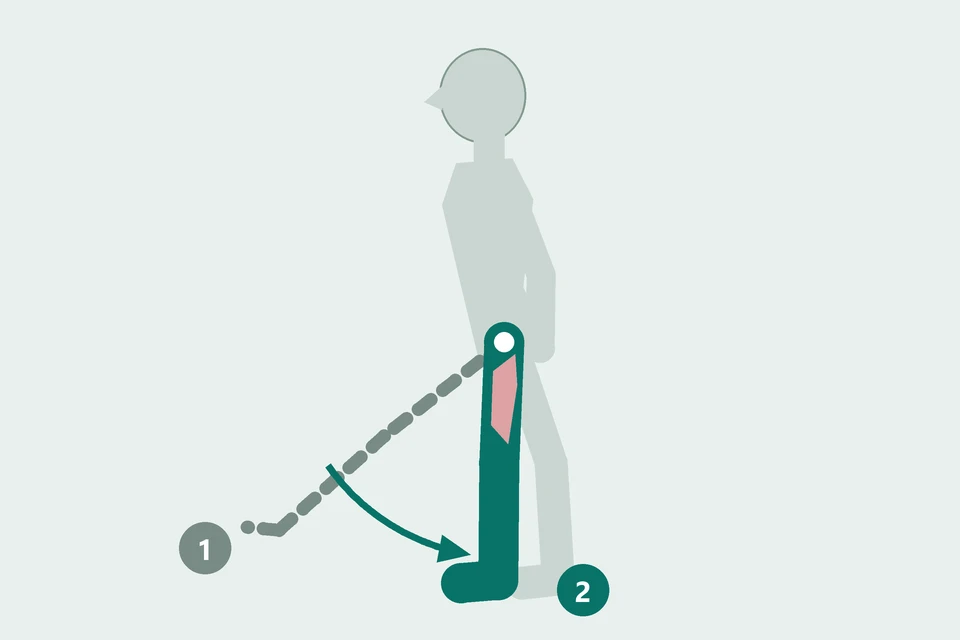
Help straighten the hip
Hip extension assistance
The hamstring portion of adductor magnus helps extend the hip. The adductors contribute more than simply squeezing the legs together.
Often works with
Sources & illustrations
Anatomy and technique: the references below. Region boundaries and movement diagrams are schematic. Exercise images are AI-generated illustrations.