
Abdominal muscles
Rectus abdominis
Musculus rectus abdominis
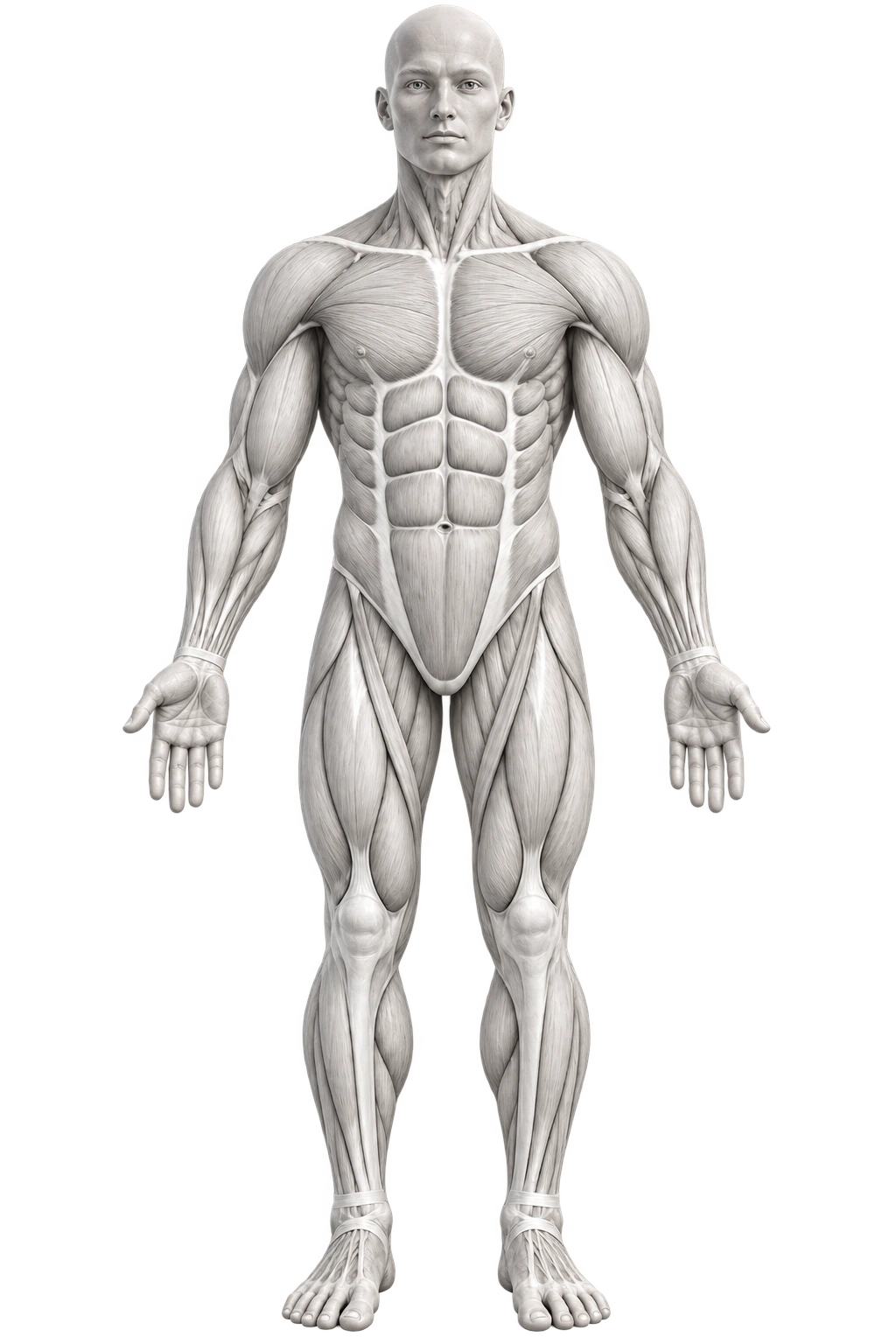
The rectus abdominis runs along the front of your abdomen. It brings your rib cage and pelvis closer together and helps keep your torso steady during movement.
At a glance
- Region
- Core
- Movement pattern
- Core flexion and stabilization
- Joint
- Spine and pelvis
Exercises
Exercises for the abs
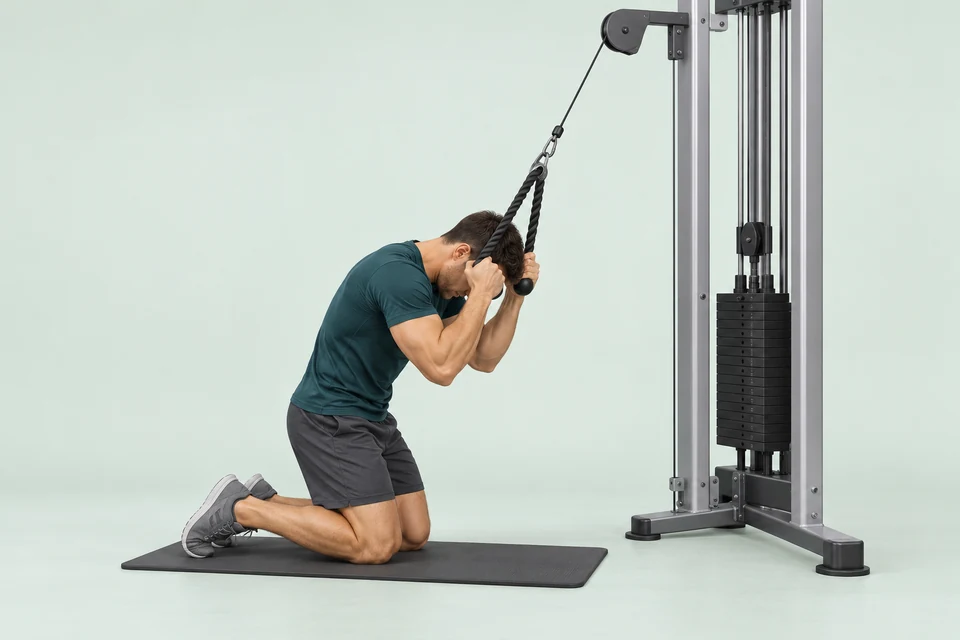
Cable machine · High pulley · Rope
Kneeling cable crunch
Curl the ribs toward the pelvis against a high cable to train the abdominal wall.
View technique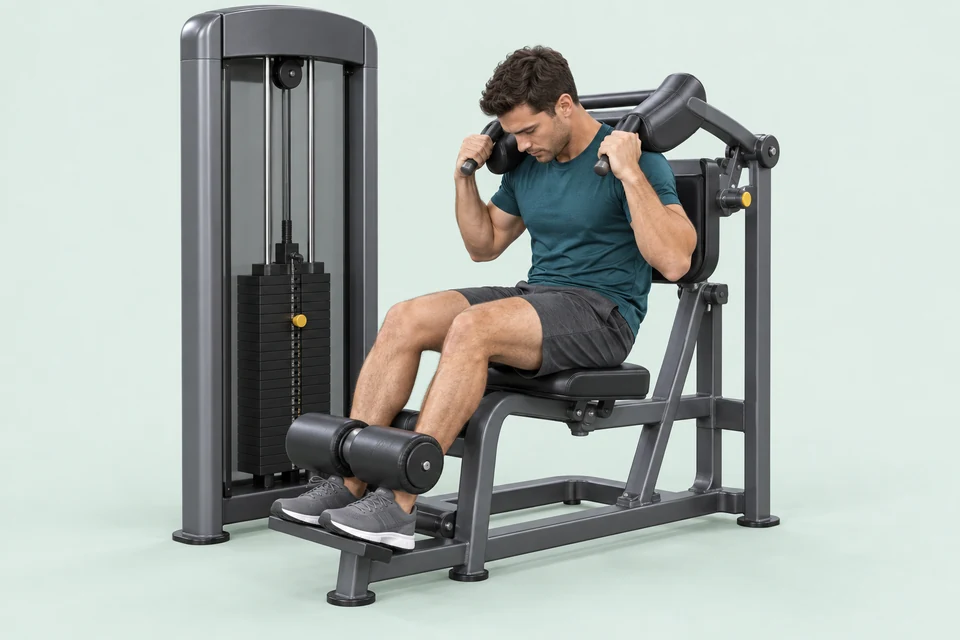
Machine · Adjustable seat and pads
Abdominal crunch machine
Flex the torso against a guided resistance while the pelvis stays supported.
View technique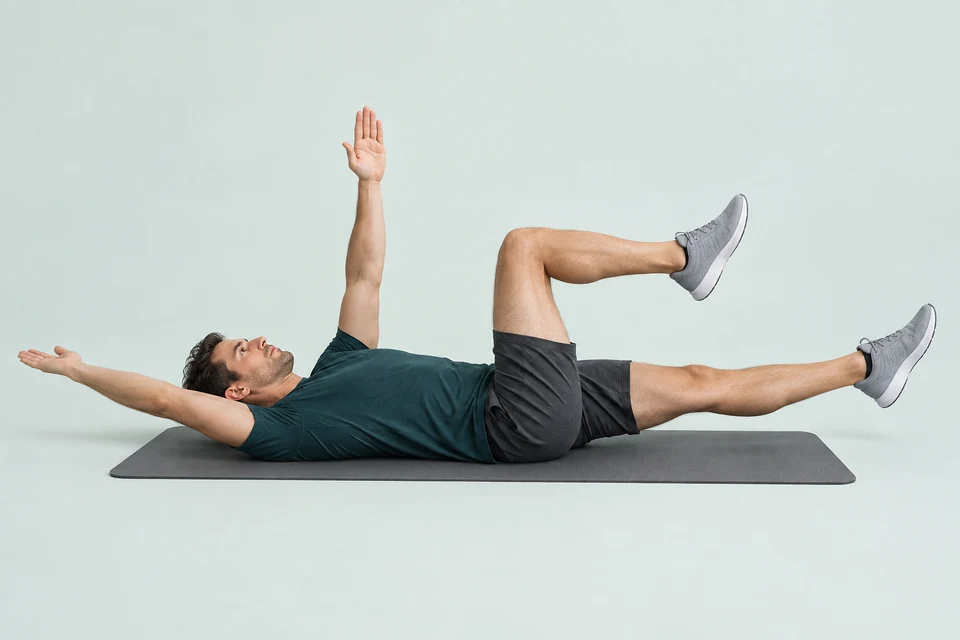
No equipment · Mat
Dead bug
Move the opposite arm and leg while keeping your torso steady. The abdominal muscles resist extension of the lower back.
View technique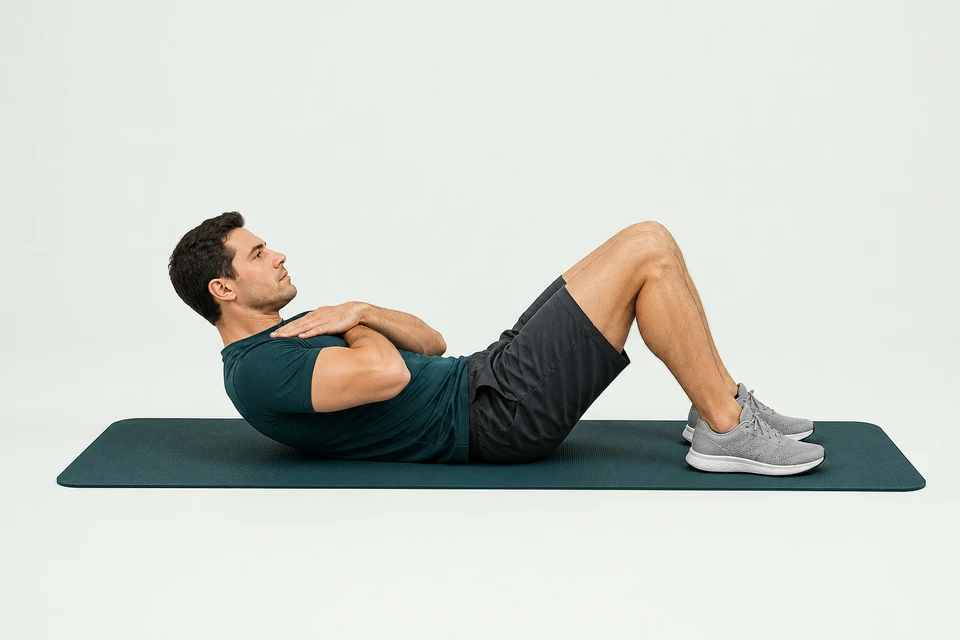
No equipment · Mat
Crunch
A small upper-body curl brings the rib cage toward the pelvis.
View technique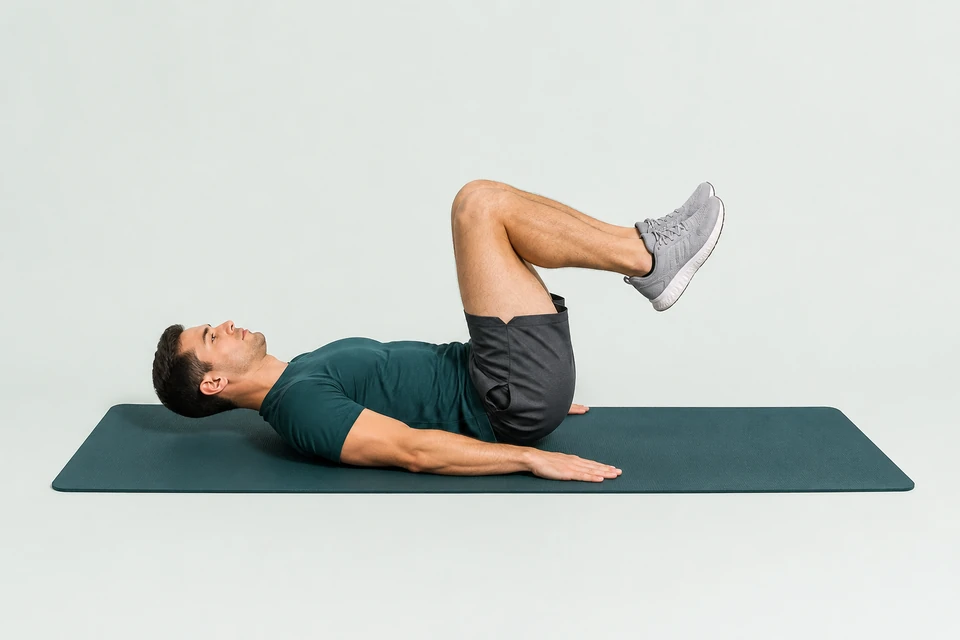
No equipment · Mat
Reverse crunch
Roll the pelvis toward the chest while the head and shoulders stay supported.
View technique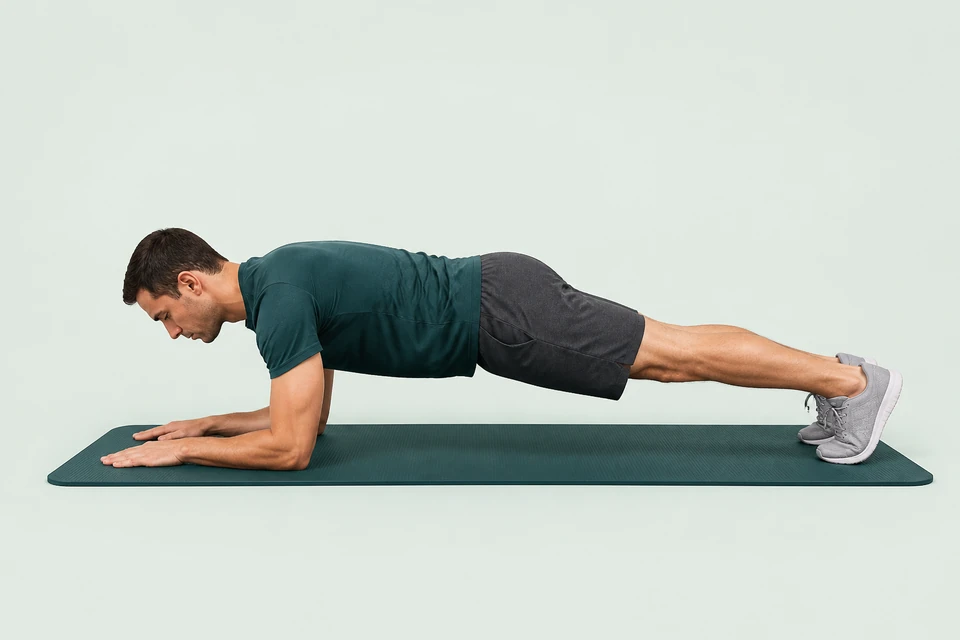
No equipment · Mat
Forearm plank
The abs work with the rest of the core to keep the torso from sagging.
View techniqueExercise suggestions for this muscle are being prepared.
Understand the muscle
Two muscle columns, divided by tendon bands
The rectus abdominis runs from the pubic bone to the lower chest inside a connective-tissue sheath. Its familiar six-pack appearance comes from tendinous intersections within the paired muscle.
Along the front of the abdomen
Left and right muscle columns
Musculus rectus abdominisThe two sides run vertically between pelvis and rib cage. They work together when you curl the torso.
Exercises for this region
Horizontal tendon bands
Tendinous intersections
Intersectiones tendineaeThese bands divide the muscle into visible segments. The upper and lower regions remain parts of the same muscle.
This is an attachment or connective-tissue structure, not a separate contractile muscle region. The exercises for the whole muscle train the associated movement.
Connective tissue along the midline
Linea alba
Linea albaThis fibrous seam lies between the two muscle columns and connects the connective-tissue layers of the abdominal wall.
This is an attachment or connective-tissue structure, not a separate contractile muscle region. The exercises for the whole muscle train the associated movement.
The listed exercises involve this region alongside other parts of the muscle. A muscle head or deep portion is not necessarily trained in isolation.
Simply explained
What does the muscle do?
You can curl the chest toward the pelvis, roll the pelvis toward the chest, or hold both steady. The rectus abdominis works with the rest of your core in all three tasks.
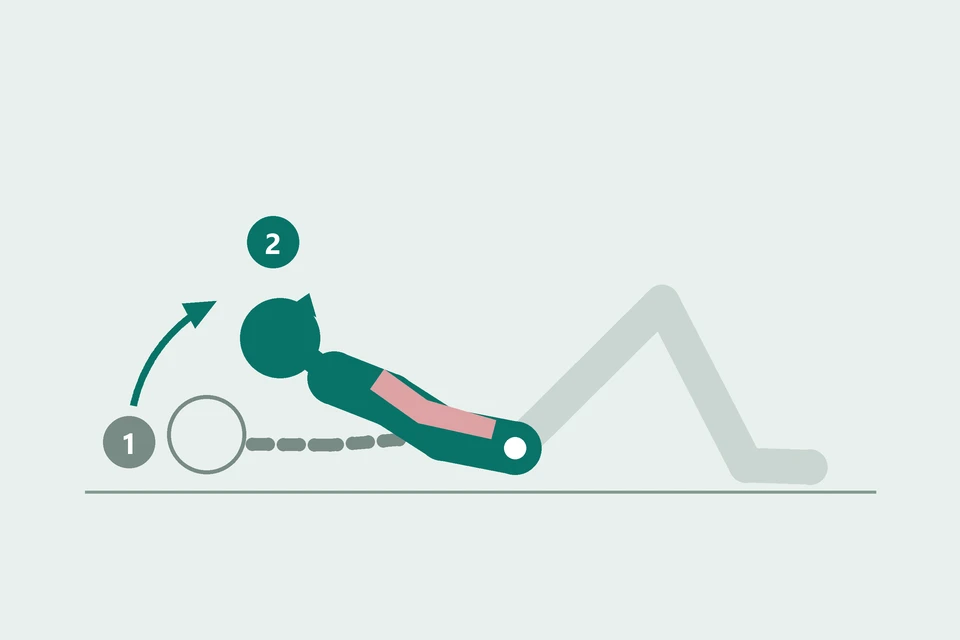
Curl the chest forward
Trunk flexion
The ribs move toward the pelvis. In a crunch, the upper back lifts while the pelvis stays on the mat.
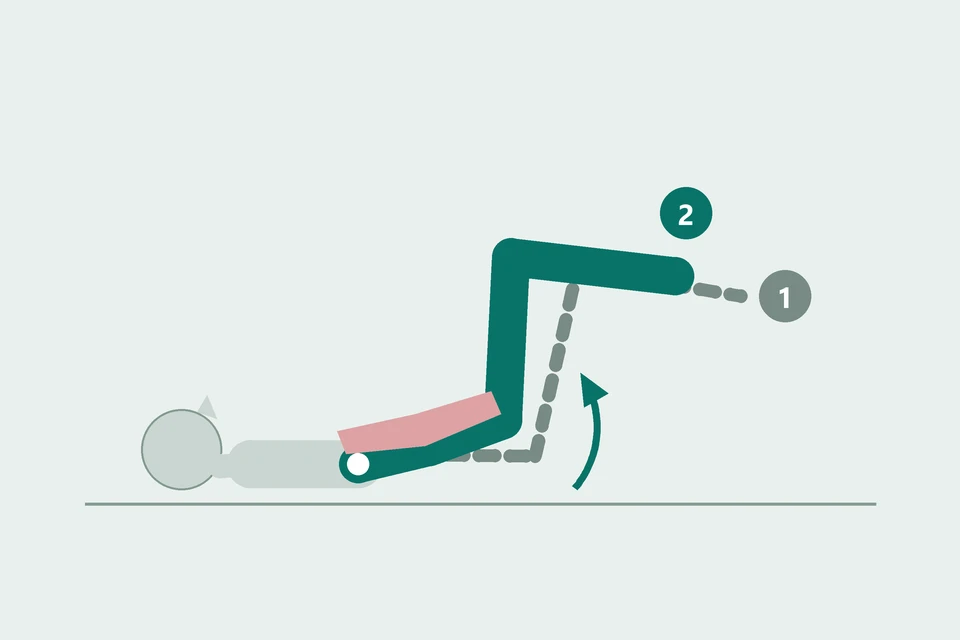
Roll the pelvis toward the ribs
Posterior pelvic tilt
With the chest supported, the lower attachment moves toward the ribs. A reverse crunch combines this tilt with a small pelvic lift.
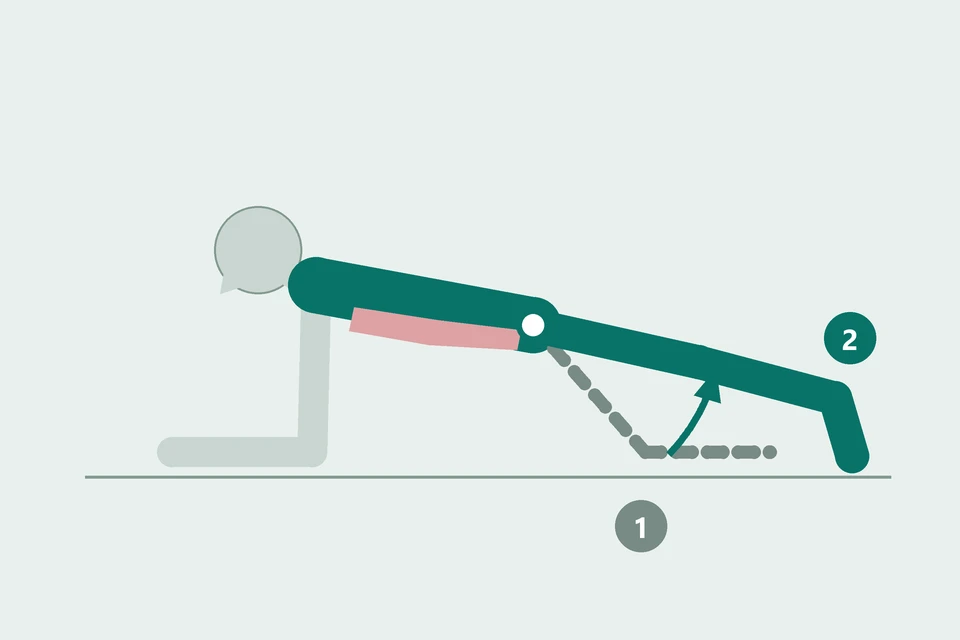
Keep the torso steady
Core stability
The abs help resist excessive back extension. In a plank, they work with the obliques and other muscles to maintain your position.
Often works with
Sources & illustrations
Anatomy and technique: the references below. Region boundaries and movement diagrams are schematic. Exercise images are AI-generated illustrations.