
Abdominal muscles
External obliques
Musculus obliquus externus abdominis
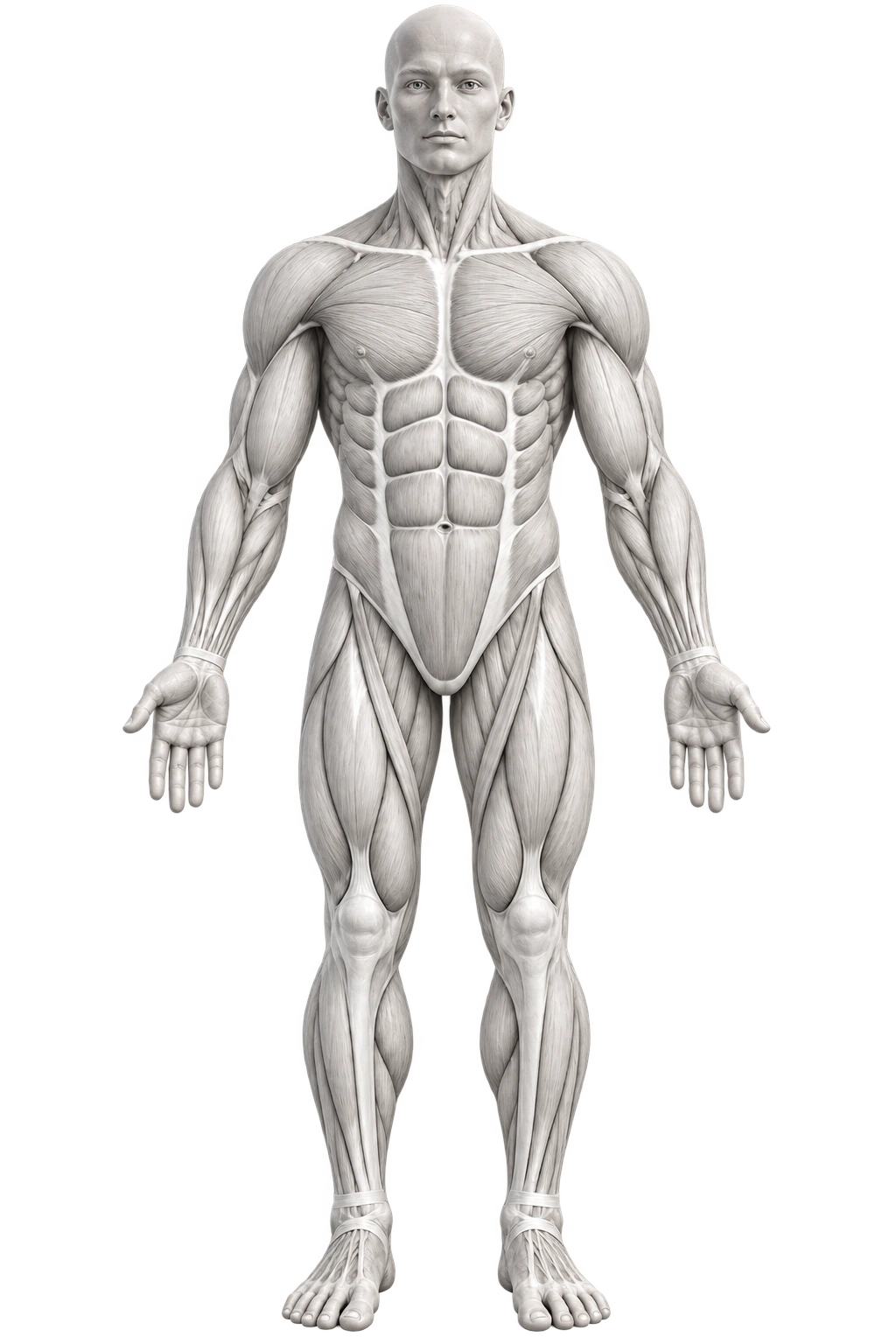
Your outer side abs help you turn your torso and keep it steady — for example when carrying a weight in one hand.
At a glance
- Region
- Side abdomen
- Movement pattern
- Rotation and lateral trunk stability
- Joint
- Spine, ribs, and pelvis
Exercises
Exercises for the side abs
No equipment · Mat
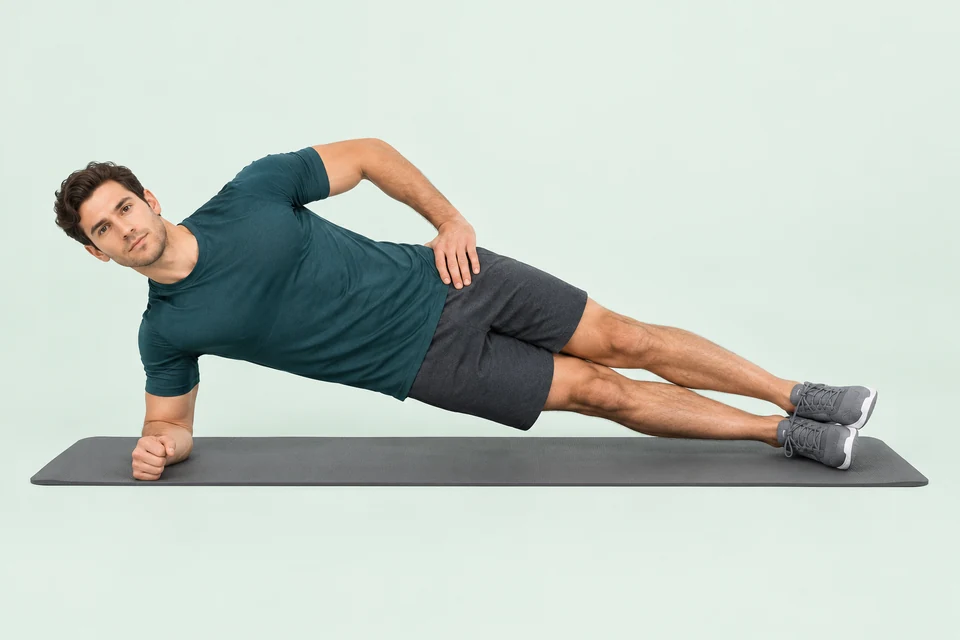
Straight-leg side plank
Hold a straight side-on body line supported on the forearm and feet to train lateral trunk stability.
View technique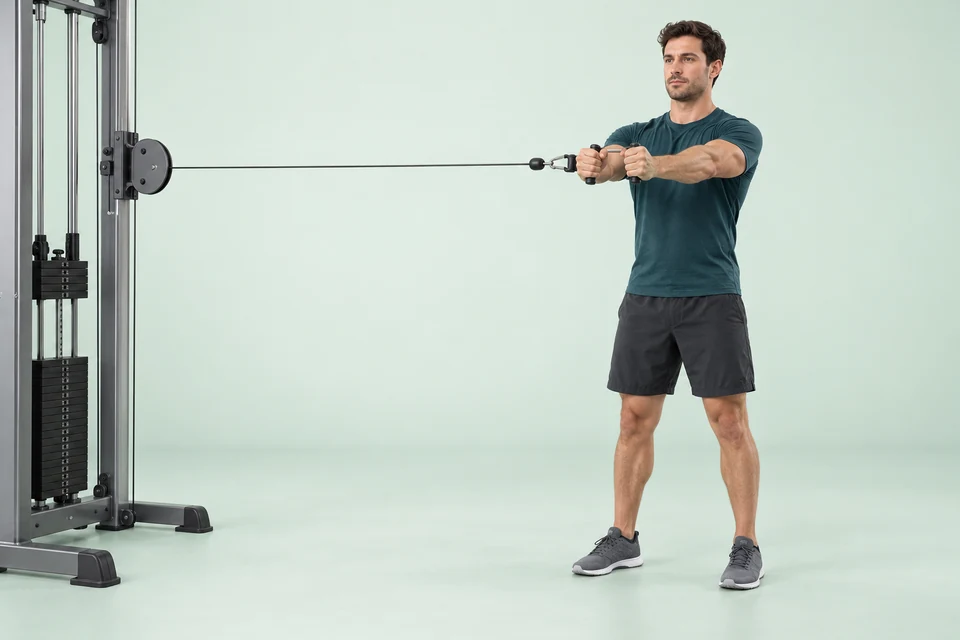
Cable machine · Chest-height pulley · Handle
Cable Pallof press
Resist the cable's sideways pull while pressing the hands forward; the torso stays unrotated.
View technique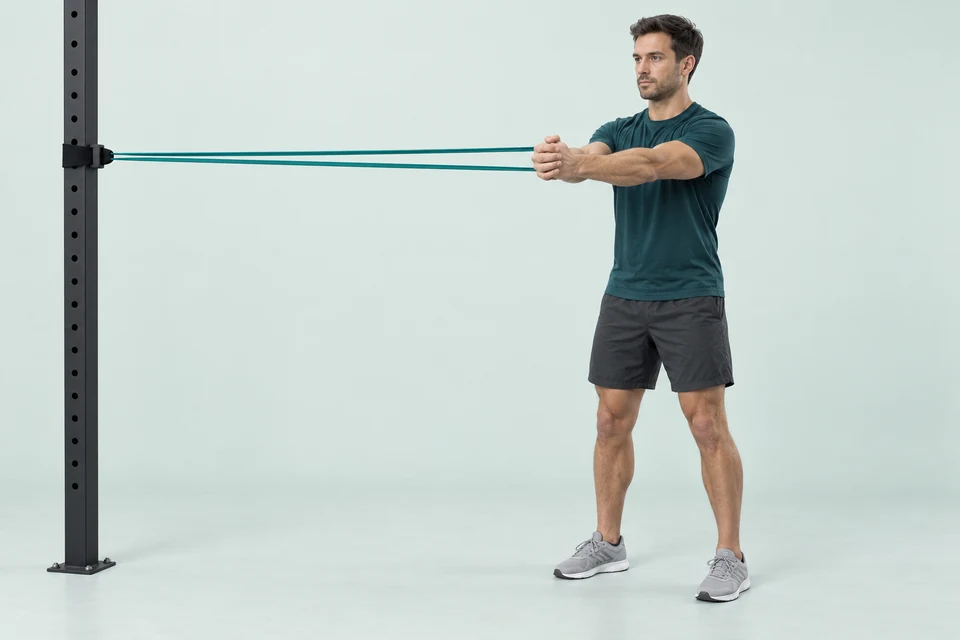
Resistance band · Secure chest-height anchor
Pallof press with resistance band
Press your hands forward while a band pulls from the side. Your obliques work with the rest of your core to resist rotation.
View technique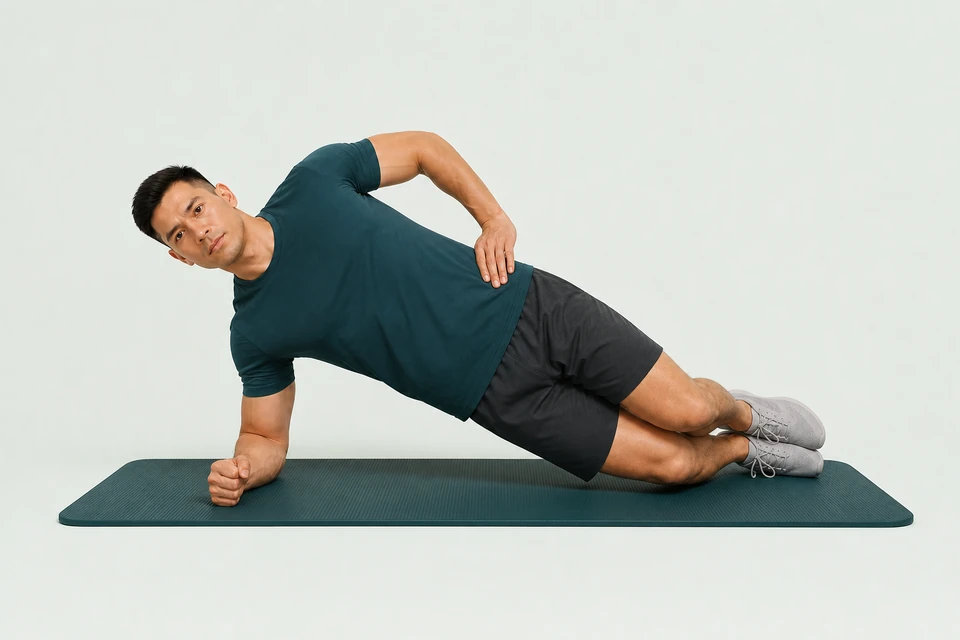
No equipment · Mat
Knee-supported side plank
Support yourself on one forearm and bent knees while your side abs help hold your hips up.
View technique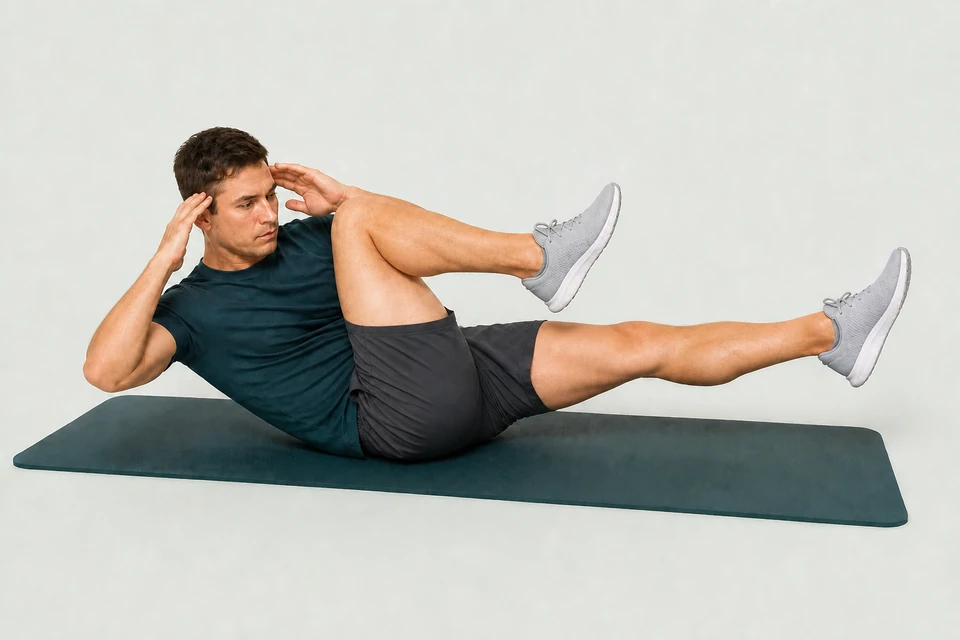
No equipment · Mat
Bicycle crunch
Slowly turn one shoulder toward the opposite knee while extending the other leg.
View technique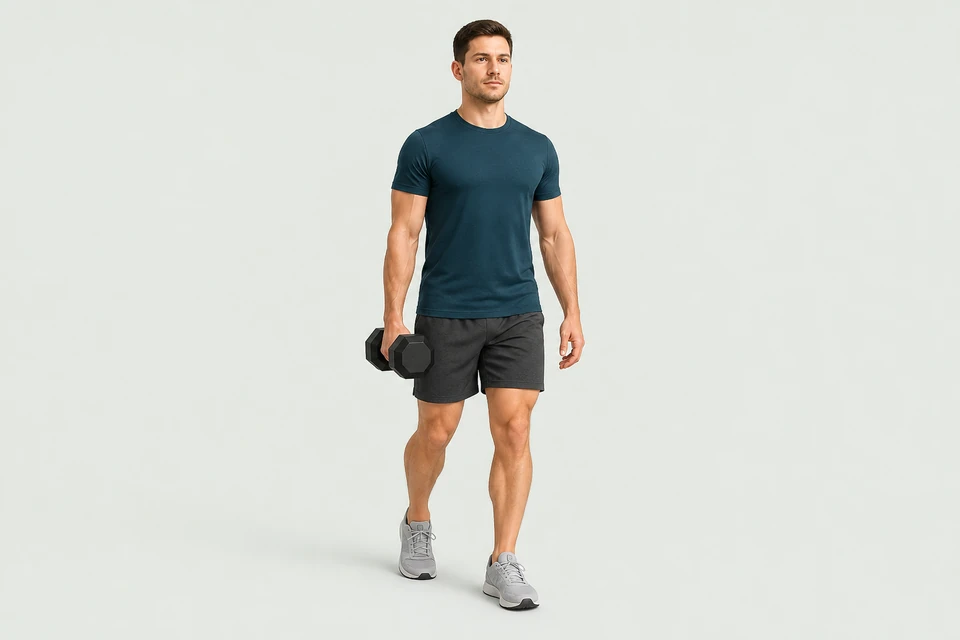
Dumbbell · Clear walking space
Dumbbell suitcase carry
Walk with a dumbbell in one hand while your trunk muscles resist leaning sideways.
View techniqueExercise suggestions for this muscle are being prepared.
Understand the muscle
Two sides with diagonal fibres
The external oblique is the outermost layer of the side abdominal wall. It runs from the lower eight ribs toward the pelvis and abdominal midline. The internal oblique and transverse abdominal muscle lie beneath it.
Left outer abdominal wall
Left side
Musculus obliquus externus abdominis sinisterHelps turn the chest to the right and bend the trunk to the left. It works with other core muscles during both movement and holds.
Exercises for this region
Right outer abdominal wall
Right side
Musculus obliquus externus abdominis dexterHelps turn the chest to the left and bend the trunk to the right. Both sides also assist when you curl the trunk forward.
Exercises for this region
Broad sheet of connective tissue
Abdominal aponeurosis
Aponeurosis musculi obliqui externi abdominisThe muscle continues into a flat tendon at the front of the abdomen. This connects it to the midline seam, the linea alba.
This is an attachment or connective-tissue structure, not a separate contractile muscle region. The exercises for the whole muscle train the associated movement.
The listed exercises involve this region alongside other parts of the muscle. A muscle head or deep portion is not necessarily trained in isolation.
Simply explained
What does the muscle do?
In simple terms, the external obliques help you twist, bend sideways, brace your core, and control your rib cage and pelvis.
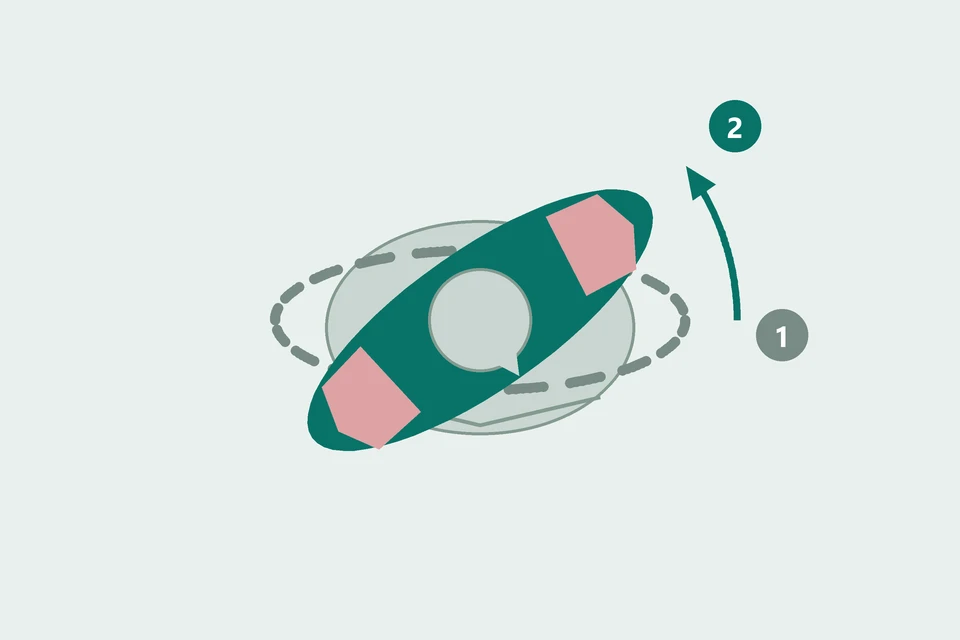
Turn the chest
Trunk rotation
Each side helps turn the chest in the opposite direction, together with the internal oblique on the other side. Bicycle crunches combine rotation with a small curl.
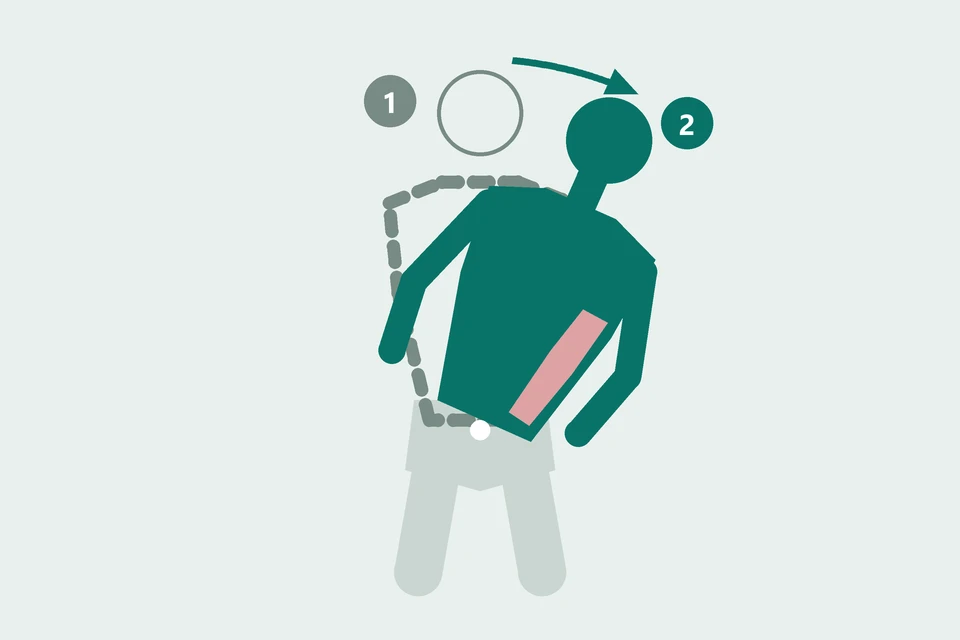
Bend to one side
Lateral flexion
The ribs move toward the pelvis on the same side. The obliques work with other trunk muscles to create and control this sideways bend.
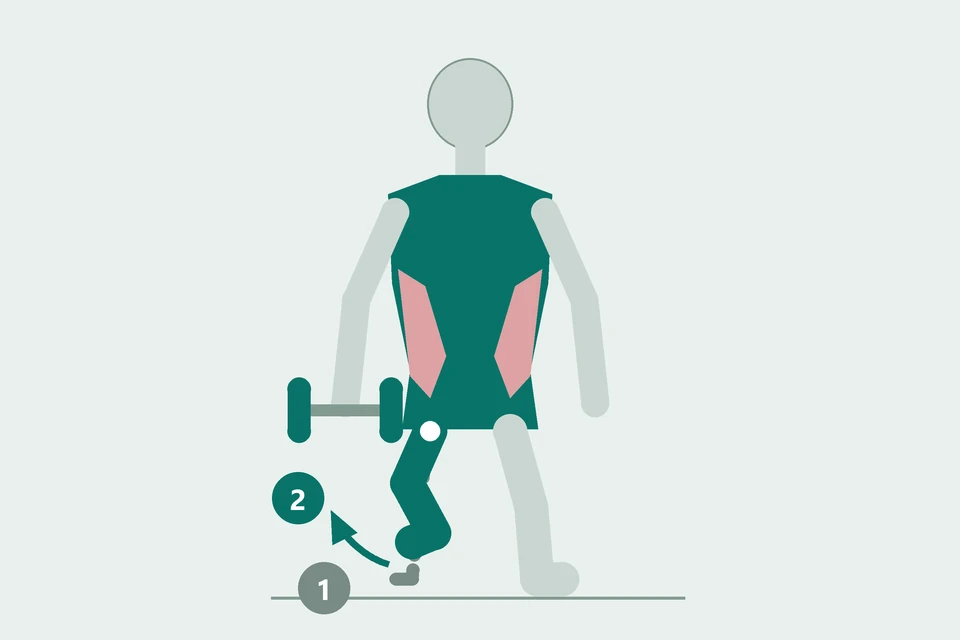
Stay upright under load
Lateral trunk stability
During a suitcase carry, the side abs help resist sideways bending. The torso stays steady as the legs move, with several core muscles sharing the work.
Often works with
Sources & illustrations
Anatomy and technique: the references below. Region boundaries and movement diagrams are schematic. Exercise images are AI-generated illustrations.