
Back muscles
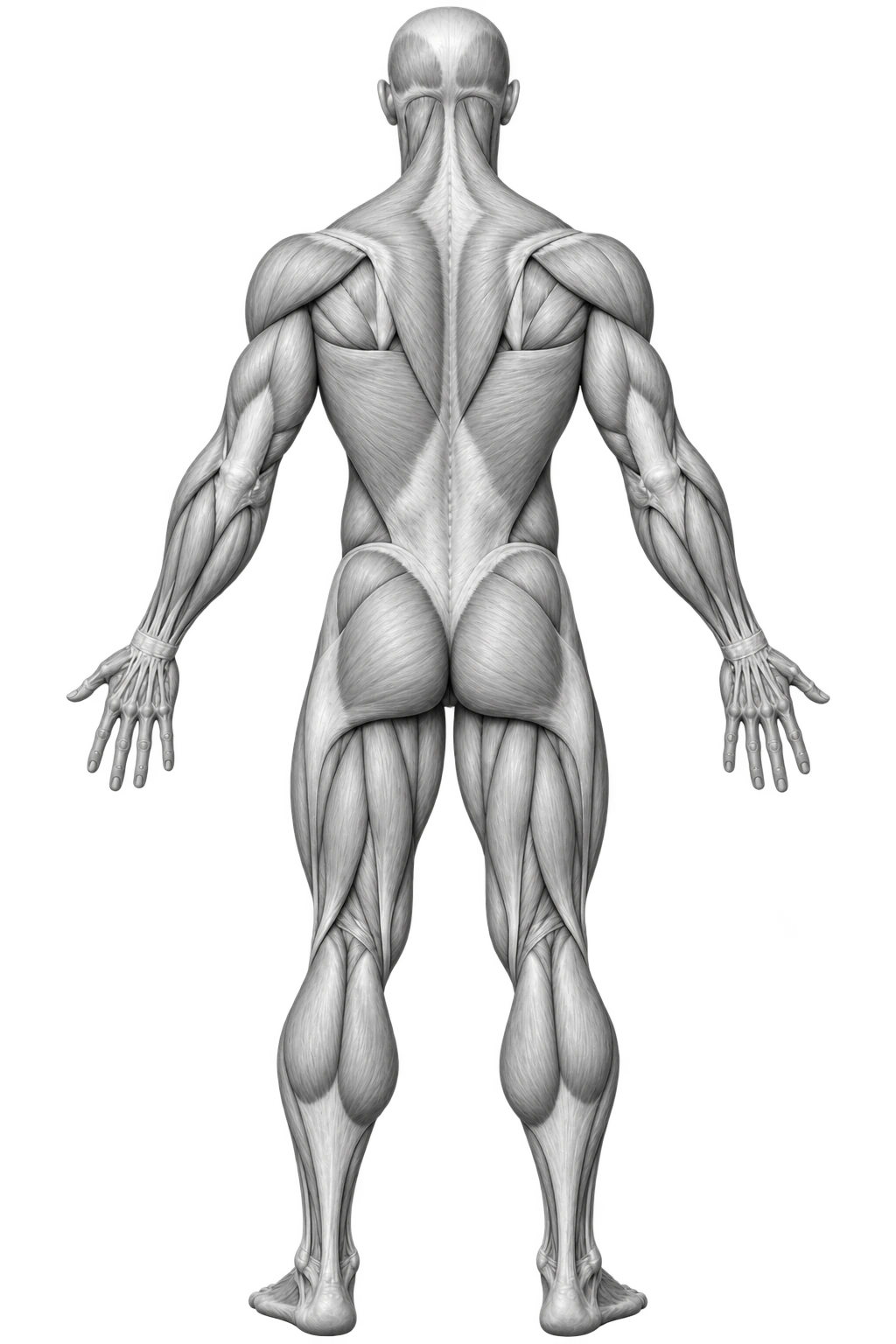
Latissimus dorsi
Musculus latissimus dorsi
Your broad back muscle connects your torso to your upper arm and helps with pulling — for example when rowing.
At a glance
- Region
- Back
- Movement pattern
- Pulling movements
- Joint
- Shoulder joint
Exercises
Exercises for the lats
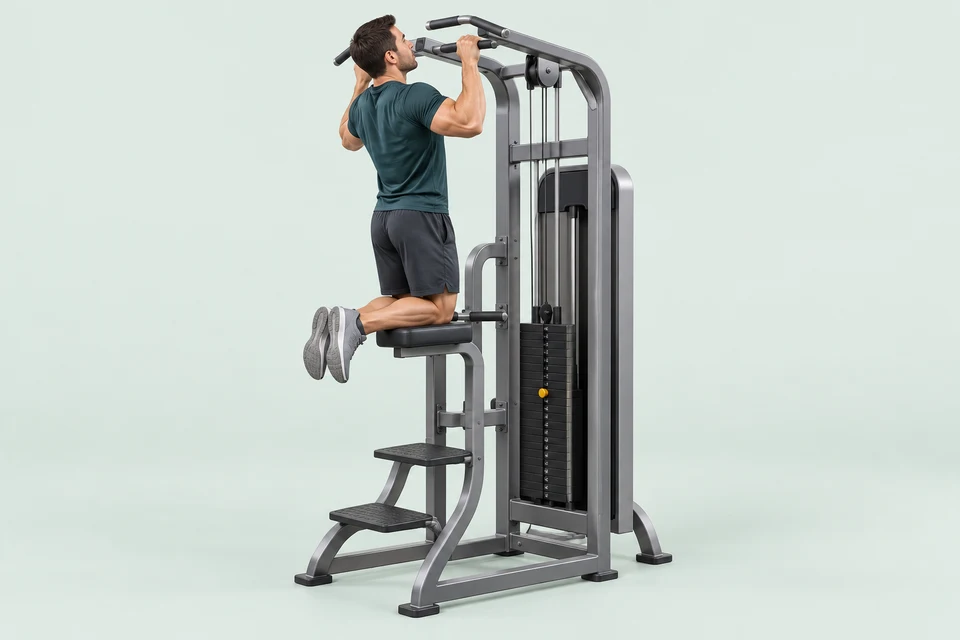
Assisted pull-up machine with knee pad
Machine-assisted pull-up
A counterweighted knee pad reduces the bodyweight you pull, making the pull-up adjustable for the lats and assisting biceps.
View technique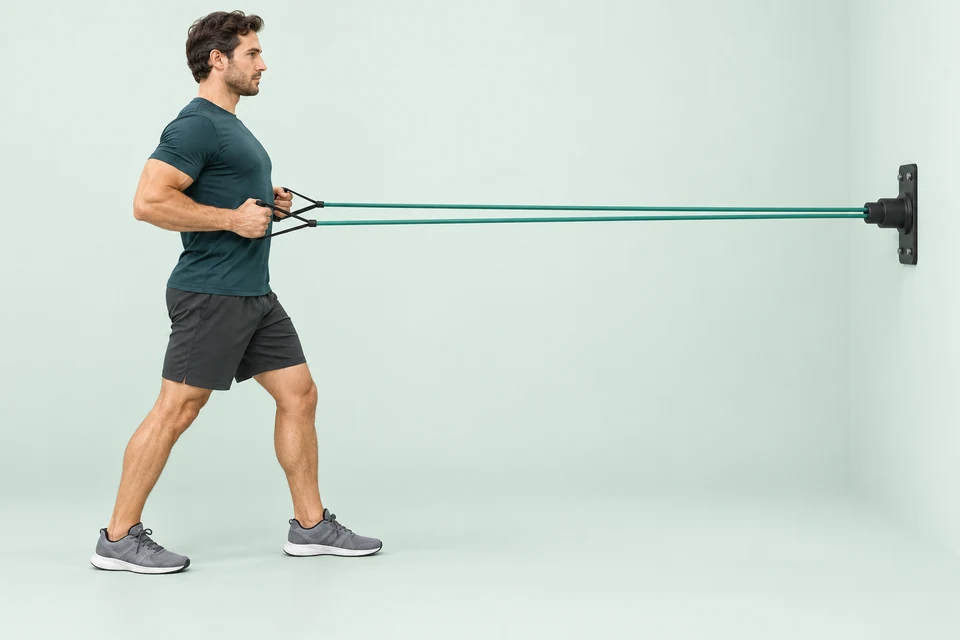
Resistance band · Rated fixed anchor
Standing resistance-band row
Pull against a band to train the lats and mid-back while keeping the torso still.
View technique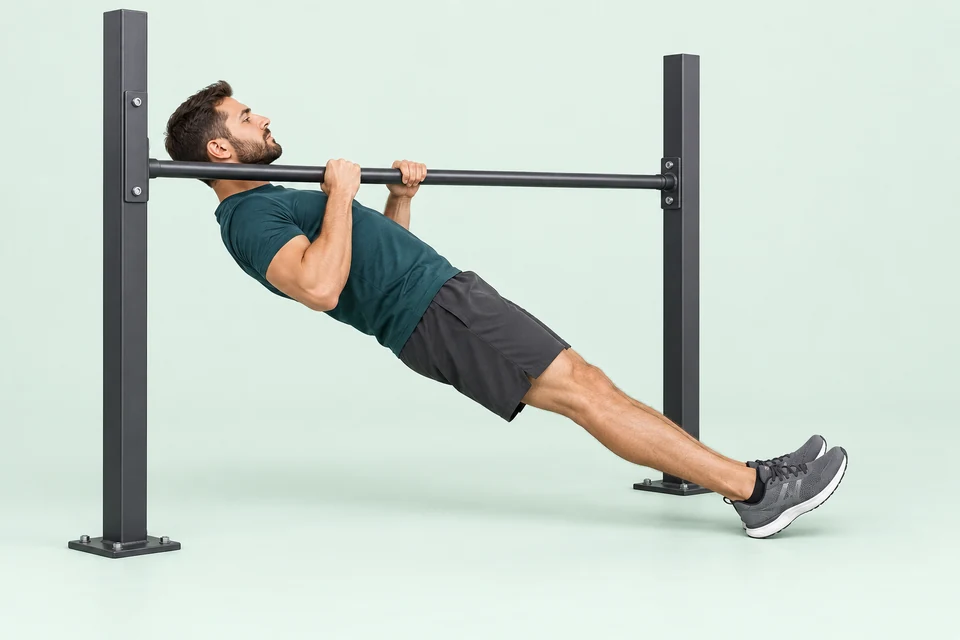
Bodyweight · Fixed low training bar
Inverted row on a low bar
Pull the chest toward a low fixed bar while the heels stay on the floor to train the lats and upper back.
View technique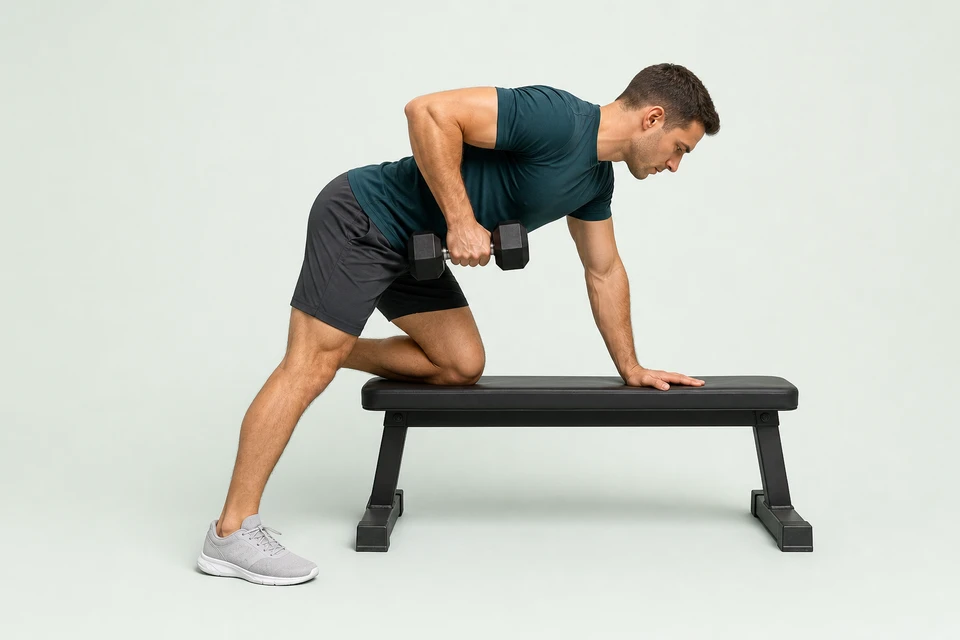
Dumbbell · Flat bench
Single-arm dumbbell row
One arm rows a free weight while your other hand and knee support you on a bench.
View technique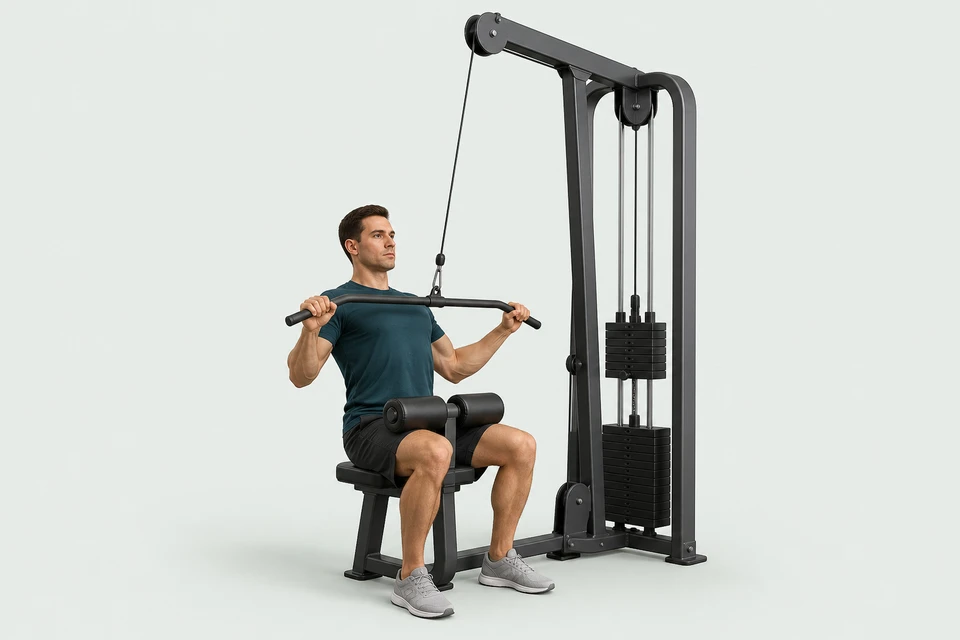
Cable machine · Lat bar
Lat pulldown
Pull from overhead toward your chest with both arms. The machine lets you adjust the resistance.
View technique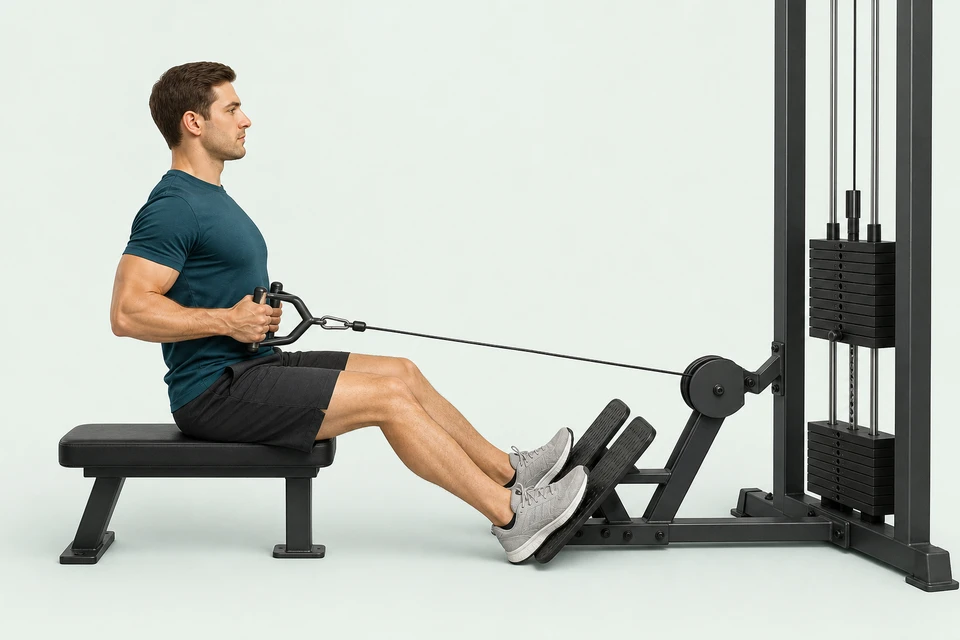
Cable machine · Narrow handle
Seated cable row
Both arms pull a shared handle toward your abdomen against the cable's resistance.
View technique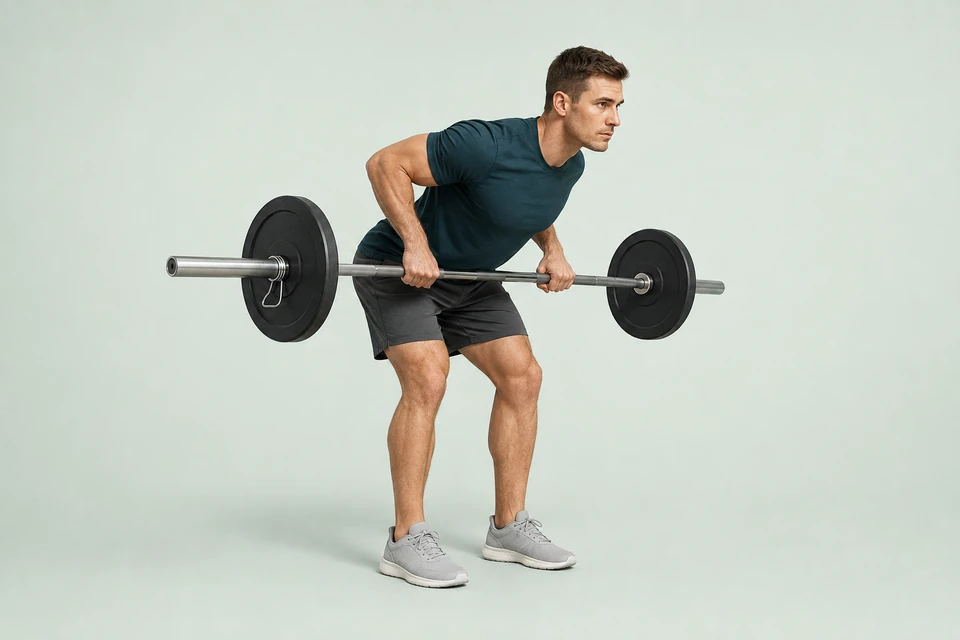
Barbell · Plates and collars
Barbell bent-over row
Row with both arms while your trunk muscles hold the bent-over position steady.
View technique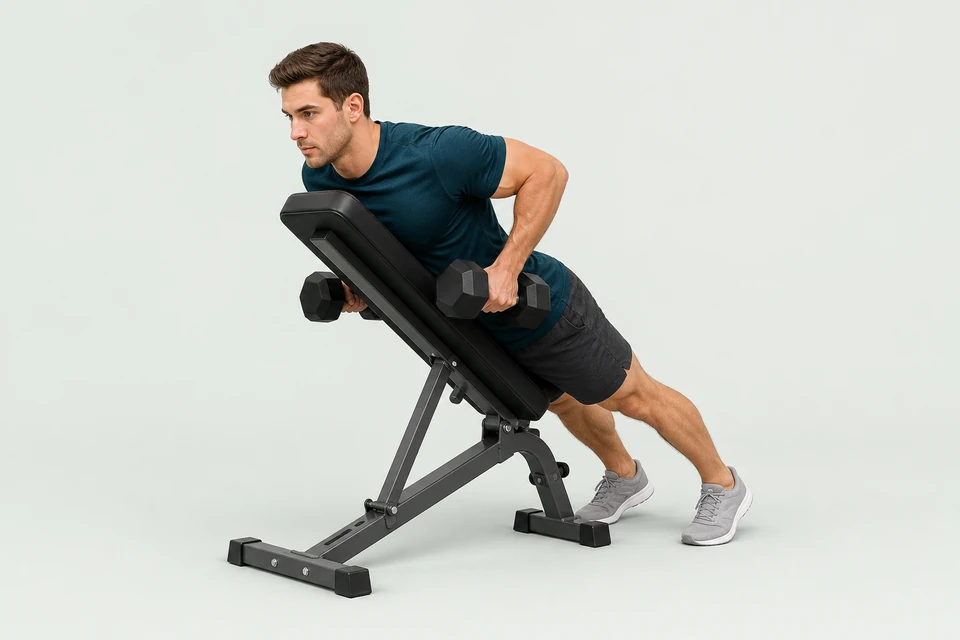
Dumbbells · Incline bench
Chest-supported dumbbell row
The bench supports your chest while both arms row. This reduces the effort needed to hold your torso in position.
View technique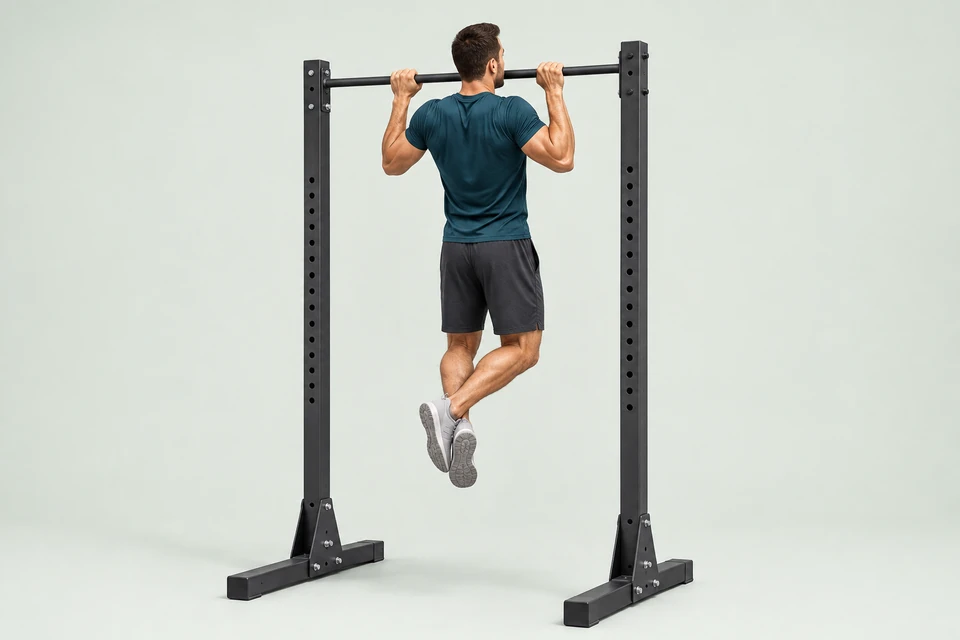
Pull-up bar · Bodyweight
Overhand pull-up
Pull your body toward a fixed bar. Your lats and other back muscles work together with your elbow flexors.
View techniqueExercise suggestions for this muscle are being prepared.
Understand the muscle
From your back to your upper arm
The latissimus spreads across your mid and lower back. Its fibers converge toward the armpit and attach to your upper arm.
Broad attachment to the torso
Origin
OrigoArises from the lower thoracic spine, thoracolumbar fascia, iliac crest and lower ribs.
This is an attachment or connective-tissue structure, not a separate contractile muscle region. The exercises for the whole muscle train the associated movement.
Connection to the upper arm
Insertion
InsertioAttaches by a tendon to the groove between the humeral tubercles. This connection lets a back muscle move your arm.
This is an attachment or connective-tissue structure, not a separate contractile muscle region. The exercises for the whole muscle train the associated movement.
The listed exercises involve this region alongside other parts of the muscle. A muscle head or deep portion is not necessarily trained in isolation.
Simply explained
What does the muscle do?
In simple terms, the latissimus pulls your upper arm down, back, and inward toward your body.
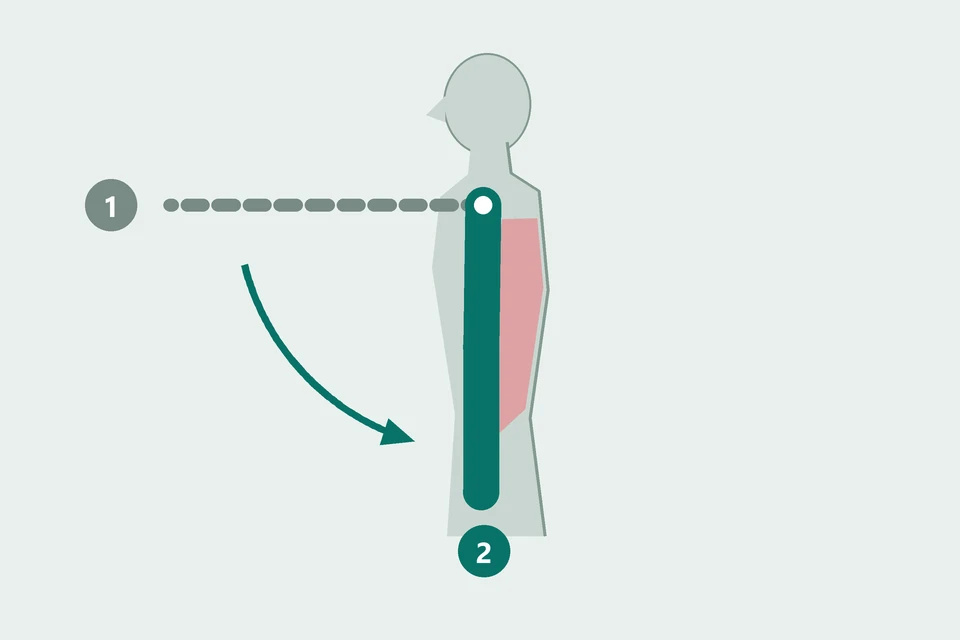
Pull your arm backward
Shoulder extension
Bring an arm held in front of you back toward your torso, as in rowing.
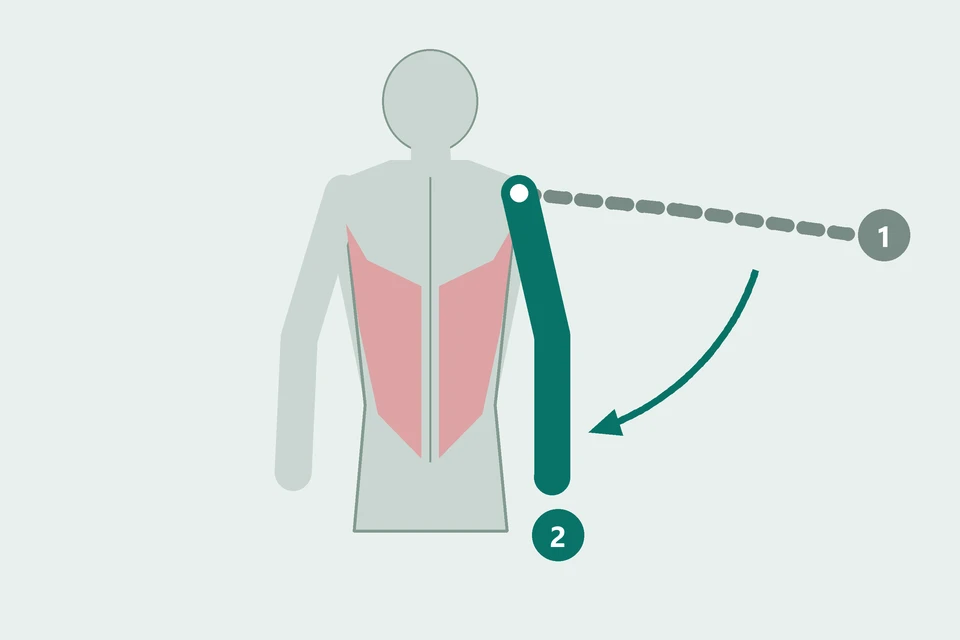
Bring your arm toward your body
Adduction
Pull an arm raised to the side down toward your torso, as in a lat pulldown.
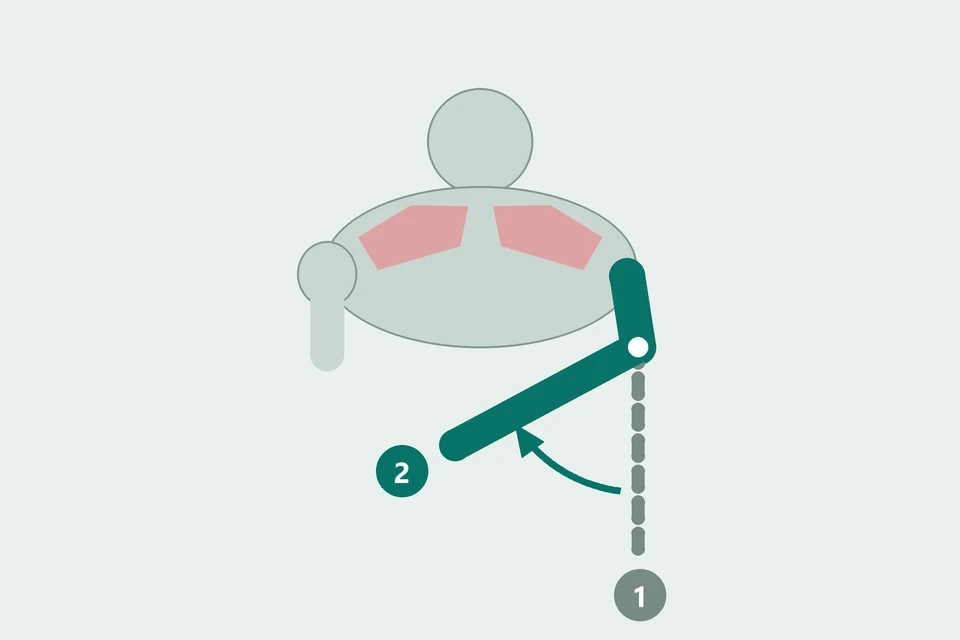
Rotate your upper arm inward
Internal rotation
With your elbow bent beside your body, the forearm turns inward. The movement happens at the shoulder.
Often works with
Sources & illustrations
Anatomy and technique: the references below. Region boundaries and movement diagrams are schematic. Exercise images are AI-generated illustrations.