
Triceps surae
Calf muscles
Musculus triceps surae
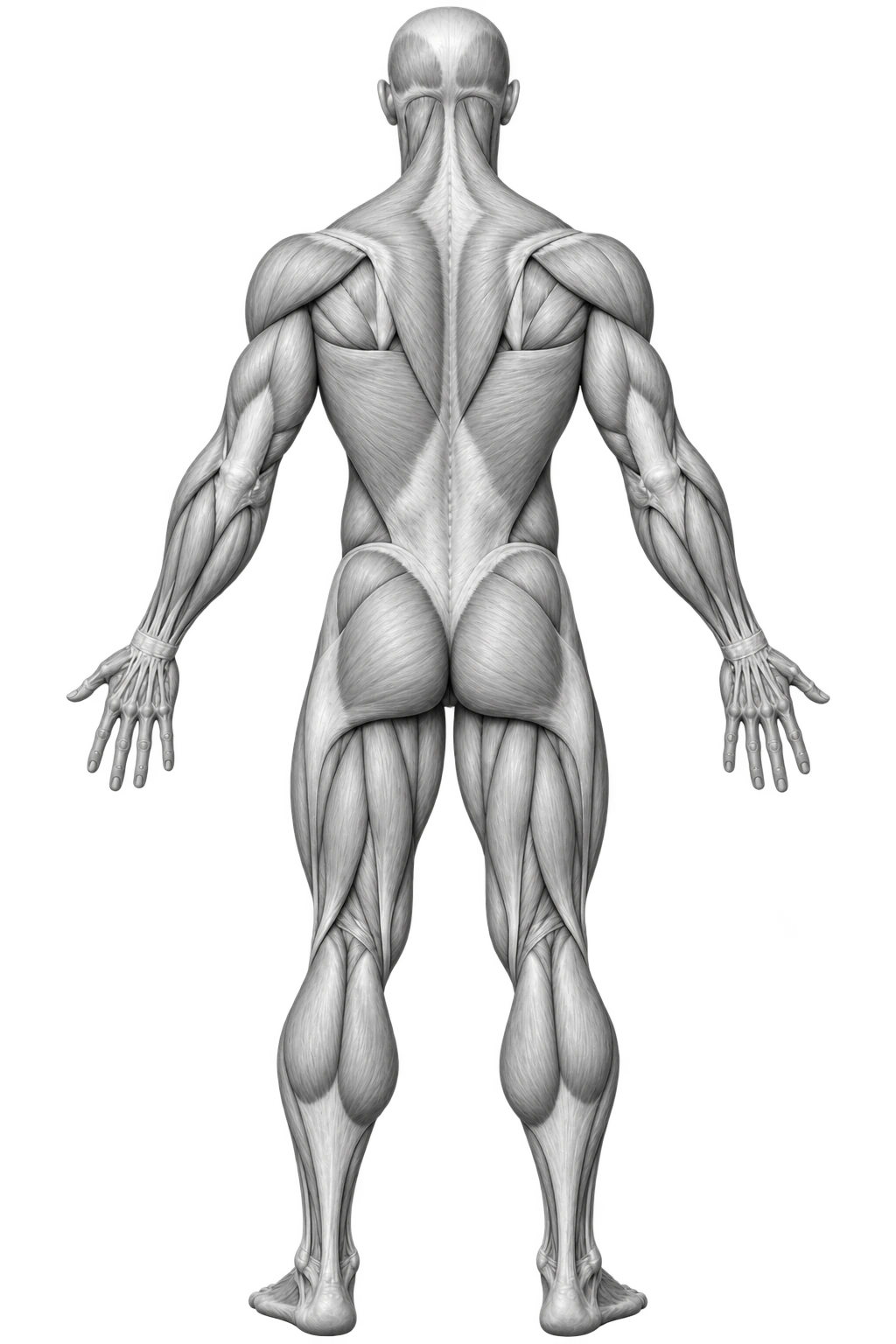
The gastrocnemius and soleus form the powerful muscle mass at the back of your lower leg. Together they raise your heel and create the push-off for walking, running, and jumping.
At a glance
- Region
- Lower leg
- Movement pattern
- Calf raises and push-off during gait
- Joint
- Ankle and knee joints
Exercises
Exercises for the calves
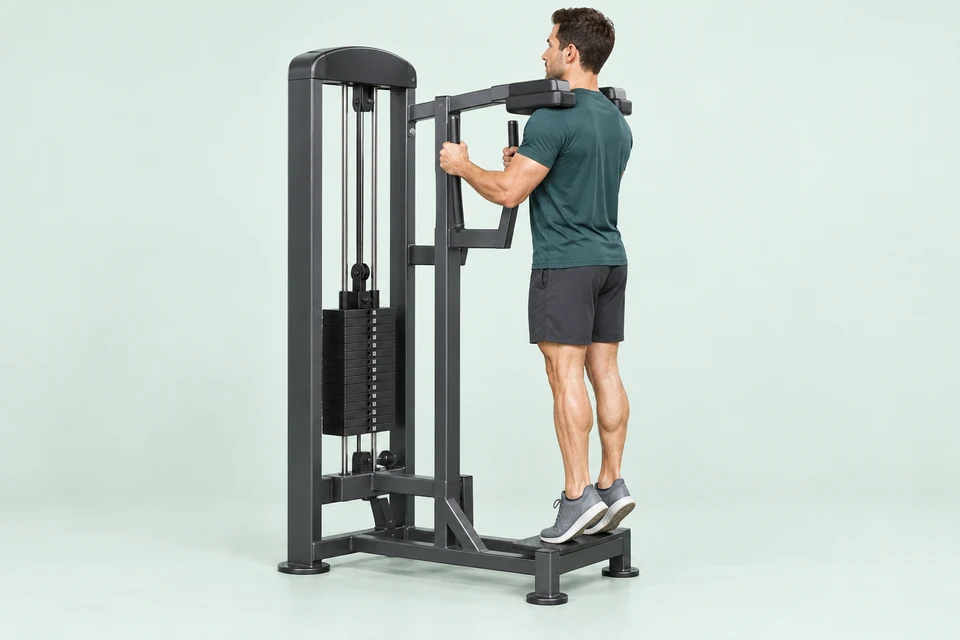
Machine · Shoulder pads · Raised platform
Standing calf raise machine
Raise the heels with nearly straight knees against the machine to emphasize the gastrocnemius.
View technique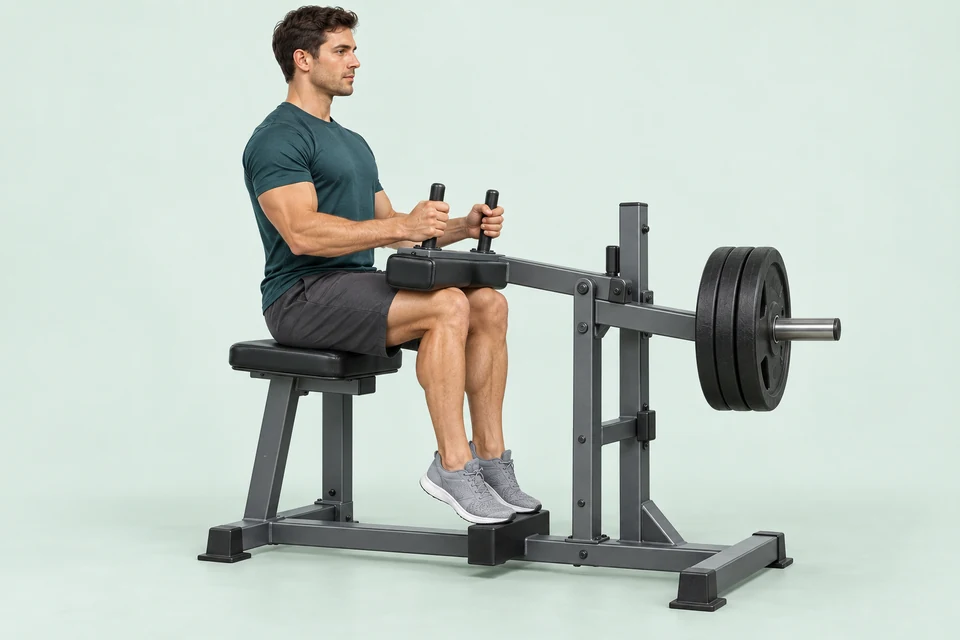
Machine · Thigh pad · Foot block
Seated calf raise machine
Raise the heels with bent knees to emphasize the soleus under a guided resistance.
View technique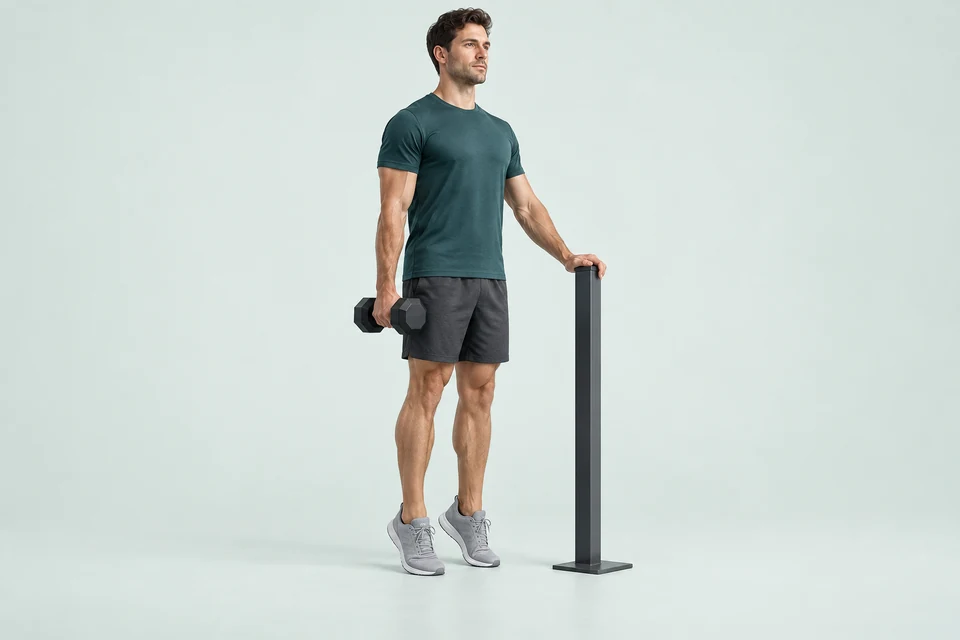
Dumbbell · Stable support
Standing dumbbell calf raise
Raise both heels while holding a dumbbell. The added load progresses the standing calf raise with the knees nearly straight.
View technique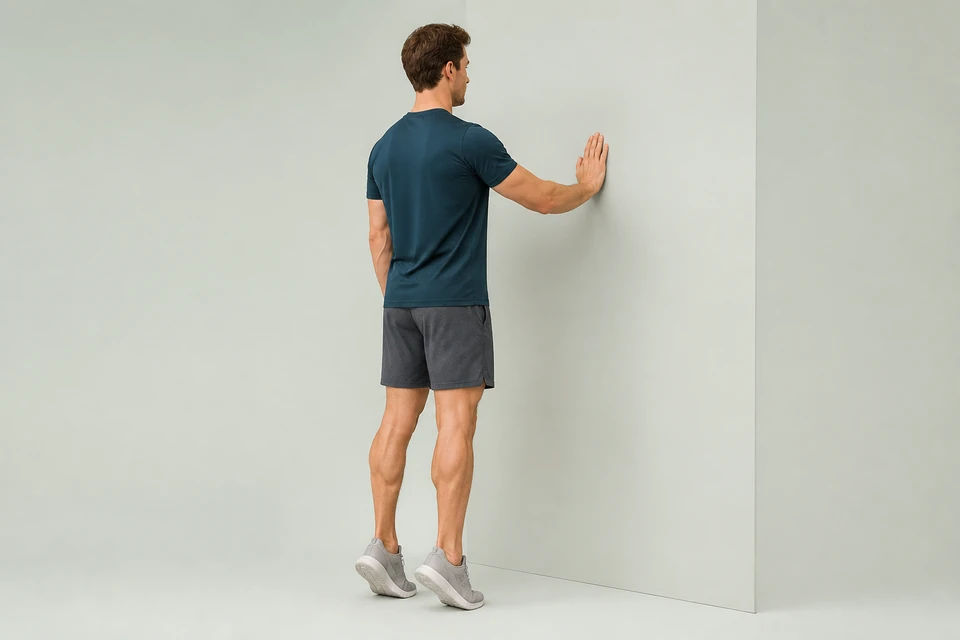
No equipment · Wall
Bodyweight standing calf raise
Rise onto both forefeet with light hand support. This simple straight-knee variation trains the calf without added weight.
View technique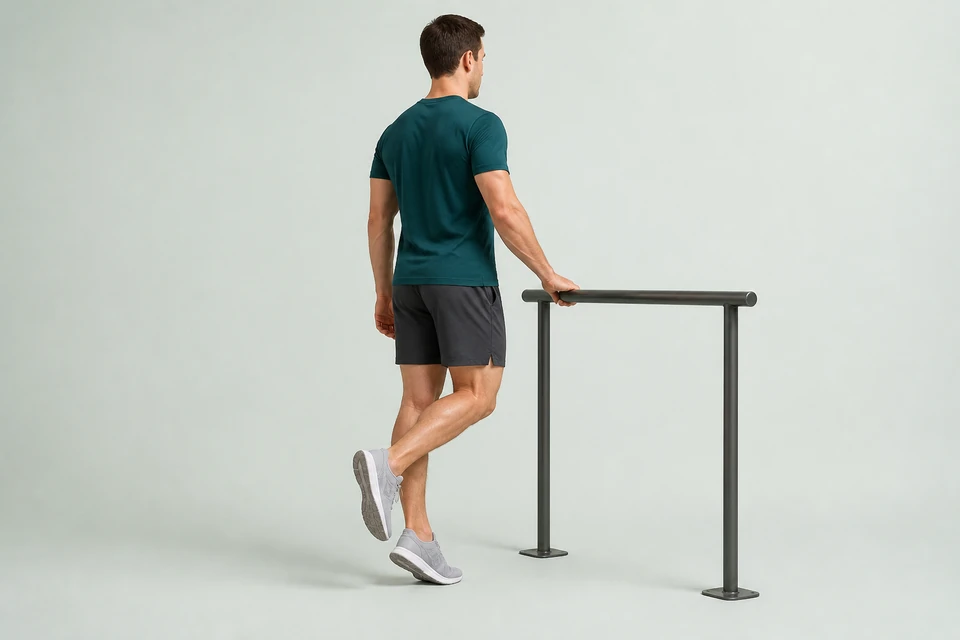
No equipment · Wall
Supported single-leg calf raise
One leg carries your bodyweight while light hand support keeps balance from limiting the calf.
View technique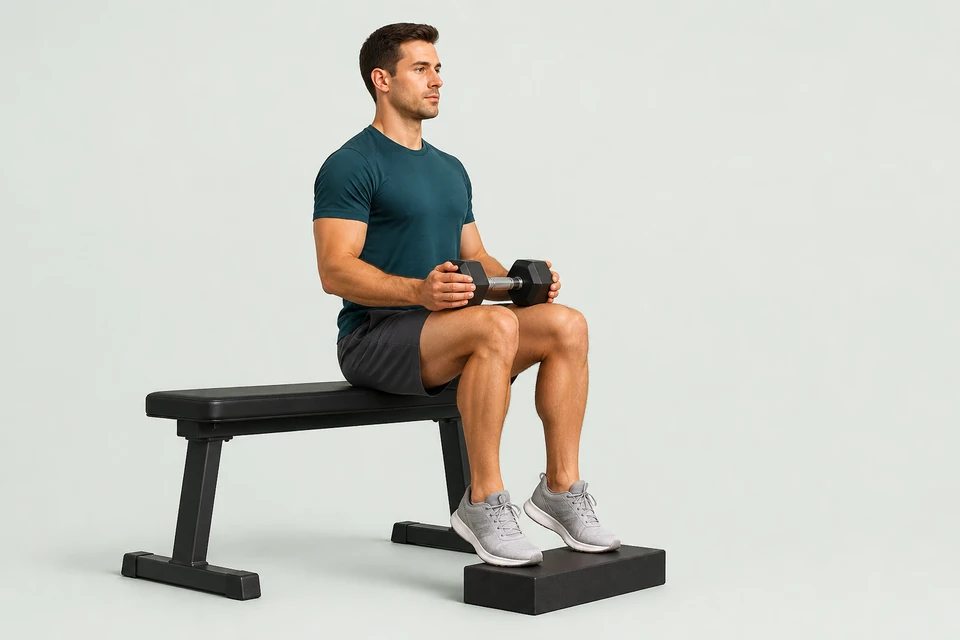
Dumbbell · Bench
Seated dumbbell calf raise
With your knees bent, raise the heels while a dumbbell rests securely across the thighs. This changes the role of the gastrocnemius while the soleus continues to work.
View techniqueExercise suggestions for this muscle are being prepared.
Understand the muscle
Two muscles, one shared Achilles tendon
The visible gastrocnemius lies over the broader soleus. Their fibers merge into the Achilles tendon, which attaches to the heel bone.
Two-headed superficial calf muscle
Gastrocnemius
Musculus gastrocnemiusIts medial and lateral heads begin above the knee. Because it crosses both knee and ankle, it raises the heel most effectively when the knee is relatively straight.
Exercises for this region
Broad deep calf muscle
Soleus
Musculus soleusIt begins at the tibia and fibula below the knee and acts only at the ankle. It continues to plantarflex the foot with either a straight or bent knee.
Exercises for this region
The listed exercises involve this region alongside other parts of the muscle. A muscle head or deep portion is not necessarily trained in isolation.
Simply explained
What does the muscle do?
In simple terms, your calves lift your heel from the floor. The straight-knee and bent-knee versions change how strongly the two main calf muscles contribute.
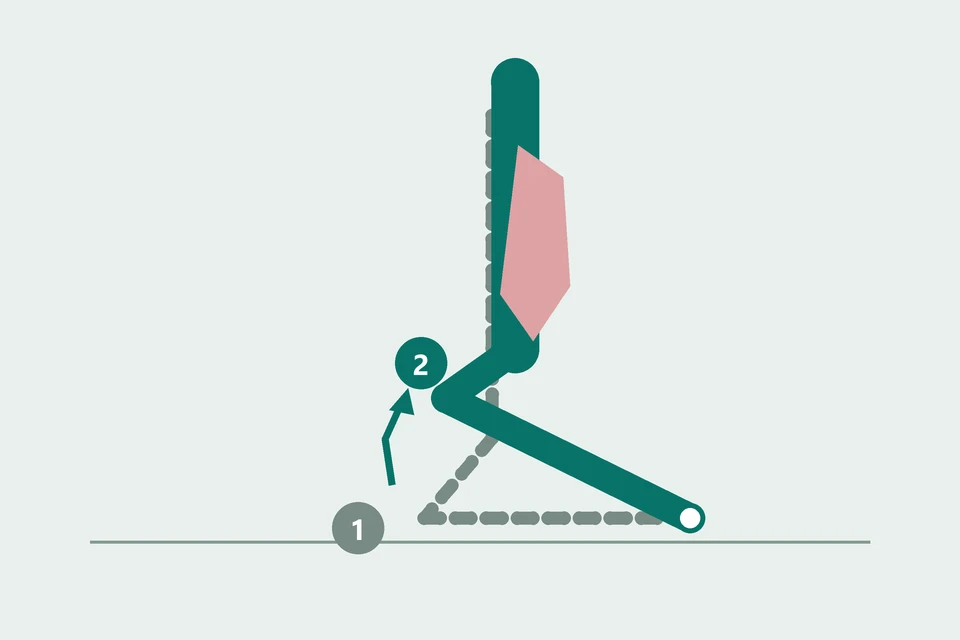
Raise your heel
Ankle plantarflexion
The forefoot stays down while the heel moves upward. This is the main movement in every calf-raise variation.
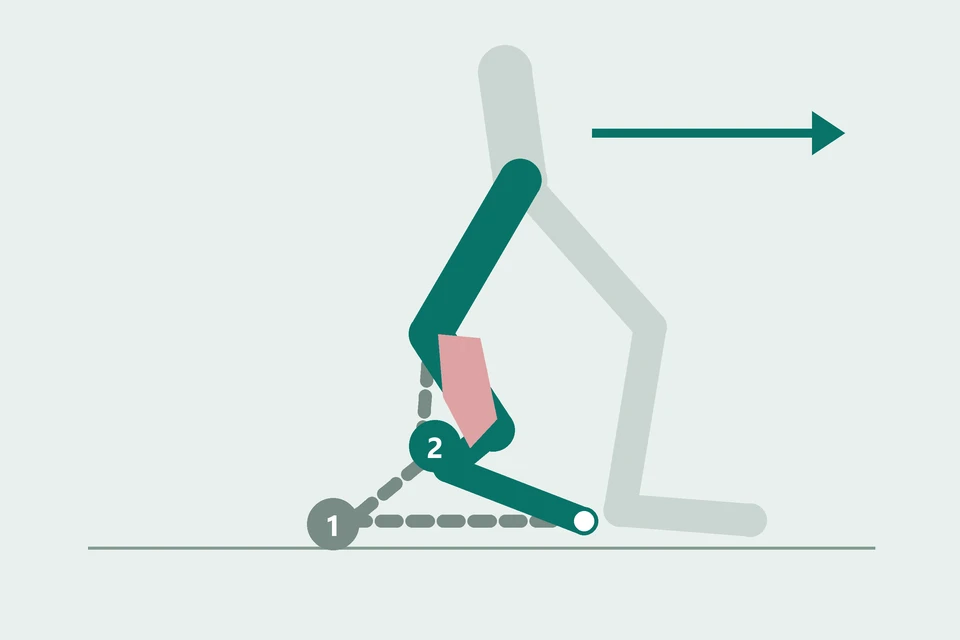
Push the body forward
Push-off
Near the end of a step, the calf raises the rear heel and transfers force through the forefoot to move the body ahead.
Often works with
Sources & illustrations
Anatomy and technique: the references below. Region boundaries and movement diagrams are schematic. Exercise images are AI-generated illustrations.